Residential Window Tinting in the DMV: Films, Glass Options, and What Actually Works
The DMV summer is brutal for west-facing rooms — afternoon sun pouring through standard clear glass turns a living room into something approaching a greenhouse. Window tinting works, but the options and trade-offs are more nuanced than the marketing suggests.
Mike Reynolds
Lead Glass Technician & Owner
In This Article
The DMV Solar Problem and Why Tinting Matters
West-facing rooms in the DC-Maryland-Virginia region get hit particularly hard by afternoon sun from June through September. The combination of high summer sun angle and long afternoon sun exposure means that a west-facing window wall can admit 600-800 watts per square meter of solar radiation during peak exposure — roughly the equivalent of 8-10 incandescent light bulbs per square foot of window, all producing heat. Rooms with significant west-facing glass areas and no effective solar control become genuinely uncomfortable without aggressive air conditioning, and the energy cost of cooling those spaces is substantial.
The same phenomenon affects south-facing glass in mid-summer, though the south-facing solar exposure is actually highest in winter when the sun is lower in the sky — which is part of why solar control and passive solar gain are sometimes at odds in DMV window design. East-facing glass has morning sun exposure but typically not the extended high-intensity afternoon exposure that creates the most acute discomfort.
Window tinting — whether through window film applied to existing glass or through replacement with tinted or Low-E glass — is the primary tool for managing this solar heat gain problem. The right solution depends on your existing windows, your goals (solar control only, or solar control plus improved insulation), and your budget.
Window Film: The Retrofit Option
Window film is a polyester or multilayer plastic sheet applied to the interior surface of existing glass. Solar control window films work by reflecting or absorbing a portion of the incoming solar radiation before it enters the room. Films are characterized by visible light transmittance (VLT) — how much visible light they allow through — and solar heat gain coefficient (SHGC) — how much total solar energy they allow through.
High-performance window films for residential solar control typically have VLT values of 35-70% (compared to clear glass at 87-90%) and SHGC values of 0.25-0.45 (compared to clear glass at 0.87). The lower the SHGC, the more solar heat is blocked. Films with very low VLT (below 35%) can appear quite dark from the exterior and affect interior light quality; films in the 50-70% VLT range are typically the residential sweet spot for most homeowners — meaningful solar control without dramatic darkening.
Film application is a cost-effective retrofit for existing windows that are otherwise in good condition. A professional film installation on a standard double-hung window takes 30-60 minutes and the film cures fully within 2-4 weeks. Film warranties from major manufacturers (3M, LLumar, Eastman) typically run 10-15 years for residential applications. The primary limitation of film is that it does not improve the thermal insulating performance of the window — it reduces solar heat gain but does not change the U-factor, so a drafty single-pane window with film applied is still a thermally poor window in winter.
Low-E Glass: The Replacement Option
Low-E (low-emissivity) glass has a microscopically thin metallic coating that reflects infrared radiation — both the long-wave infrared associated with winter heat loss and the short-wave infrared in solar radiation. Low-E glass for solar control in warm climates (SHGC-optimized Low-E) blocks solar heat gain while maintaining good visible light transmittance.
A well-specified Low-E IGU replacement for west-facing DMV windows — for example, a unit with SHGC 0.22 and VLT 0.50 — provides solar control comparable to a good window film but also delivers improved winter insulation (U-factor in the 0.25-0.30 range, versus 0.50+ for single-pane or 0.40+ for standard double-pane without Low-E). The integrated solution is more expensive than film but also more comprehensive and requires no future replacement of the film.
Low-E glass is available in multiple formulations targeting different climate priorities. For DMV homes with significant south or west glass exposure, solar-control Low-E (sometimes called passive Low-E type 2 or hard-coat solar-control Low-E) is typically the right choice. Heating-climate Low-E (type 3 or soft-coat heating Low-E), designed to maximize passive solar gain, is less appropriate for south and west-facing DMV applications where summer solar control is a higher priority than winter passive gain.
Tinted Glass vs. Low-E: Key Differences
Tinted glass achieves solar control by absorbing solar radiation within the glass itself — the glass body is colored (bronze, gray, green, blue) to absorb a portion of the solar spectrum. Absorbed radiation warms the glass, which then re-radiates heat in both directions — into and out of the room. This means tinted glass blocks some solar energy but also creates a warm glass surface that radiates heat inward even after the sun shifts away from the window.
Low-E coatings, by contrast, reflect a portion of solar radiation back outward rather than absorbing it. The glass does not warm as significantly. For summer solar control, Low-E glass is generally more effective than comparable tinted glass at the same VLT because reflection is more efficient than absorption.
Tinted glass does have a place in DMV residential applications: for homes where the exterior aesthetic of a tinted window is desirable, or where budget constraints favor tinted over Low-E, or for specific design contexts where the tinted appearance is architecturally appropriate. But for pure thermal performance, Low-E is superior.
HOA and Historic District Restrictions
Many neighborhoods in the DMV have homeowners association rules or historic district restrictions that affect window tinting choices. HOA rules in communities like Reston, Columbia, and various PUD developments in Fairfax and Montgomery Counties sometimes specify that exterior window appearance must remain consistent with the community standard — which typically means no heavily tinted or reflective glass visible from the exterior. DC's historic district protections, which cover large portions of Capitol Hill, Georgetown, Dupont Circle, and other neighborhoods, often restrict exterior changes to window appearance including glass tinting.
Before specifying heavily tinted or reflective glass replacement in any HOA community or historic district, verify that the change is permitted. Interior window film, applied to the inside of existing glass, is typically not regulated by HOA rules that govern exterior appearance — it is not visible from outside. This makes film a useful option in regulated neighborhoods where exterior glass replacement specifications are constrained.
For solar control glass replacement or window film recommendations for your DMV home, send photos of the problem windows for a free custom assessment. We can advise on the right approach for your situation — film, glass replacement, or a combination — based on your window condition, orientation, and solar exposure. Call (703) 470-7867 with questions.
About the Author
Mike Reynolds
Lead Glass Technician & Owner
With over 15 years of experience in window and glass repair across the DC, Maryland, and Virginia area, Mike shares practical expertise to help homeowners and businesses make informed decisions about their glass repair and replacement needs.
Need Help With Your Glass?
Our experts are ready to help with any window or glass issue. Free estimates, same-day service available across DC, MD & VA.
Related Articles
Continue reading about energy efficiency
More Energy Efficiency
View All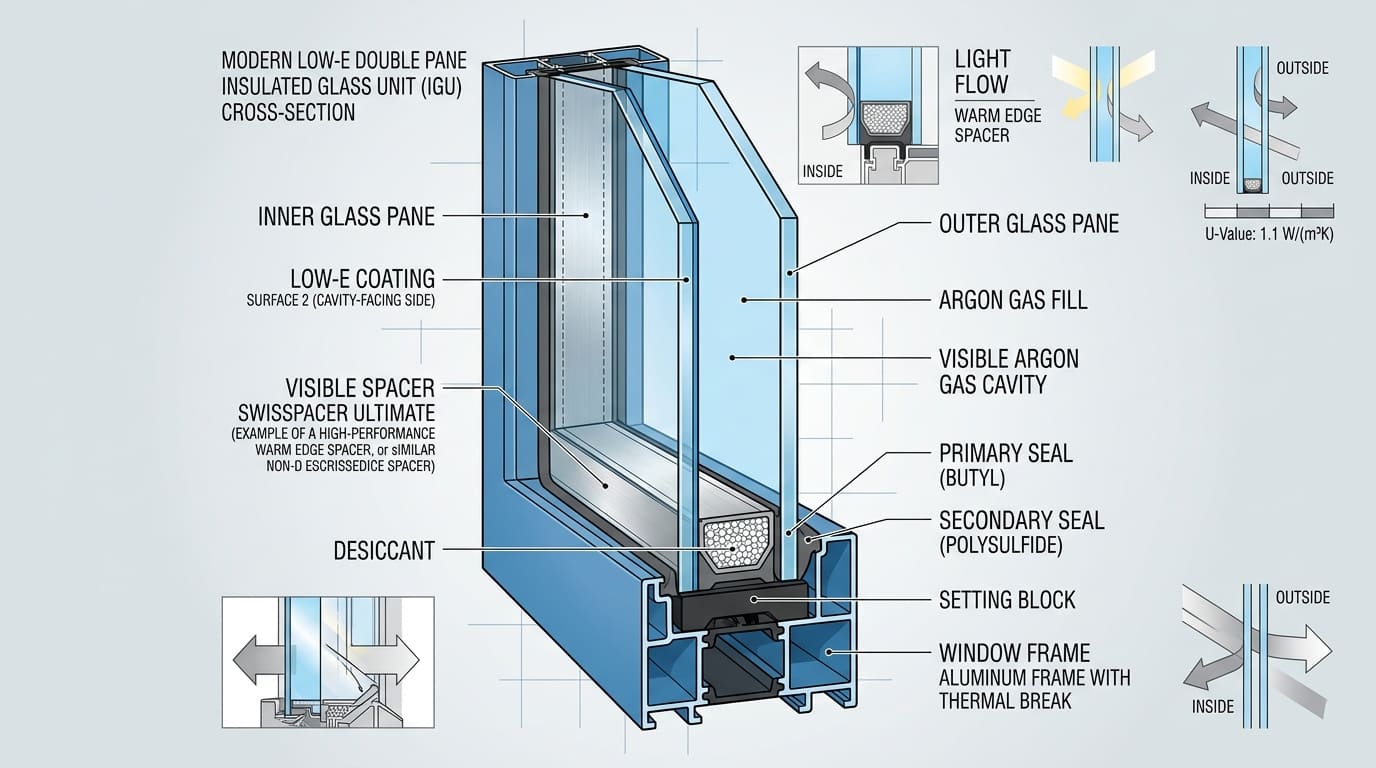
Energy-Efficient Glass Upgrades for DMV Homes: Low-E, Argon & Beyond
10 min read
Low-E Glass Explained: Is It Worth the Upgrade for Your DMV Home?
7 min read
When to Upgrade from Single-Pane to Double-Pane Windows in the DMV
8 min read
How Glass Replacement Saves Money on Energy Bills in the DMV
7 min readExplore More Resources
Helpful Guides
Common Problems
Our Services
24/7 Emergency
Board-Up & Glass
Licensed & Insured
DC, MD & VA
300+ Areas
DMV Coverage
Same-Day Service
When You Need It
Ready to Get Started?
Get a free estimate for any window or glass service across the DMV area.