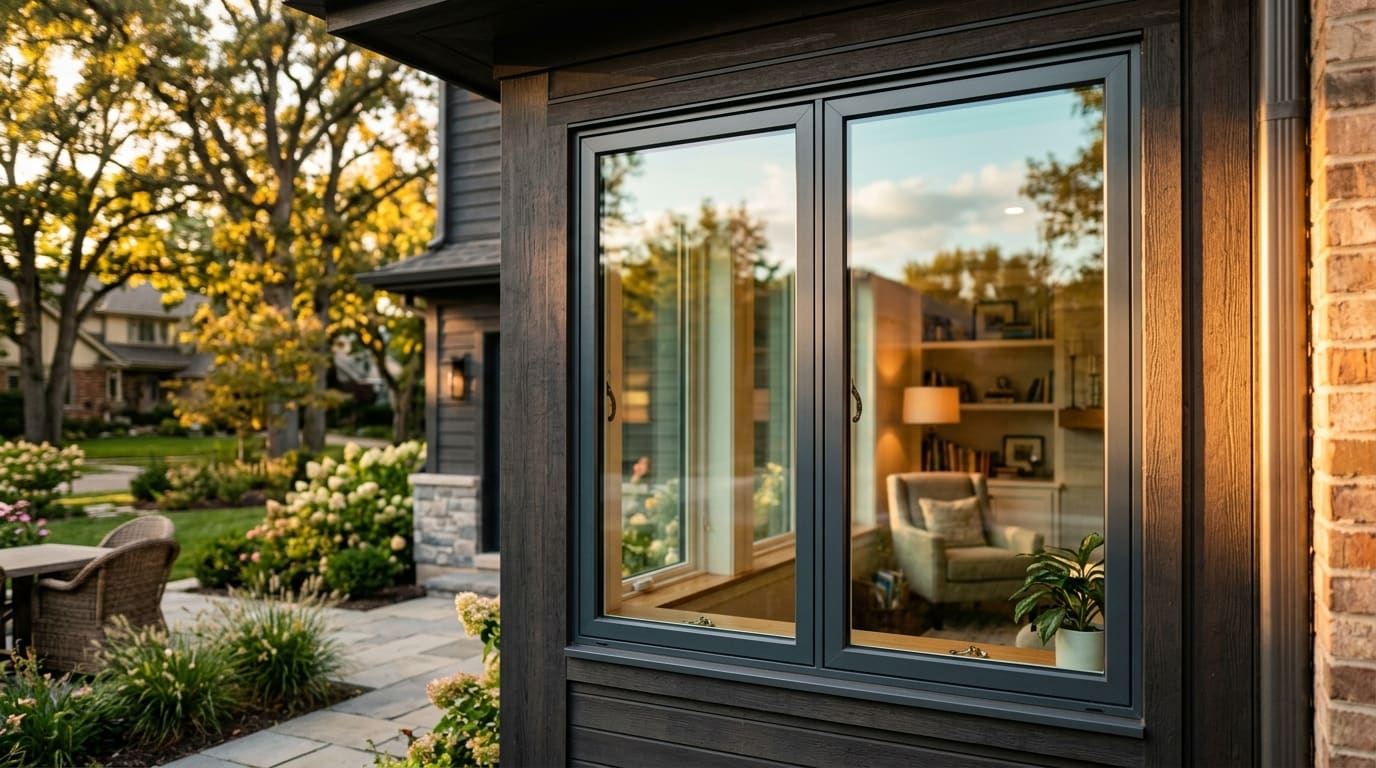
Low-E Glass Explained: Is It Worth the Upgrade for Your DMV Home?
Low-E glass is the most impactful upgrade available when replacing window glass. Here is how it works, what it costs, and whether the energy savings justify the investment for your DMV home.
Mike Reynolds
Lead Glass Technician & Owner
In This Article
What Is Low-E Glass?
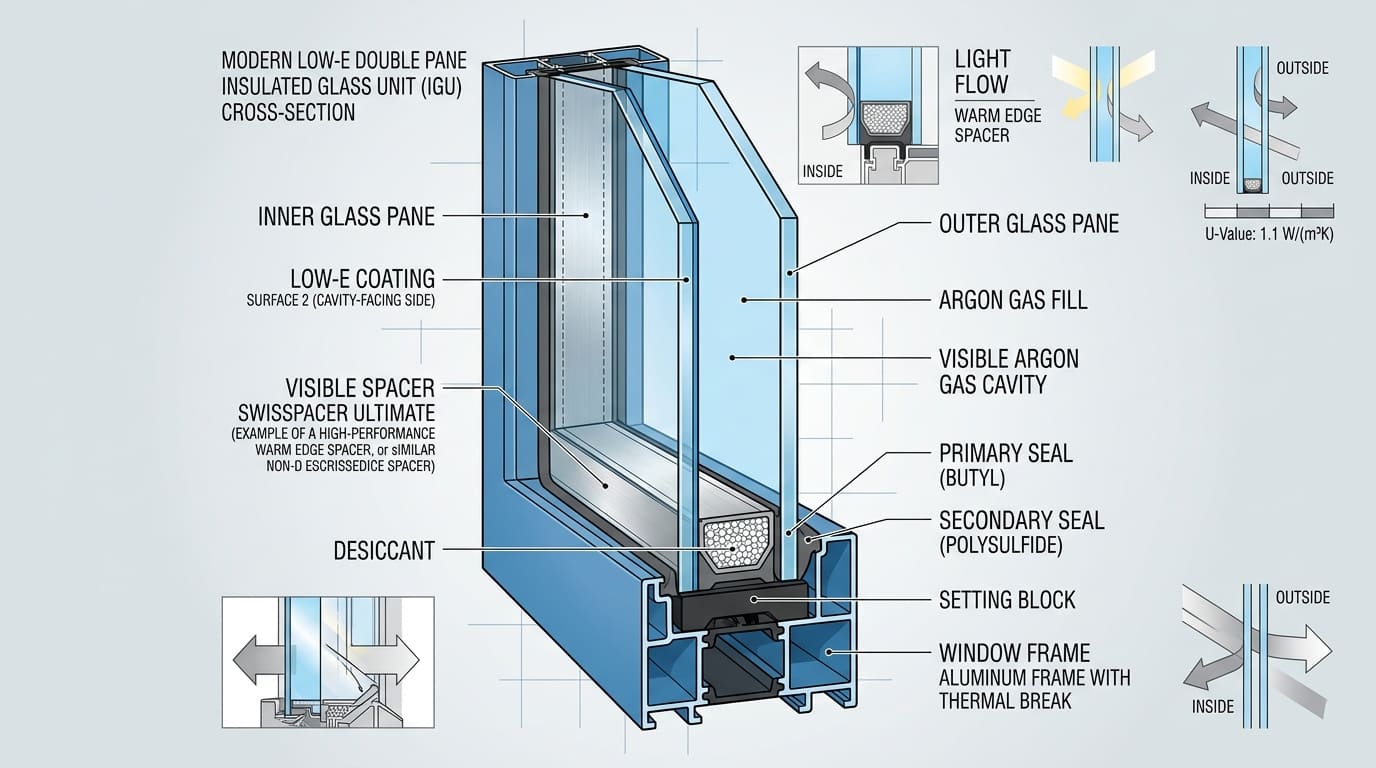
Low-E stands for low emissivity. The coating is a microscopically thin layer of metallic oxide — typically silver or tin oxide — applied to one surface of the glass during manufacturing. You cannot see it with the naked eye, but it fundamentally changes how the glass interacts with heat energy. Low-E glass reflects long-wave infrared radiation (heat) while allowing short-wave visible light to pass through freely.
Solar Control vs Passive Low-E
Not all Low-E coatings are the same. Solar control Low-E is optimized to reflect incoming solar radiation before it enters your home — ideal for south-facing and west-facing windows in the DMV where summer heat gain is the dominant concern. A south-facing window with solar control Low-E can reduce summer heat gain by 25 to 45 percent compared to clear glass.
Passive retention Low-E has a higher solar heat gain coefficient — it allows more solar energy in — but excels at reflecting interior heat back into the room during winter. This is better for north-facing windows where solar gain is minimal and retaining winter heat is the priority.
Real Energy Savings in the DMV Climate
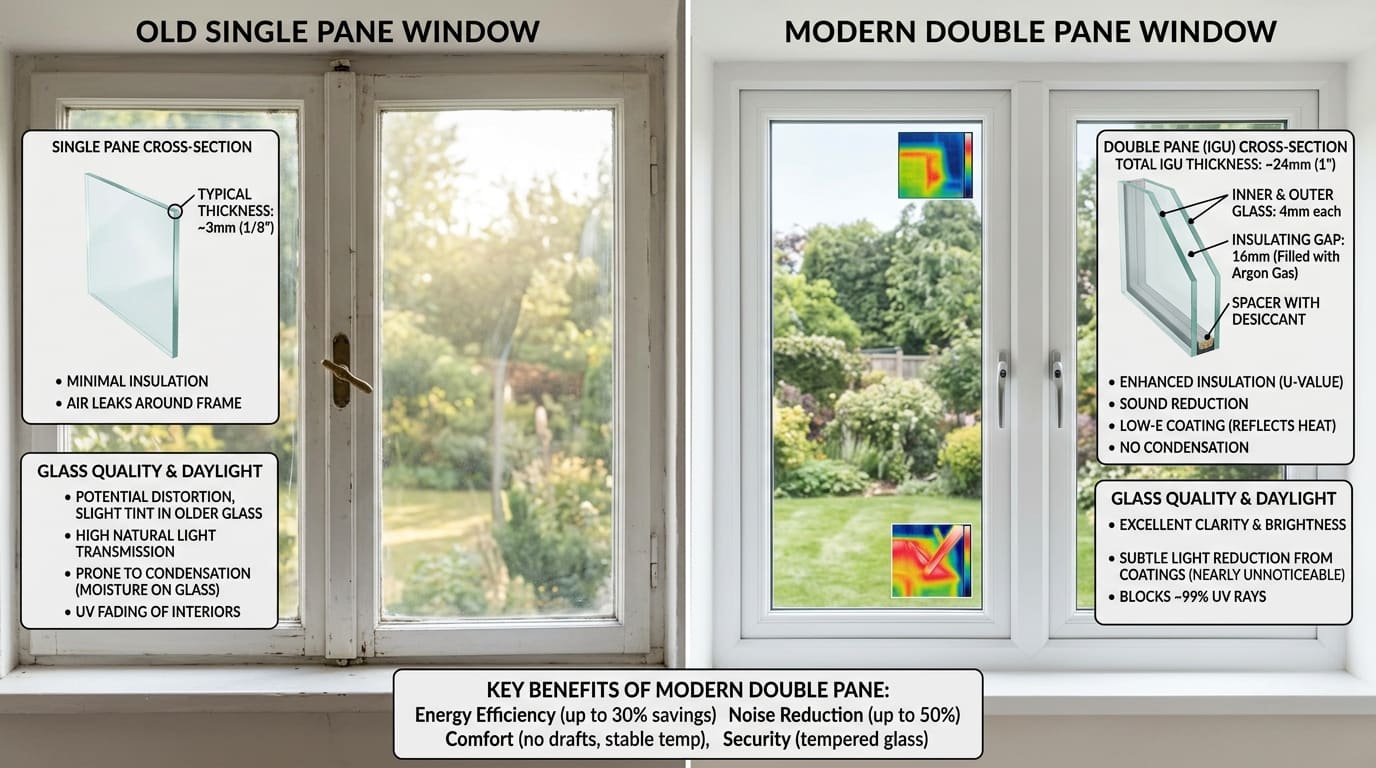
The Department of Energy estimates that upgrading from clear glass to Low-E glass in a mixed heating-cooling climate like Washington DC can reduce window-related energy costs by 12 to 30 percent depending on the number of windows upgraded and their orientation. For a typical DMV home spending $200 to $400 per month on heating and cooling, the window component represents $50 to $120 monthly — meaning Low-E glass can save $6 to $36 per month across upgraded windows.
Compounded over the 20-plus year lifespan of the glass, those savings add up to thousands of dollars. Add the federal tax credit under the Inflation Reduction Act, and the financial case becomes compelling for most homeowners.
UV Protection Bonus
Low-E glass blocks 99 percent of ultraviolet radiation that causes fading and deterioration of hardwood floors, furniture, artwork, and fabrics. In homes with large south or west-facing windows — common in neighborhoods like Cleveland Park, Chevy Chase, Bethesda, and McLean — UV protection alone can prevent thousands of dollars in interior damage over the life of the glass.
The Bottom Line
For any DMV homeowner replacing glass — whether due to damage, seal failure, or an energy upgrade project — choosing Low-E over clear glass adds a relatively small percentage to the total cost while delivering measurable, compounding savings for decades. It is the single most cost-effective glass upgrade available.
About the Author
Mike Reynolds
Lead Glass Technician & Owner
With over 15 years of experience in window and glass repair across the DC, Maryland, and Virginia area, Mike shares practical expertise to help homeowners and businesses make informed decisions about their glass repair and replacement needs.
Need Help With Your Glass?
Our experts are ready to help with any window or glass issue. Free estimates, same-day service available across DC, MD & VA.
Related Articles
Continue reading about energy efficiency
More Energy Efficiency
View All
Explore More Resources
Helpful Guides
Common Problems
Related Pages
Our Services
24/7 Emergency
Board-Up & Glass
Licensed & Insured
DC, MD & VA
300+ Areas
DMV Coverage
Same-Day Service
When You Need It
Ready to Get Started?
Get a free estimate for any window or glass service across the DMV area.