Specialty glass

Custom Glass Fabricated to Your Exact Specificationsin DC, MD & VA

Custom glass tabletops, shelving, partitions, backsplashes, railings, and canopies — cut, finished, and tempered in-house at our DC-area shop. Serving homeowners, designers, architects, and contractors across DC, Maryland, and Virginia.

  • 24/7 Emergency Service
  • DC · Maryland · Virginia
  • Free photo estimates

Bonded & Insured

Residential and commercial

24/7 Emergency

Seven days a week

Free Estimates

No obligation

Locally Owned

Residential and commercial

Upfront Pricing

Never an overtime charge

Templated

To your exact opening

Any Shape

or Size

Polished

Edges and custom holes

Precision

Cut

Types we handle

Custom Glass Fabrication: what we work on

Each of these is a different assembly with its own hardware, tolerances and code path. Drawings, not stock photos.

Cut-to-size glass with edge detailA templated piece in plan with the corner radius called out, and a magnified section showing the polished pencil edge.

Glass Tabletop

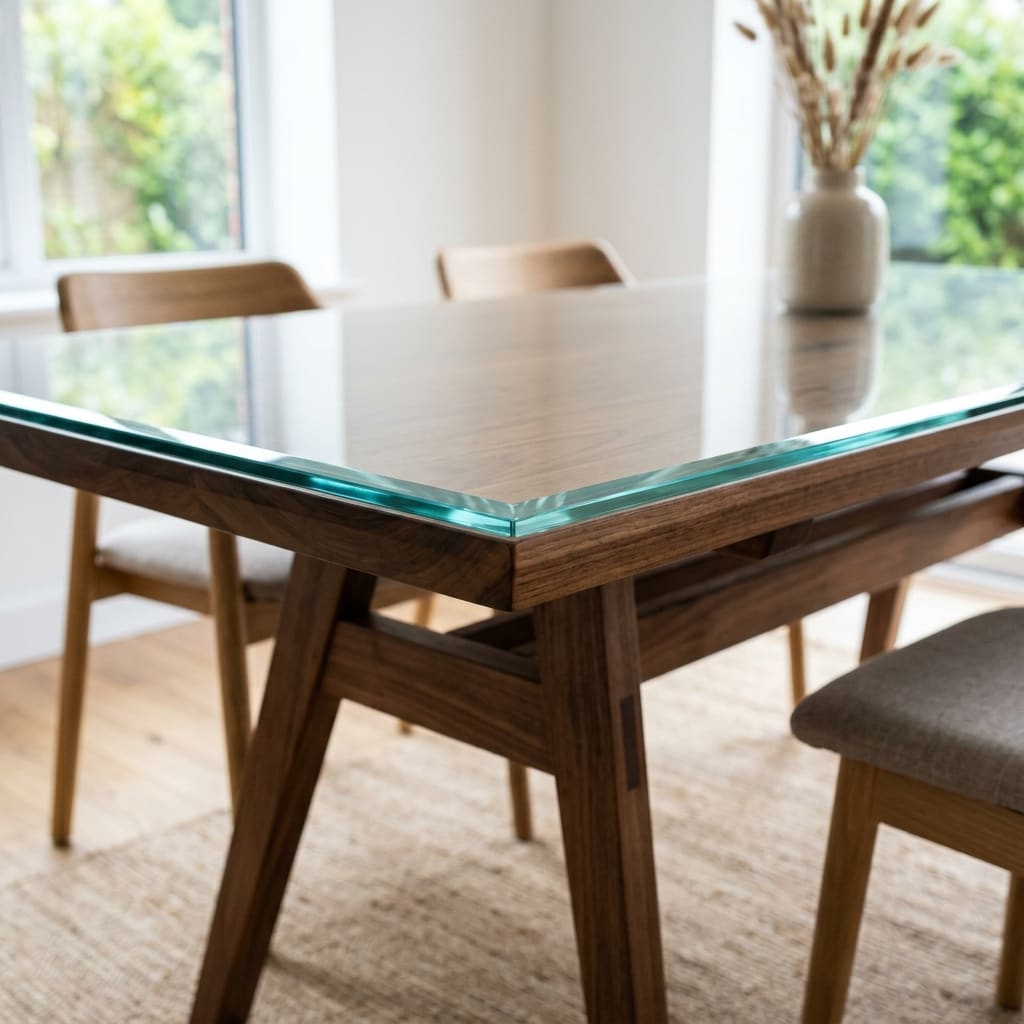
Custom-cut glass tops for dining tables, coffee tables, conference tables, and desks in any shape — rectangular, round, oval, racetrack, or traced from an irregular base. Tempered glass in 1/4", 3/8", or 1/2" thickness with flat polish, bevel, pencil, or ogee edge finishing. Protects the timber underneath while adding a polished, contemporary surface.
Glass shelving on standards, elevationTempered shelves carried on bracket pairs off wall standards, with the front edges polished.

Glass Shelving

Precision-cut shelf glass for bathroom niches, entertainment centers, bar areas, china cabinets, and retail displays. Available in 1/4", 3/8", and 1/2" thicknesses with drilled bracket holes, radius corners, and notch cuts for standard and custom bracket hardware. Clear, frosted, and tinted options.

Frameless office partition, head and base detailA tempered panel dropped into a head track and a base track, bedded on setting blocks and held by gaskets at each channel lip.

Glass Partition

Frameless and framed glass partitions for offices, home studies, commercial interiors, and open-plan spaces requiring acoustic separation without visual closure. Tempered or laminated panels in floor-to-ceiling and partial-height configurations. Popular in DC office conversions and Northern Virginia commercial buildouts.

Cut-to-size backsplash panel with edge detailA templated piece in plan with the corner radius called out, and a magnified section showing the polished pencil edge.

Glass Backsplash

Architectural glass backsplash panels for kitchen and bathroom applications. Available in standard clear, back-painted in any color, frosted, textured, and low-iron ultra-clear. Tempered for safety in cooking zones. Creates a seamless, grout-free surface that is dramatically easier to clean than tile and makes a striking design statement.

Standoff-mounted glass guard, sectionA laminated glass panel carried on two standoff barrels bolted through to the slab edge, with the guard height set from the walking surface.42 in.

Glass Railing

Frameless and semi-frameless glass railing panels for staircases, balconies, decks, and mezzanine levels. Laminated tempered glass for code-compliant safety — holds together on impact rather than shattering. Point-fixed and channel-mounted systems. Dramatically opens sightlines compared to wood or metal balusters in contemporary DC and Northern Virginia homes.

Laminated glass canopy, sectionOverhead glazing is laminated so the interlayer retains the fragments if a lite is broken.PVB INTERLAYERFRAGMENTS HELD

Glass Canopy

Custom architectural glass canopies and overhangs for building entrances, storefronts, and outdoor covered areas. Laminated glass with silicone structural bonding and stainless hardware for weather exposure. Popular in commercial mixed-use developments throughout the DMV and at high-end residential entries in communities like Bethesda, McLean, and Capitol Hill.

Every hour costs you more

Why you need custom glass fabrication now

Delaying repair doesn't save money — it multiplies the damage.

01

Off-the-Shelf Glass Never Fits Your Project Precisely

Stock glass comes in limited dimensions that rarely match custom projects. A tabletop even a quarter inch off looks wrong; shelf glass that does not match the opening wastes space. Professional fabrication delivers precision that eliminates these compromises.

02

Wrong Glass Type Leads to Unsafe or Underperforming Results

Standard annealed glass works for picture frames but is dangerous for tabletops, railings, and architectural panels. Tempered glass is required for impact-risk applications; laminated glass is required for overhead glazing and many railing applications. We guide every client to the correct specification before fabrication.

03

DIY Cutting and Fabrication Produces Unsafe, Ugly Results

Glass cutting is a leading cause of hand injuries in DIY projects. Curved cuts require industrial equipment, raw edges are razor sharp, and holes must be drilled with diamond-core bits under water cooling to prevent cracking. Professional fabrication is the only way to achieve the safety and finish quality a glass project demands.

What You Get

Custom Glass Fabrication Benefits

Every service comes with our commitment to quality, speed, and transparency.

01

Any Size & Shape

From a few inches for display inserts to over 8 feet for conference tables. Rectangular, circular, oval, custom curves, and irregular shapes from templates or CAD drawings.

02

Multiple Glass Types

Clear, tempered, laminated, frosted, back-painted, tinted, low-iron, and pattern glass. We help you choose based on structural requirements, aesthetics, and code compliance.

03

Full Edge Finishing Menu

Flat polished, beveled, pencil, ogee, waterfall, and seamed profiles. Edge finishing is both a safety requirement and a design element.

04

In-House Tempering

All cutting, drilling, and finishing must happen before tempering. In-house tempering means no third-party delays and full quality control.

05

Hole Drilling & Cutouts

Diamond-core drilling for hardware, cable pass-through, and faucet cutouts. All holes completed before tempering with placement calculated to preserve structural integrity.

06

Delivery & Installation

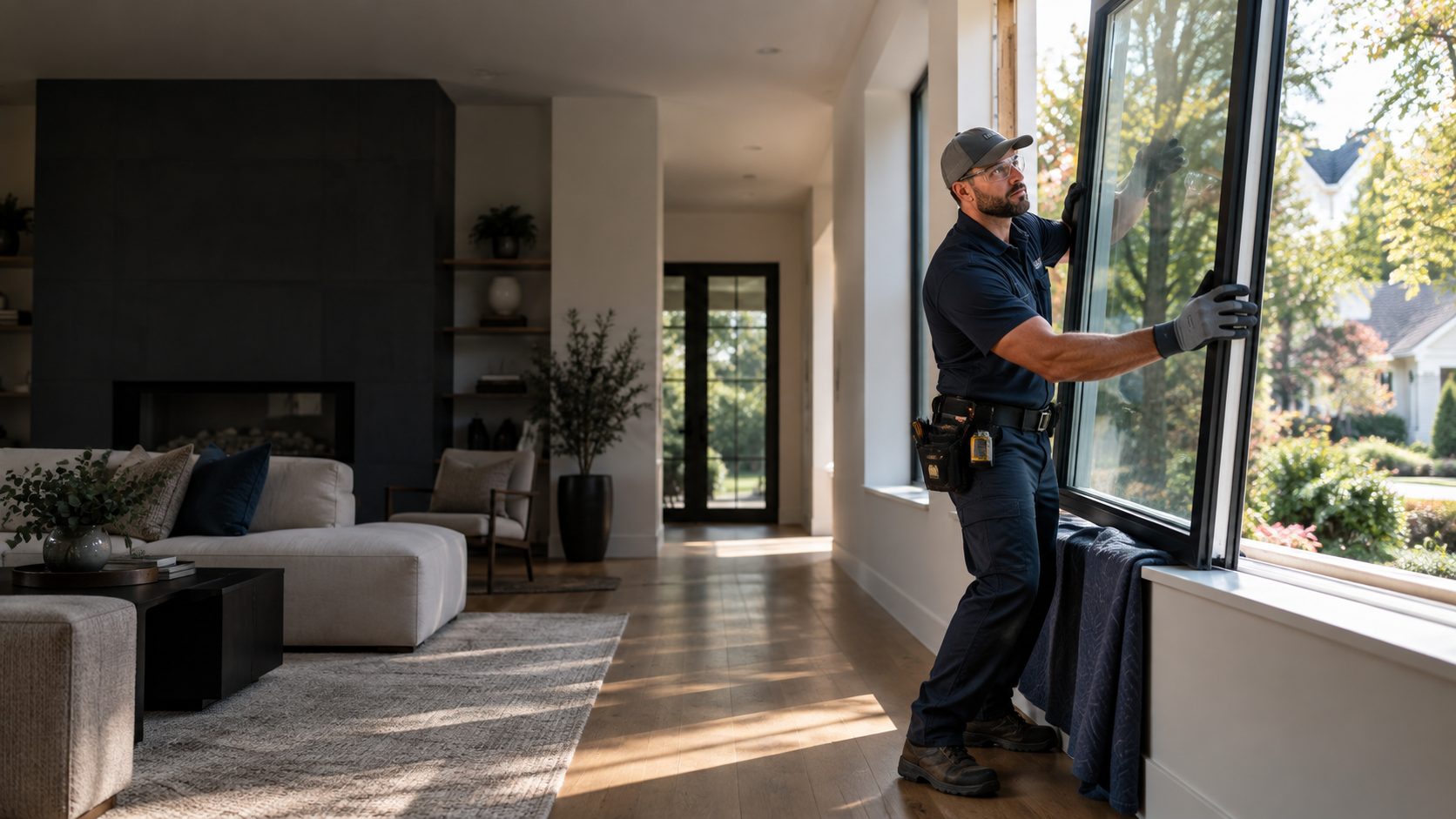
Professional packaging and delivery on padded glass racks. We also install — placing on furniture, mounting on walls, or integrating with hardware systems.

Custom Glass Fabrication on a job site in the DMV
Cut-to-size glass with edge detailA templated piece in plan with the corner radius called out, and a magnified section showing the polished pencil edge.PENCIL POLISHTEMPLATED
Cut-to-size — plan and edge
The detail behind it

Specified before it is ordered

Every custom glass fabrication job starts with the assembly, not the pane. What the frame is, how the glass is captured, which code applies to that opening — those decide the specification, and the specification decides whether the repair lasts.

  • Safety glazing specified to the code for the opening
  • Same-day service for most jobs
  • Free photo estimates with no obligation
  • Bonded and insured, residential and commercial

Get a Free Custom Glass Fabrication Estimate

Upload photos of the glass and we will come back with an itemized estimate. No home visit needed, no obligation.

Upload Photos Now
Our Process

How Custom Glass Fabrication Works

A simple, transparent process from first contact to completed job.

01

Specify

Share dimensions, glass type, thickness, edge profile, and cutout requirements. For custom shapes, provide a template, CAD file, or we trace the outline on-site.

02

Confirm the make-up

We come back with the full specification in writing — glass type, thickness, edge profile, and every hole and notch located. Nothing is cut until you have agreed it, because once a piece is toughened none of it can be revisited.

03

Fabricate

Precision cutting, diamond-core drilling, edge polishing, and tempering if required. Every piece inspected against your specifications before leaving the shop.

04

Deliver & Install

Professional delivery on padded racks. Installation includes placement, mounting, and hardware integration as needed.

The Transformation

Before & After Custom Glass Fabrication

Before

Unfinished project or damaged glass piece that does not fit standard sizes or shapes.

After

Precision-cut custom glass piece that fits perfectly and elevates your space.

Warning Signs

Signs You Need Custom Glass Fabrication

You need a glass piece in a specific size or shape not available off the shelf.
Your existing glass tabletop, shelf, or display glass is cracked or broken and needs an exact-match replacement.
You want a back-painted glass backsplash instead of tile for a grout-free, easy-clean surface.
Your renovation includes a glass railing system that needs code-compliant laminated tempered panels.
You want a glass partition wall to separate zones without closing off light.
Your contractor or designer has specified custom glass with dimensions, cutouts, or edge profiles not available in stock.
You want to protect a valuable table with a custom-fit glass top matching its exact shape.
You need multiple identical glass pieces for a commercial buildout or multi-unit project.
You own a historic home and need replacement glass in non-standard sizes matching original wavy, seeded, or textured character.
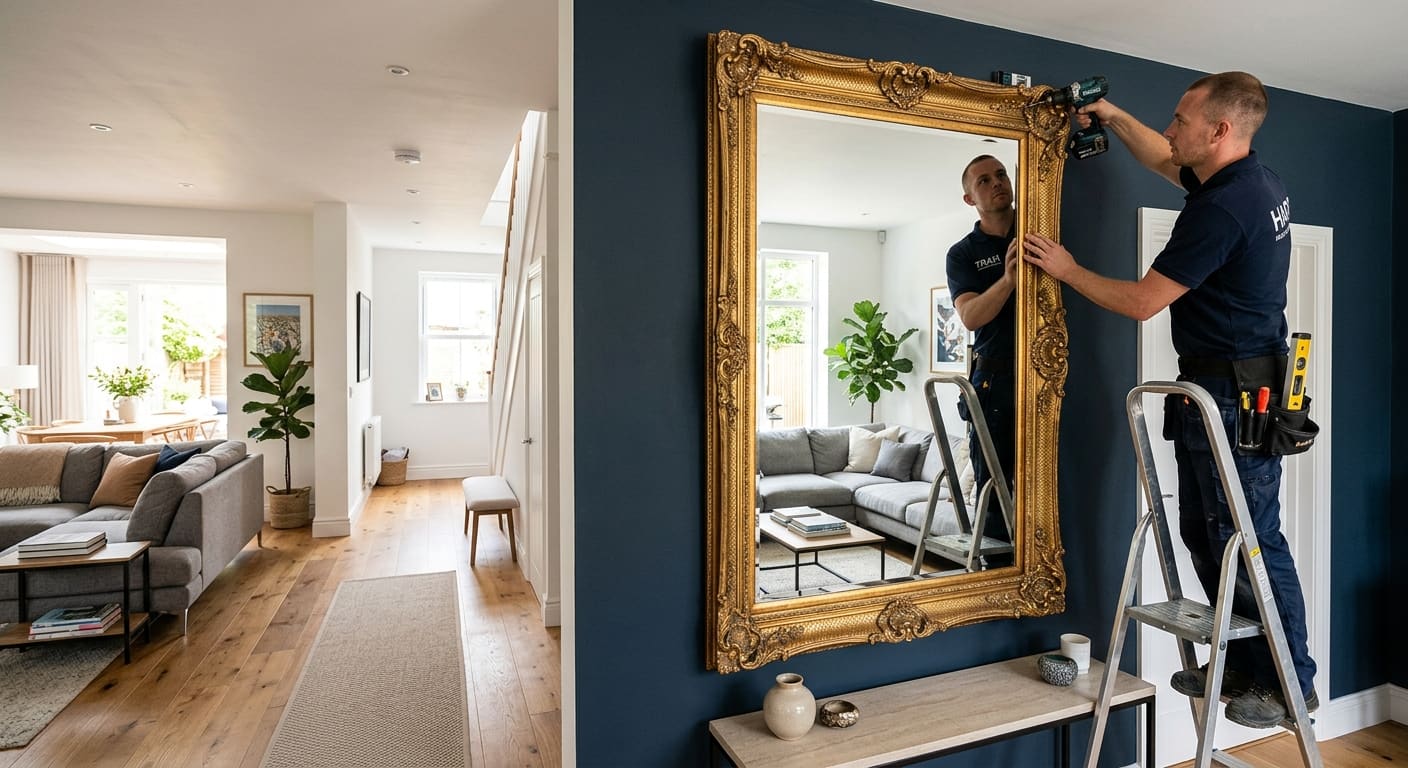
You need a custom mirror cut to a specific shape with beveled edges.

Glass Thickness Guide for Custom Applications

Tabletops: 3/8" tempered for most applications, 1/2" for large tables over 48" and high-impact surfaces, 1/4" for small display tops. Shelving: 1/4" for loads up to 15 lbs, 3/8" up to 30 lbs, 1/2" for heavy objects and spans over 36". Partitions and railings: 1/2" or thicker tempered or laminated per building code. Backsplashes: 1/4" tempered. Canopies and overhead glazing: laminated glass required by code to hold together if cracked. We verify compliance for every structural application.

Tempered vs. Laminated Glass for Custom Projects

Tempered glass is heated to 1,200°F and rapidly cooled, making it four to five times stronger than standard glass. It breaks into small blunt pieces rather than shards — the standard for tabletops, shower doors, and railing panels. Laminated glass bonds two or more layers with a PVB interlayer that holds broken pieces together. It is mandatory for overhead glazing, skylights, canopies, and railings where a fallen panel would be hazardous. For maximum safety, laminated tempered glass combines the strength of tempering with the post-breakage integrity of lamination. We fabricate both types in-house.

Back-Painted Glass Backsplashes: A Grout-Free Alternative

Back-painted glass offers a seamless surface dramatically easier to clean than tile. The back of a tempered panel is painted in any color, then mounted paint-side-to-wall so the clear glass face is what you see. The result is a rich color with a glass sheen that tile or painted drywall cannot match. Installation uses silicone adhesive with strategic spacing for ventilation. We fabricate panels with precision-cut outlets, switch plates, and range hood cutouts.

Custom Glass Railings for Staircases and Balconies

Glass railings eliminate the visual barrier of wood or metal balusters while meeting building code safety requirements. Replacing balusters with frameless panels opens sightlines and increases the sense of space — especially effective in townhouses and row homes where staircases feel narrow. We fabricate panels in laminated tempered glass using point-fixed standoff or channel-mounted systems. For exterior railings, we use UV-stable interlayers and marine-grade stainless hardware that resists humidity and freeze-thaw corrosion. We verify code compliance with your contractor before fabrication.

Precision Measuring for Custom Glass

A panel off by 1/8" may not fit. For tabletops, we trace the base or measure at multiple points to account for out-of-square furniture. Shelf glass gets measured at multiple locations since cabinet interiors are rarely parallel. Partitions and railings use laser level and digital measuring for accuracy hand tools cannot match. Backsplash panels with cutouts get a detailed template mapping every penetration relative to panel edges. Precise measurement is what stops a piece having to be made twice.

Custom Glass for Home Renovations

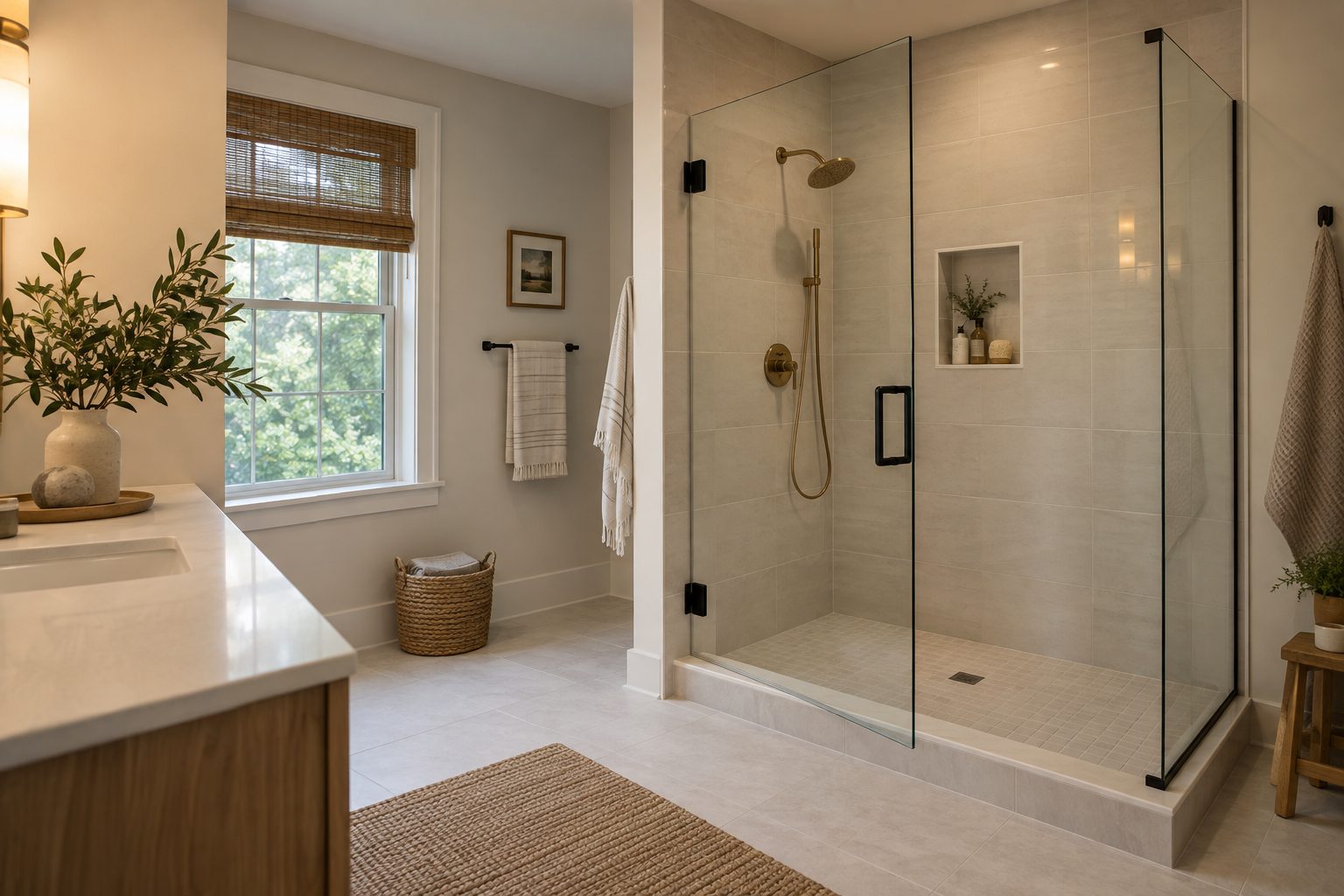
Kitchen remodels use back-painted glass backsplashes for a grout-free surface in any color. Bathroom upgrades incorporate custom glass shelving in shower niches and frameless enclosures. Built-in shelving benefits from precision-cut glass shelves in clear, frosted, or tinted finishes. Display cases use custom glass with UV-protective coatings. Dining and coffee tables need custom tops cut to the exact outline of the base. We work with homeowners, designers, contractors, and cabinet makers across the DMV.

Custom Glass for Historic DMV Homes

Historic row houses and townhomes often have windows, transoms, and sidelights in non-standard dimensions. Victorian-era homes may have original wavy glass with optical distortions that homeowners want replicated. We source restoration glass with authentic wave patterns and seed bubbles matching 19th and early 20th-century glazing. Textured and patterned glass — reeded, fluted, rain, hammered — was common in Craftsman bungalows and period homes. For properties in designated historic districts, our glass meets Historic Preservation Review Board and local commission requirements.

Commercial Custom Glass — Offices, Restaurants & Retail

Offices use frameless glass partitions for private rooms that maintain an open, light-filled aesthetic. Reception desks with frosted logo panels create polished first impressions. Restaurants use custom glass for display cases, sneeze guards, bar tops, and wine storage enclosures. Retail stores use glass shelving and countertop cases for clean product presentation. We fabricate glass with sandblasted logos and frosted privacy bands — permanent alternatives to vinyl graphics. Switchable privacy glass lets conference rooms toggle between clear and opaque. Our commercial team manages multi-piece projects from template to installation.

The Custom Glass Fabrication Process

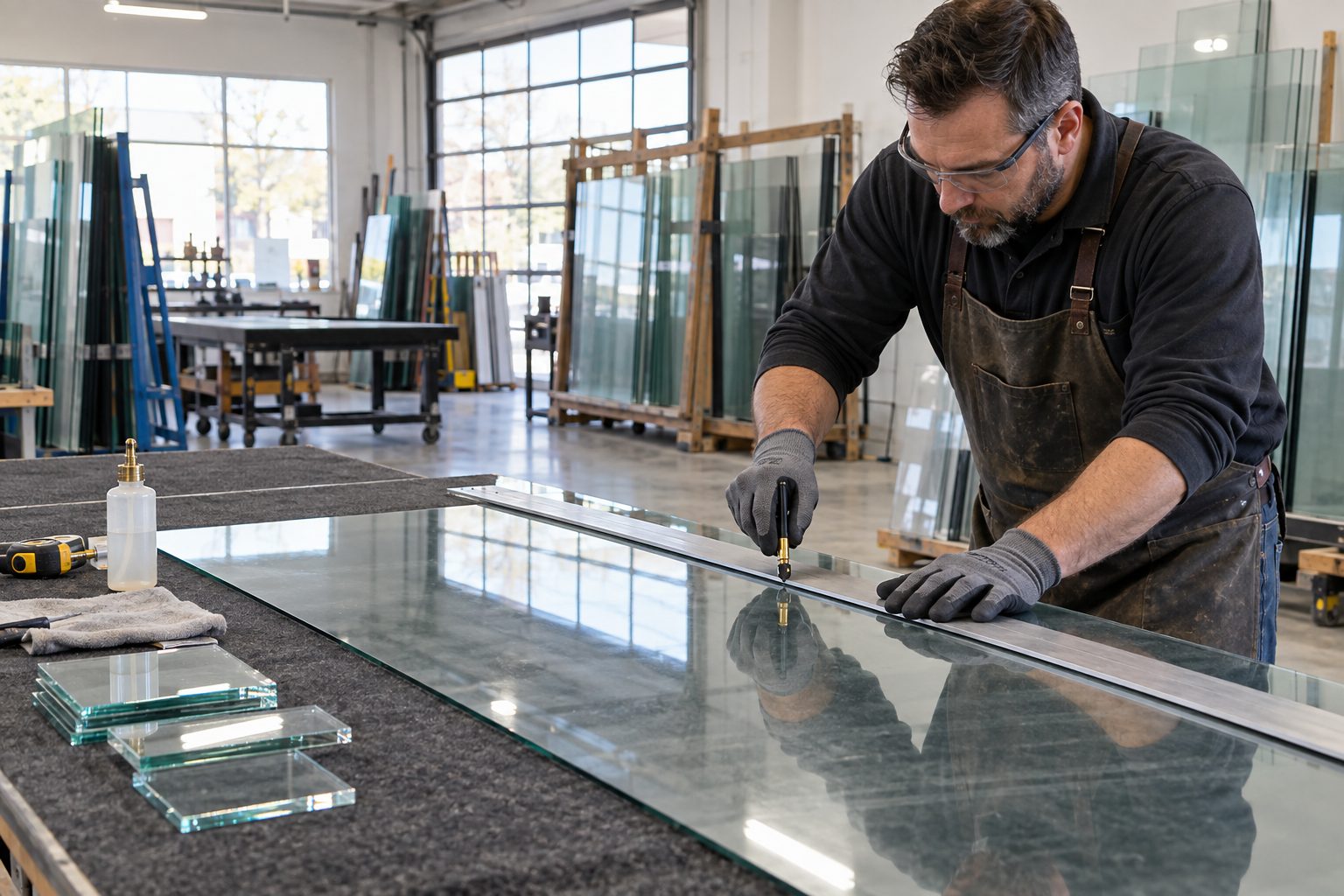
Templating: we trace the exact shape on-site with rigid material, or take precise measurements at multiple points for rectangular pieces. Cutting: the template transfers to our cutting table where glass is scored along the outline and broken with controlled pressure. Edge finishing: flat polish for tabletops, beveled edges that catch light on mirrors, pencil polish for shelving, or ogee S-curves for traditional looks. Drilling: diamond-core bits under water cooling prevent thermal shock — this must happen before tempering. Tempering: the finished piece is heated to 1,200°F and rapidly cooled, creating the stress pattern that gives tempered glass its strength. Every piece is inspected against specifications before packaging.

For Every Property

Residential & Commercial Custom Glass Fabrication

Residential custom glass fabrication

Residential Custom Glass Fabrication

Professional service for homes, condos, and townhomes across the DMV.

Commercial custom glass fabrication

Commercial Custom Glass Fabrication

Serving offices, retail, restaurants, and buildings of any scale.

Common Questions

Custom Glass Fabrication FAQ

We fabricate glass tabletops, shelving, office and residential partitions, kitchen and bathroom backsplashes, stair and balcony railings, architectural canopies, display cases, and virtually any other flat glass application. We work with clear, tempered, laminated, frosted, back-painted, tinted, low-iron, and pattern glass in thicknesses from 3/32" to 3/4". If you can describe it, we can likely fabricate it.

Work we stand behind

See the work, then judge it

Virginia Glass Windows is locally owned and has been doing residential and commercial glass across Northern Virginia, DC and Maryland for over a decade. Bonded and insured, on call around the clock.

Shop drawings

On the bench, and on paper

A live model of a sheet being scored and edged, then four plates: the six edge profiles in section, the rules that decide where a hole or a notch may go, when a shape is measured and when it has to be templated, and how a curve is set out.

A score running across the sheet, an arris being worked, and a hole and a notch already cut — drag to turn the bench, or use the arrow keys.

CG-01 · Edge profiles

Scale Enlarged

EDGE PROFILES — SECTIONSeamedArris knocked off only. For glass going into a channel or a frame where the edge never shows.Flat polishedGround square and polished bright. The default for a table top or a shelf.PencilRounded to a soft radius. Kinder to the hand on a shelf edge or a bar top.BevelA shallow angled face, usually about an inch. Refracts, so the border catches colour.OgeeAn S-curve worked with a shaped wheel. Traditional, and heavy in the hand.WaterfallA generous quarter-round. Reads as a thick, soft edge on a heavy top.Every profile above is worked before toughening. Afterwards the piece cannot be cut, drilled or ground at all.

CG-02 · Holes and notches — shop rules

Scale NTS

HOLES AND NOTCHES — SHOP RULES (t = glass thickness)≥ 2t from the edge≥ 2t between holesedge clearance both waystoo near a corner —corners want 6t or moreinternal corner radiused,never left squareWorked, at 3/8 incht = 0.375 inedge to hole ≥ 0.75 inhole to hole ≥ 0.75 incorner to hole ≥ 2.25 inhole diameter ≥ 0.38 intighter than this and the piecetends to fail in the furnaceSequence is not negotiable.Cut, then drill, then notch, then work the edges — and only then toughen. A toughened panel is under locked-instress from face to face: touch it with a wheel or a drill afterwards and the whole piece dices on the bench.Which is why hardware positions are settled on paper before anything is cut.

CG-03 · Measured or templated

Scale Diagrammatic

MEASURED — STRAIGHT SIDESThree widths, three heights, both diagonals.The widths and heights find a taper. The diagonals finda rack — if they differ, the opening is not square, and theglass is cut to the smallest of each with a working clearance.TEMPLATED — ANYTHING ELSETraced in rigid board, off the thing itself.Registration marks so the template cannot be laid on thecutting table the wrong way round, and the board goes tothe bench with the order rather than a sketch of it.If the shape has a curve that is not a single radius, no set of measurements will describe it.Arches, kidney tops, traced furniture bases and settled masonry openings are all templated. It is not caution;it is the only method that works.

CG-04 · Setting out a shape

Scale NTS

SETTING OUTRadius cornerRCentre sits in by R from both edges.Mark both tangent points and the arcfollows on its own.Arch headrisespanSpan and rise fix the radius completely,so a true arc can be cut from two numbers.An ellipse cannot. That gets templated.Circle with fixingsdiameterDiameter, plus a pitch circle and astarting angle for the fixings. Holes go inbefore toughening — settled first.Give the shop the construction, not the outline.A radius, a span and rise, a diameter and a pitch circle are things a cutting table can be set to. A traced linewith no construction behind it is a template — and then we want the template itself.

Four things worth knowing before you call

Two about the order the work happens in, two about describing the piece you want.

Sequence

Everything happens before the furnace

Cutting, drilling, notching and edge work are all done while the glass is still annealed. Toughening locks a compression skin onto both faces with tension trapped in the middle, and any cut into that afterwards releases the lot — the panel dices on the bench. So a hardware position that turns up late is not an adjustment; it is a new piece.

Thickness

Thickness is a span question before it is a taste question

The published unsupported spans are what set it: 1/4 inch to about 48 in, 3/8 inch to about 78 in, 1/2 inch to about 96 in. Weight follows from the same table — 3/8 inch runs 4.87 pounds a square foot — and weight is what decides the crew, the access and the fixings.

Shape

A curve without a single radius has to be templated

Span and rise describe any true arc completely, and a cutting table can be set from those two numbers. An ellipse, a kidney, a traced furniture base or a settled masonry opening has curvature that changes along its length, and no set of measurements will capture it. Those come off the object in rigid board, with registration marks so the template cannot go on the table the wrong way round.

Edges

The edge is a specification, not a finish

A seamed edge is for glass disappearing into a channel. A flat polish is the default where the edge shows. A pencil is softer to the hand on a shelf or a bar top, a bevel refracts and throws colour, and an ogee or a waterfall reads as a much heavier piece than it is. Pick it at the same time as the thickness — it changes the finished dimension and it cannot be changed later.

Most custom work starts as something else

A shelf for a niche, a mirror for an awkward wall, a replacement lite for an opening that has moved since it was built. If the piece belongs to one of those, the page for it will get you a better answer faster.

Send the construction, and the hardware, together.

Sizes, edge profile, thickness and every hole in one go. Once a piece is toughened, none of it can be revisited.

(703) 470-7867

Ready for Custom Glass Fabrication?

Upload photos for a free estimate, or call for same-day service. Bonded and insured across DC, Maryland and Virginia.