
After-Hours Commercial Glass Repair in the DMV: What Businesses Need to Know
A broken storefront at 2am on a Tuesday is a different problem than a broken residential window — the liability exposure, security implications, and business continuity stakes are all higher. Here is how commercial glass emergencies work in the DMV.
Mike Reynolds
Lead Glass Technician & Owner
In This Article
The After-Hours Commercial Glass Reality
Commercial glass failures do not follow business hours. Vandalism incidents in DC spike late Friday and Saturday nights. Smash-and-grab incidents at retail locations along 14th Street, H Street, Connecticut Avenue, and Bethesda's Elm Street happen at any hour. Vehicle impacts into storefronts — accidents, parking lot mishaps, and deliberate vehicle-as-weapon incidents — occur around the clock. A broken storefront window at 11pm on a Thursday night requires a response that protects the business, its inventory, and its employees and customers from the following morning onward.
The distinction between after-hours commercial glass and residential emergency glass is the scale and consequence. A residential broken window is a comfort and security concern. A broken commercial storefront is an immediate liability issue — if a customer or passerby enters through the opening and is injured, the property owner has a duty-of-care exposure. It is a security issue — in an urban commercial corridor, an unsecured opening invites opportunistic theft from inside the business. And it is a business continuity issue — if the storefront cannot open in the morning, the business cannot operate.
Immediate Response: Board-Up Protocol
The first response to any commercial glass failure after hours is board-up — securing the opening with plywood or polycarbonate panels sufficient to prevent entry and protect the interior from weather. Professional commercial board-up is not the same as nailing a piece of plywood over a hole; it involves measuring the opening, cutting panels to fit, installing them securely with fasteners that anchor to the frame rather than just covering the opening, and sealing the perimeter against weather infiltration.
For commercial storefronts with aluminum frame systems — the standard commercial construction throughout DC, Bethesda, Tysons, Rockville, and the Virginia commercial corridors — board-up involves working within the existing frame system. If the frame is intact, a well-fitted plywood or polycarbonate board can be set into the frame and secured in a way that does not require cutting or drilling the frame, preserving it for permanent glass reinstallation. If the frame is damaged, the board-up installation needs to bridge damaged frame sections and maintain a weather-tight installation.
For businesses with multiple-story storefront glazing or high-end retail environments, transparent polycarbonate board-up panels are available at higher cost than plywood. These allow the business to remain visually open to street traffic while the permanent glass replacement is arranged — relevant for retailers, restaurants, and service businesses where street presence and visual merchandising matter.
Documentation for Insurance Claims
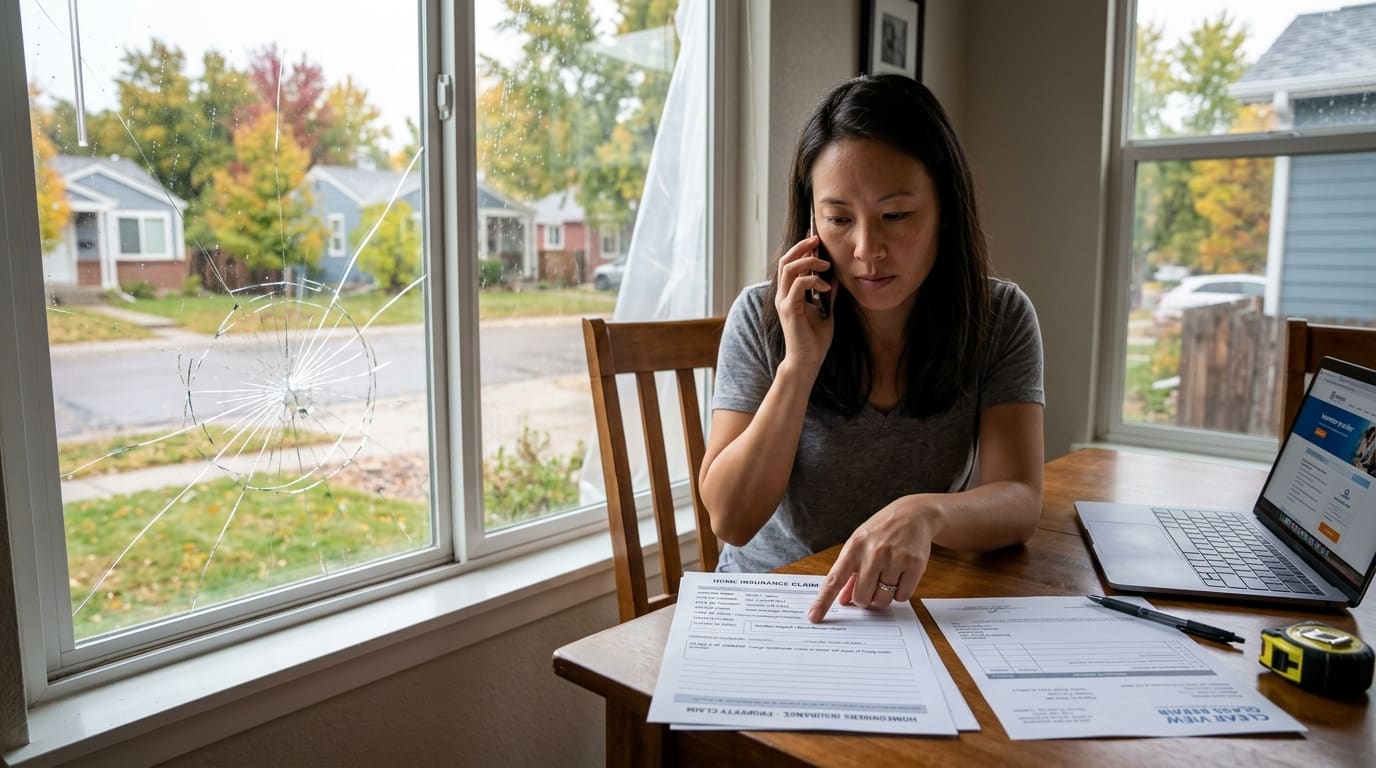
Commercial glass damage is almost universally covered under commercial property insurance, subject to deductibles and policy terms. Proper documentation at the time of incident is essential for the insurance claim process. Before board-up begins — or at minimum before permanent replacement — the damage should be photographed thoroughly: wide shots of the full opening, close-ups of the frame damage and glass debris pattern, photos from the interior showing any interior damage or theft evidence, and any surveillance footage that captures the incident.
For vandalism and smash-and-grab incidents, a police report is typically required by the insurer before a claim is processed. In DC, this means a Metropolitan Police Department report; in Maryland, the relevant county or municipal police department; in Virginia, similarly. Filing the report immediately — before board-up if possible, or shortly after — is important. The responding police officer's report will include the incident time, location, and case number, which the insurance adjuster will request.
We provide written documentation of the glass type, dimensions, and frame condition as part of our commercial repair process — this documentation supports the insurance claim and ensures the replacement glass is specified appropriately for the original installation. Insurance adjusters sometimes push back on replacement specifications that exceed the original installation; having documentation that the original installation was a specific product type helps in those conversations.
Permanent Replacement Timelines
After-hours board-up is a temporary measure, typically expected to hold for 3-10 business days while permanent replacement glass is fabricated and scheduled. Commercial storefront glass — particularly for large commercial lite systems or for custom-size applications in older commercial buildings in historic DC neighborhoods — often requires custom fabrication with lead times of 5-10 business days for standard products and up to 3 weeks for large, complex, or specialty applications.
The permanent replacement process involves removing the board-up installation, inspecting and cleaning the frame system, fabricating or procuring the replacement glass to the frame opening dimensions, setting the new glass with appropriate setting blocks and glazing tape or wet seal, and applying final caulk and cleanup. For large commercial storefronts, this is typically a half-day to full-day job with a 2-3 person crew.
For properties with frequent glass incidents — corner locations in high-foot-traffic commercial corridors, businesses in areas with elevated vandalism rates — we have worked with property owners to upgrade from standard commercial glass to impact-resistant or security-glazed alternatives. These are discussed in the context of permanent replacement: the ongoing board-up and replacement costs may justify the higher upfront cost of security-enhanced glass.
Glazed Entry Systems and Storefront Frames
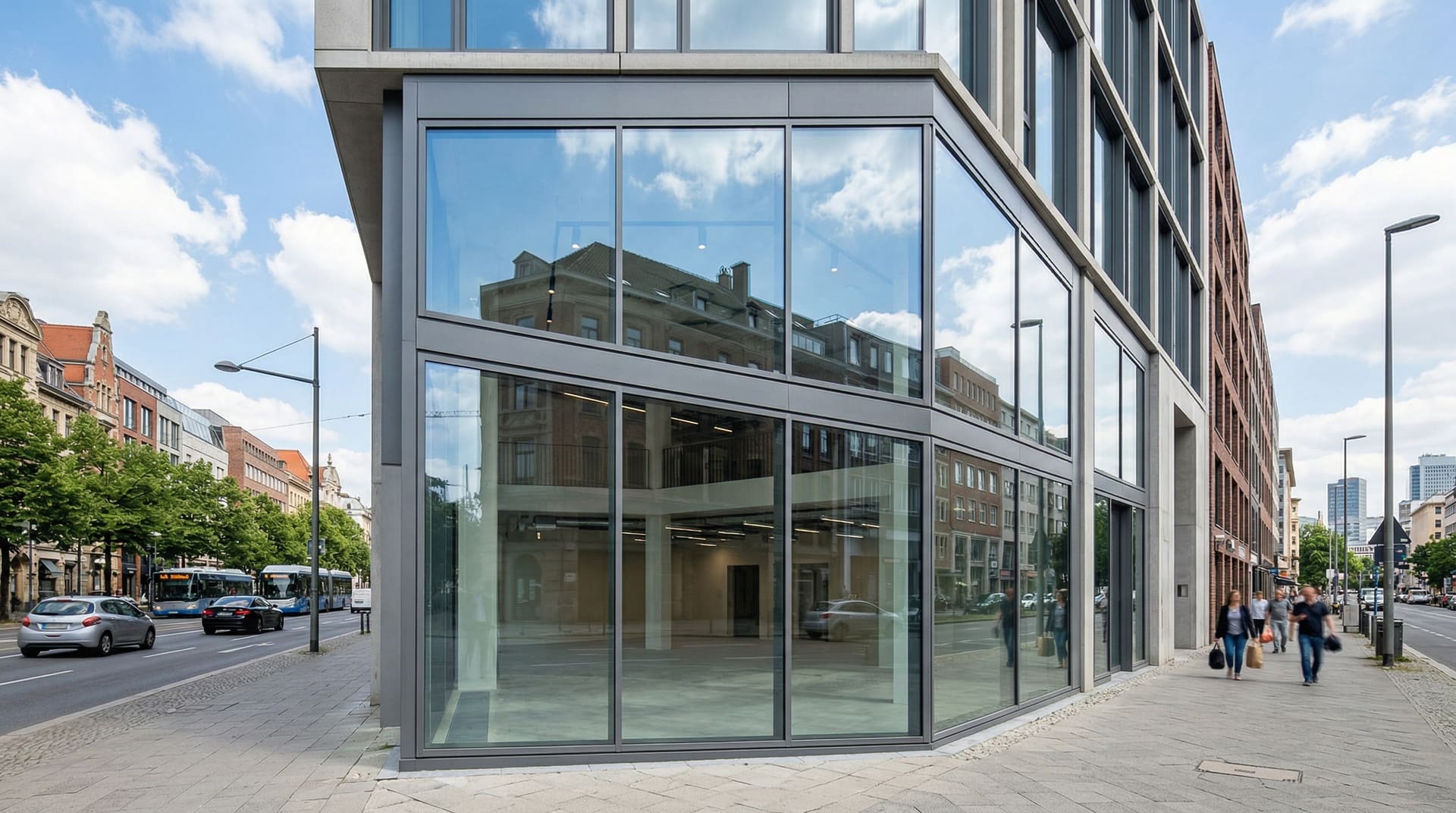
Modern commercial storefronts in the DMV typically use aluminum glazing systems from manufacturers like Kawneer, YKK AP, Oldcastle, or Tubelite. These systems have specific glass thickness requirements and glazing bead configurations that must be matched in replacement glass installation. Installing glass that does not match the original specification — wrong thickness, wrong spacer bar, incorrect glazing tape — creates a system that is either loose (potential for rattle and movement, risk of glass breakage from wind loading) or compressed (risk of glass breakage from thermal expansion).
When we work on commercial storefront glass, we identify the glazing system manufacturer and model from the frame markings or from the building's architectural specifications where available. This allows us to specify replacement glass and glazing components that match the original design intent and maintain the frame system integrity.
For DC commercial properties in historic districts — Georgetown, Downtown, Dupont Circle, Kalorama — there may be historic preservation or BZA approval requirements for storefront modifications, including glass specification changes. Upgrading from clear to tinted or reflective glass in a designated historic storefront may require review. We can advise on these requirements as part of the replacement planning process.
For after-hours commercial glass emergencies in DC, Maryland, and Northern Virginia, call (703) 470-7867 for immediate response. We provide board-up within hours of a call, permanent glass replacement within standard fabrication lead times, and insurance documentation support. Contact us online for non-emergency commercial glass assessments and quotes.
About the Author
Mike Reynolds
Lead Glass Technician & Owner
With over 15 years of experience in window and glass repair across the DC, Maryland, and Virginia area, Mike shares practical expertise to help homeowners and businesses make informed decisions about their glass repair and replacement needs.
Need Help With Your Glass?
Our experts are ready to help with any window or glass issue. Free estimates, same-day service available across DC, MD & VA.
Related Articles
Continue reading about commercial


More Commercial
View All
Explore More Resources
Helpful Guides
Common Problems
Related Pages
Our Services
24/7 Emergency
Board-Up & Glass
Licensed & Insured
DC, MD & VA
300+ Areas
DMV Coverage
Same-Day Service
When You Need It
Ready to Get Started?
Get a free estimate for any window or glass service across the DMV area.