Residential service Failed Seals Waste Energy Every Day — Schedule Your Free Diagnosis Today

Fix Foggy Windows — Restore Clarity & Efficiencyin DC, MD & VA

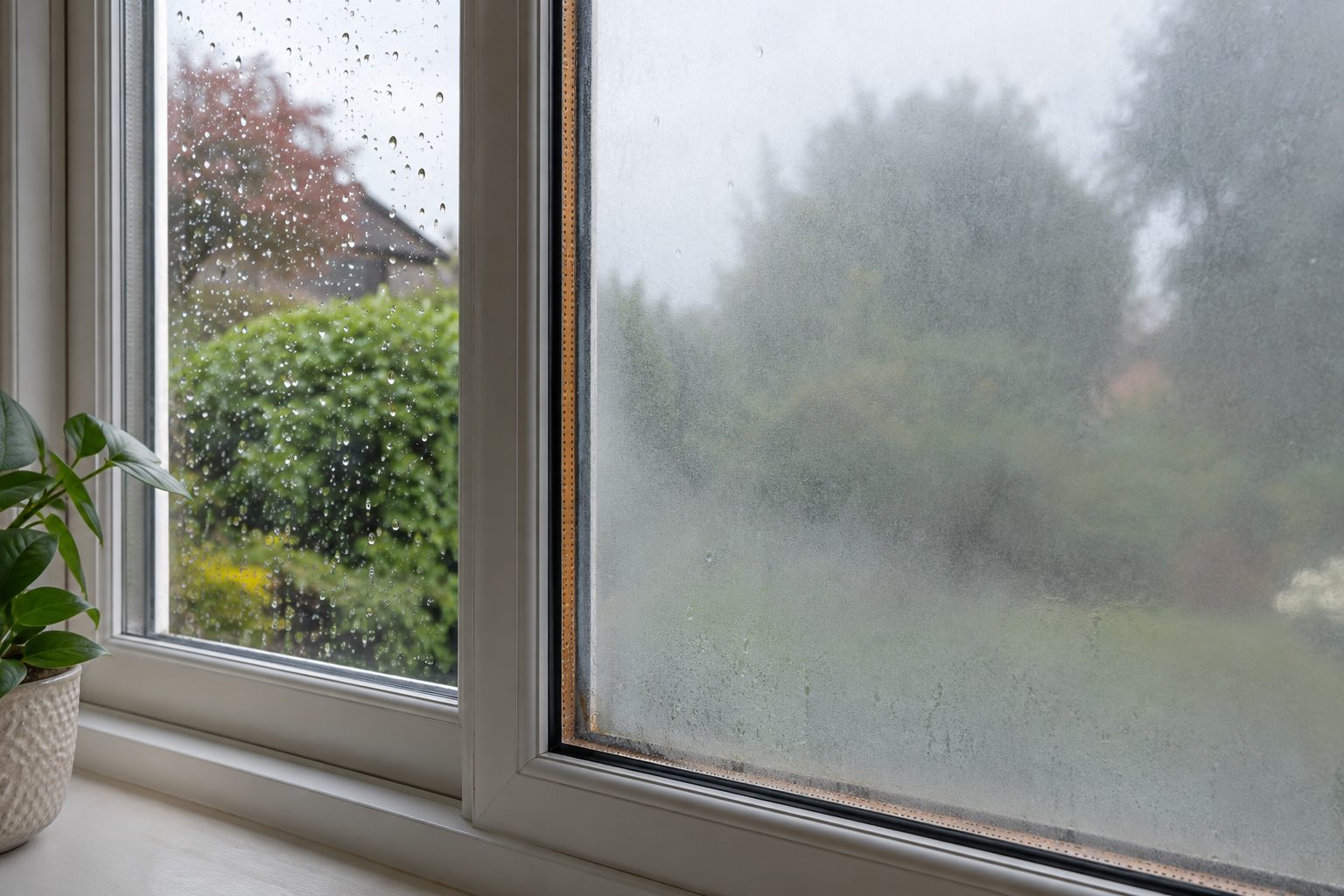
Fog, haze, or moisture between your double-pane windows means the seal has failed. The insulating gas is gone and your window is bleeding energy. We replace the glass unit without touching your frame — restoring clear views and full thermal performance. Every month you wait deepens the mineral etching on the interior surfaces and adds to your energy bill.

  • 24/7 Emergency Service
  • DC · Maryland · Virginia
  • Free photo estimates

Bonded & Insured

Residential and commercial

24/7 Emergency

Seven days a week

Free Estimates

No obligation

Locally Owned

Residential and commercial

Upfront Pricing

Never an overtime charge

Low-E

Argon-filled units

Frame Kept

IGU-only replacement

Same-Day

Diagnosis Available

Warm-Edge

Spacer options

Types we handle

Insulated Glass (IGU) Repair: what we work on

Each of these is a different assembly with its own hardware, tolerances and code path. Drawings, not stock photos.

Insulated glass unit, section through the edgeTwo lites of glass separated by an argon-filled cavity. The low-emissivity coating sits on surface two, the room side of the outboard lite. A warm-edge spacer holding desiccant is bedded on a primary seal, with a secondary seal closing the edge.1234LOW-E #2ARGONSPACERSEAL

Double-Pane IGUs

The standard insulated unit — two panes of glass separated by a spacer and sealed with a primary and secondary sealant. Accounts for the vast majority of DMV residential windows built after 1980. We stock common double-pane sizes for fast-turnaround replacement.

Triple-glazed unit, section through the edgeThree lites forming two sealed gas cavities, each with its own spacer, primary seal and desiccant, closed by a single secondary seal.2 CAVITIES2 SPACERS

Triple-Pane IGUs

Three glass panes with two sealed cavities for maximum insulation. Found in premium homes in Great Falls, McLean, Potomac, and Bethesda, as well as passive-house and high-performance construction. Requires precision measurement of overall unit thickness and two separate gas cavities.

Insulated glass unit, section through the edgeTwo lites of glass separated by an argon-filled cavity. The low-emissivity coating sits on surface two, the room side of the outboard lite. A warm-edge spacer holding desiccant is bedded on a primary seal, with a secondary seal closing the edge.1234LOW-E #2ARGONSPACERSEAL

Argon-Filled Units

Argon gas is the standard fill for quality double-pane IGUs. Argon is denser than air, conducts heat more slowly, and provides 15 to 20 percent better thermal performance than air-filled units. Most IGUs fabricated after 2000 in the DMV region use argon fill.

Krypton-filled unit, section through the edgeThree lites forming two sealed gas cavities, each with its own spacer, primary seal and desiccant, closed by a single secondary seal.2 CAVITIES2 SPACERS

Krypton-Filled Units

Krypton provides even better insulation than argon due to its higher density. Used in premium triple-pane windows and thin-profile IGUs where the cavity space is too narrow for argon to perform optimally. More expensive but delivers measurably superior R-values.

Insulated glass unit, section through the edgeTwo lites of glass separated by an argon-filled cavity. The low-emissivity coating sits on surface two, the room side of the outboard lite. A warm-edge spacer holding desiccant is bedded on a primary seal, with a secondary seal closing the edge.1234LOW-E #2ARGONSPACERSEAL

Low-E Coated Units

Low-emissivity coatings on one or both inner surfaces of the IGU dramatically reduce radiant heat transfer. Failed Low-E IGUs lose both the gas fill benefit and the coating benefit simultaneously. We replace with matching or upgraded Low-E specifications based on window orientation.

Spacer and seal failure, section through the edgeA breach in the perimeter seal lets the gas fill escape and moist air in. Once the desiccant saturates, that moisture condenses on the cavity faces and the unit fogs.FOGGINGBREACH

Spacer Failure

The spacer separating the two panes is the first line of defense for seal integrity. Metal spacers conduct cold directly to the glass edge, creating condensation rings at the perimeter. Warm-edge spacers dramatically outperform metal in thermal bridging resistance — we specify warm-edge spacers on all replacement IGUs.

Every hour costs you more

Why you need insulated glass (igu) repair now

Delaying repair doesn't save money — it multiplies the damage.

01

Invisible Energy Drain Costing You Every Month

A failed IGU seal means the insulating argon gas has escaped and been replaced by humid outdoor air. This reduces the window's insulating value by 15 to 30 percent depending on the original unit specifications. Across a house with several failed units, that shows up on every heating and cooling bill through the peak months. The damage is invisible — the window still looks like a window — but the energy loss is as real as a gap in your wall.

02

Progressive Mineral Etching That Cannot Be Undone

Once the seal fails, moisture cycles in and out of the IGU cavity with every temperature change — warm humid days draw moisture in, cooler nights cause it to condense on the inner glass surfaces. That condensed water deposits dissolved minerals — calcium, silica, iron compounds — directly onto the glass surface inside the unit where you can never reach them to clean them. Over weeks and months these deposits build up into a permanently etched hazy film. Act before mineral etching sets in and the glass may be reusable; wait too long and both panes of glass in the unit are permanently damaged and must be replaced.

03

Reduced Home Value and Pre-Sale Liability

Foggy windows are the single most visible sign of deferred home maintenance that buyers and home inspectors notice immediately. In neighbourhoods like Bethesda, Chevy Chase, Arlington and Alexandria, a buyer's inspector listing ten or fifteen foggy windows in a disclosure report hands the other side a negotiating lever on every one of them. Fixing failed IGUs before listing converts a liability into a selling point: "newly upgraded insulated glass throughout," which buyers recognize and value.

04

The Defogging Trap — Why It Never Permanently Works

Some companies offer "defogging" service where they drill small holes into the failed IGU, inject a desiccant or cleaning agent, and reseal the holes. This removes the visible moisture temporarily — sometimes for a year or two — but it is not a genuine repair. The hermetic seal is still broken, the insulating gas is still gone, and the drilled holes compromise the unit further. Virtually all defogged windows re-fog within one to three years. We never offer or recommend defogging because it delays a real solution while costing you money and creating false confidence. IGU replacement is the only permanent fix.

05

Cold Spots, Drafts, and Comfort Loss You Cannot Explain

Failed IGUs create measurable comfort problems that go beyond visible fog. When the insulating gas escapes a sealed unit, the interior glass surface temperature drops significantly closer to the outdoor temperature — during a typical DMV January night in the twenties, the inner surface of a failed IGU can be 15 to 25 degrees cooler than the inner surface of an intact unit. This cold glass surface creates a convective loop: room air near the window cools, sinks, and flows across the floor as a perceptible draft, even though the window is fully closed and sealed. Homeowners in neighborhoods like Ashburn, Gainesville, and Clarksburg — where open floor plans with large window walls are common in newer construction — often report that certain rooms feel persistently drafty or that the HVAC system cannot maintain even temperatures despite running constantly. The instinct is to blame the HVAC system, add space heaters, or crank up the thermostat, but the root cause is cold glass from failed insulated units radiating chill into the room and triggering convective air movement. Replacing the failed IGUs restores the interior glass surface temperature to its designed range, eliminates the cold-air draft cycle, and often resolves comfort complaints that homeowners have lived with for years without understanding the cause.

What You Get

Insulated Glass (IGU) Repair Benefits

Every service comes with our commitment to quality, speed, and transparency.

01

Crystal-Clear Visibility Restored

Eliminating fog, haze, and condensation between panes restores the view through your windows to factory-new clarity. The visual difference is immediate and dramatic — friends, guests, and neighbors notice instantly. No more looking through a cloudy film that progressively worsens with each winter.

02

Full Energy Performance Recovered

A new factory-sealed IGU with fresh argon gas fill and current-standard Low-E coatings restores the full thermal performance your windows were designed to deliver. Many homeowners notice measurably lower energy bills within the first full heating or cooling season after IGU replacement, particularly when upgrading from failed clear glass units to modern Low-E specifications.

03

IGU-Only Replacement Preserves Your Frame

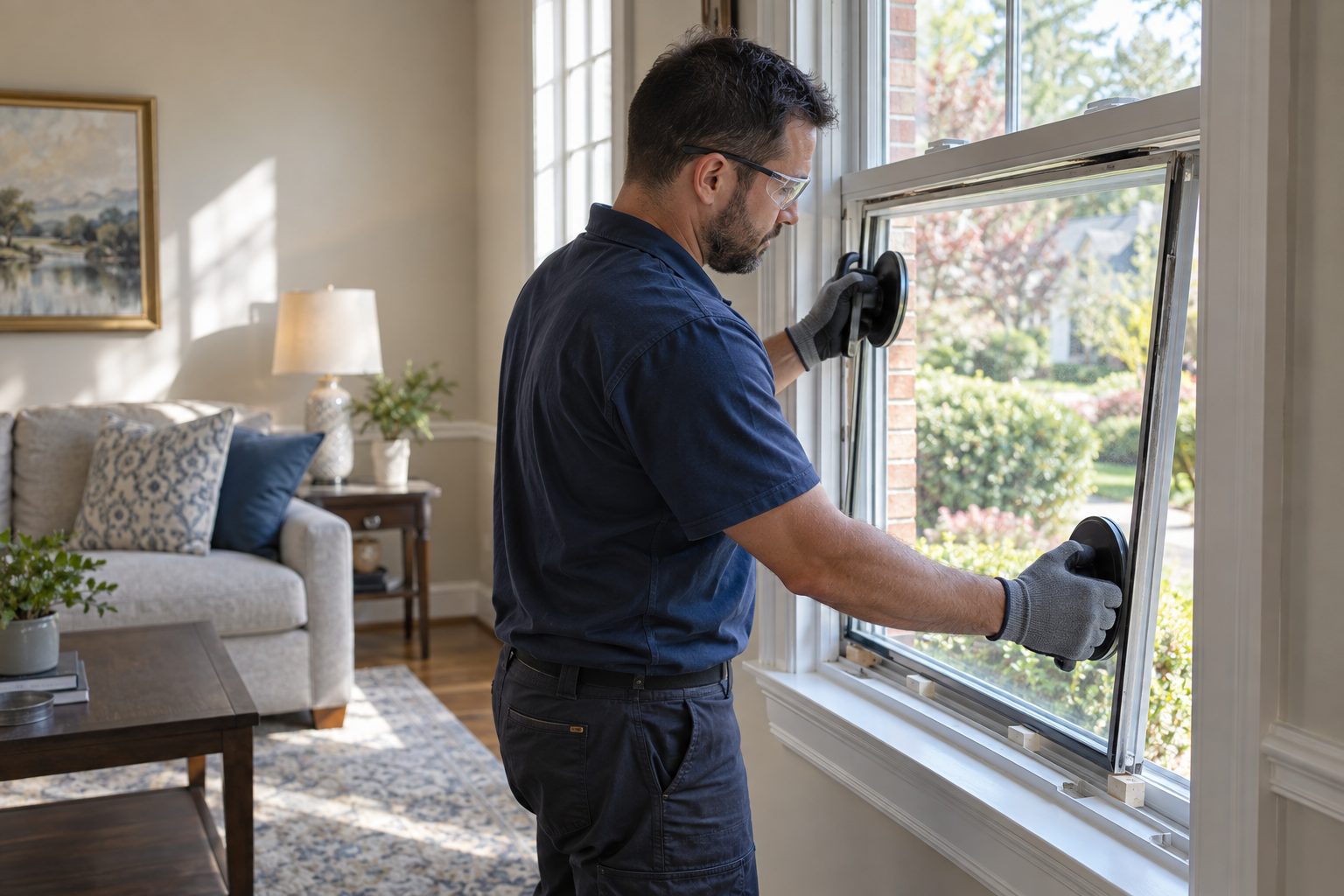
We remove and replace only the glass unit — your frames, trim, hardware, interior finishes, and window treatments remain completely untouched. No drywall repair, no repainting, no disruption to surrounding surfaces. The process is clean and contained, typically completed in under an hour per window with minimal mess and no secondary restoration costs.

04

Argon Gas Fill Standard

All replacement IGUs we install include argon gas fill as standard, restoring the thermal performance that air-filled units cannot match. Argon is dense, stable, non-toxic, and provides 15 to 20 percent better conductive heat resistance than air. Combined with Low-E coatings, argon fill gives your windows the insulating performance they were designed and marketed to provide when originally installed.

05

Low-E Upgrade Available

Replace your old clear or compromised Low-E IGUs with modern high-performance Low-E specifications matched to your window orientation. South and west-facing windows benefit from solar control coatings; north and east-facing windows benefit from passive retention coatings. Upgrading to appropriate Low-E during IGU replacement adds relatively little to the unit cost but delivers years of energy savings and UV protection.

06

Warm-Edge Spacer Technology

We specify warm-edge polymer or stainless spacers rather than aluminum spacers on all replacement IGUs. Aluminum spacers conduct heat and cold directly from the glass edge to the frame interior, creating a thermal bridge that reduces effective window R-value and causes condensation rings at the perimeter. Warm-edge spacers eliminate this bridge, improving both performance and comfort near the window perimeter.

Insulated Glass (IGU) Repair on a job site in the DMV
Insulated glass unit, section through the edgeTwo lites of glass separated by an argon-filled cavity. The low-emissivity coating sits on surface two, the room side of the outboard lite. A warm-edge spacer holding desiccant is bedded on a primary seal, with a secondary seal closing the edge.1234EXTERIORINTERIORLOW-E COATING — SURFACE 2ARGON-FILLED CAVITYWARM-EDGE SPACER + DESICCANTSECONDARY SEAL
Sealed unit — edge section
The detail behind it

Specified before it is ordered

Every insulated glass (igu) repair job starts with the assembly, not the pane. What the frame is, how the glass is captured, which code applies to that opening — those decide the specification, and the specification decides whether the repair lasts.

  • Safety glazing specified to the code for the opening
  • Same-day service for most jobs
  • Free photo estimates with no obligation
  • Bonded and insured, residential and commercial

Get a Free Insulated Glass (IGU) Repair Estimate

Upload photos of the glass and we will come back with an itemized estimate. No home visit needed, no obligation.

Upload Photos Now
Our Process

How Insulated Glass (IGU) Repair Works

A simple, transparent process from first contact to completed job.

01

Diagnosis

We confirm IGU seal failure by examining the fogging pattern, moisture distribution, and interior mineral deposits. We measure the failed unit precisely — overall thickness, glass thickness, spacer depth, spacer type, coating position — and determine the exact replacement specifications. Some apparent fogging has other causes (interior humidity, surface condensation, glass film buildup on the surface) and we differentiate these from genuine IGU failure to avoid unnecessary replacement.

02

IGU Fabrication

Your replacement insulated glass unit is custom-fabricated to your exact specifications: glass type, Low-E coating position and specification, spacer material and depth, gas fill type, and overall unit dimensions. We specify warm-edge spacers as standard and recommend the appropriate Low-E coating based on your window's orientation and exposure. Custom IGUs typically take 3 to 5 business days to fabricate from a supplier certified to IGMA standards.

03

Expert Installation

Our technician removes the failed IGU cleanly from your frame, thoroughly cleans the frame channel, removes all traces of old glazing or sealant, and installs the new unit with frame-appropriate bedding and perimeter sealant. Proper installation technique — particularly the edge sealant application — is critical for long-term seal integrity. We follow manufacturer-specified procedures for every unit to ensure the warranty is valid and the installation lasts.

04

Seal Verification & Warranty

We inspect every edge of the installed unit for proper seating and sealant coverage, verify the glass is clear with no defects or handling marks, and confirm the window operates smoothly. You receive written warranty documentation before we leave. Any adjacent windows that show early signs of seal failure are flagged so you can plan ahead rather than face an unplanned emergency repair.

The Transformation

Before & After Insulated Glass (IGU) Repair

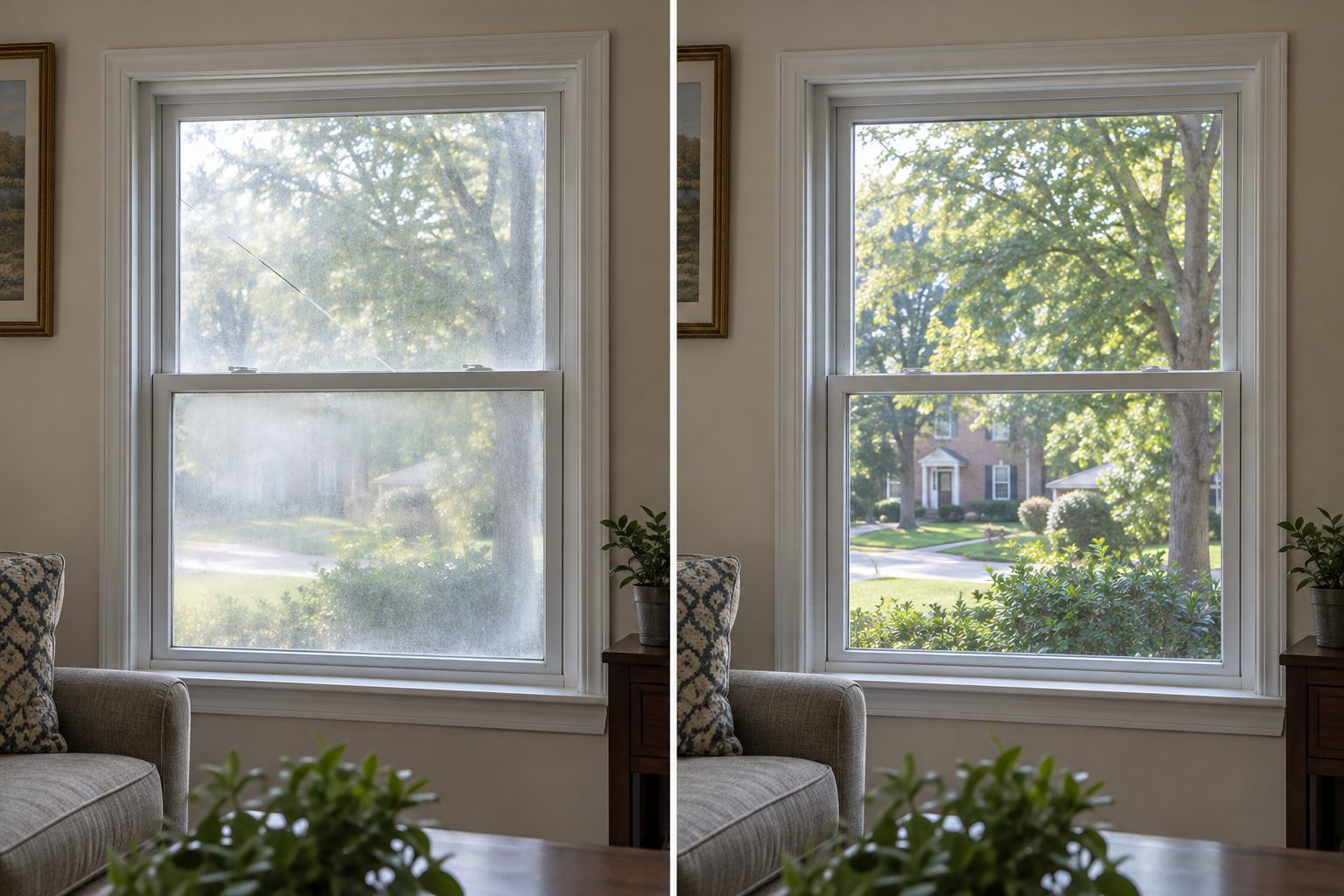
The same double-hung window before and after: a fogged, cracked sealed unit on the left, clear new glass on the right

Before

Foggy, hazy windows with visible condensation between panes destroying your view and efficiency.

After

Perfectly sealed IGU with restored clarity, full insulation, and eliminated moisture.

Warning Signs

Signs You Need Insulated Glass (IGU) Repair

Fog, haze, or milky condensation visible between the two panes that cannot be wiped away from either the inside or outside surface — the definitive sign of IGU seal failure.
Condensation that appears in the morning on cold days or when sunlight directly heats the glass and then partially clears as the glass warms — early-stage failure before full saturation.
White, gray, or crystalline mineral deposits on the interior glass surfaces creating a permanently cloudy appearance even when no active condensation is present — indicates advanced failure with mineral etching.
A noticeable increase in energy bills during summer cooling or winter heating months without changes in usage patterns, suggesting reduced insulating performance from one or more failed units.
Cold drafts near windows during winter even when fully closed — not from the glass itself but from the thermal bridging effect of a metal spacer conducting cold from the exterior glass to the interior.
Rooms with many south or west-facing windows becoming noticeably harder to cool in summer — Low-E coating loss from failed units increases solar heat gain significantly.
Water droplets or active streaking visible between the panes during periods of high humidity or rapid temperature changes — the unit is in active failure mode.
Glass that appears bowed or slightly warped when viewed from outside — atmospheric pressure acting on the interior of a unit that has lost gas fill can deform the panes slightly.
A ring of condensation or mineral deposits around the perimeter of the pane matching the spacer profile — characteristic of warm-edge spacer saturation and edge-seal failure.
Windows more than 15 to 20 years old in a home where even one or two units have failed — windows fabricated at the same time from the same materials tend to fail within a few years of each other.
A significant temperature difference felt when placing your hand near the center of a window versus near the edge — failed IGUs lose their uniform insulating barrier, creating cold spots that are easy to detect by touch during winter months in the DMV.
Increased outside noise penetrating through windows that previously seemed quiet — the insulating gas fill in a functioning IGU provides measurable sound dampening, and once the gas escapes through a failed seal the window transmits noticeably more traffic, aircraft, and neighborhood noise, particularly evident near Route 7, I-66, I-270, and Reagan National flight paths.
Visible distortion or a slight "oil slick" rainbow effect when viewing through the glass at an angle — this indicates that the Low-E coating on the interior glass surface is degrading due to prolonged moisture exposure, a sign that the seal has been compromised long enough for the coating itself to break down.
Your HVAC system running longer cycles or failing to maintain set temperatures in rooms with large window areas — multiple failed IGUs in a sunroom, great room, or room addition can reduce the effective insulation of that room's envelope enough that the heating or cooling system struggles to compensate, especially during extreme DMV summer heat or winter cold snaps.

How Insulated Glass Units Work — And Why They Fail

An insulated glass unit is a factory-assembled system consisting of two or three glass panes separated by a hollow spacer, sealed around the perimeter with a primary polyisobutylene sealant and a secondary structural sealant, and filled with argon or krypton gas in the cavity between the panes. The spacer contains a molecular sieve desiccant material that absorbs any trace moisture present during fabrication so the unit starts out perfectly dry inside. The hermetic seal created by the two-layer sealant system is what gives the IGU its insulating performance — it prevents gas from escaping and moisture from entering. Over the lifespan of an IGU, this seal is subjected to relentless stress. Every day the glass heats up in sunlight and cools at night, the gas inside the cavity expands and contracts, pumping against the perimeter seal like a bellows. Over 10,000 to 20,000 cycles spanning 15 to 25 years, the sealant material fatigues, micro-cracks form, and eventually moisture-laden air begins to infiltrate the cavity. Once moisture enters, the desiccant in the spacer absorbs it until saturated — after that, the moisture condenses freely on the interior glass surfaces during cooler periods, producing the visible fog that signals seal failure. The DMV's climate accelerates this process: our 120-degree seasonal temperature swing from below-freezing January nights to 95-degree July afternoons puts more daily thermal stress on IGU seals than milder climates experience.

Double-Pane vs Triple-Pane vs Argon vs Krypton — Which IGU Is Right for Your Home?

Understanding IGU specifications helps DMV homeowners make informed decisions when replacing failed units or choosing upgrades. Standard double-pane IGUs with air fill (the oldest design, increasingly rare in new fabrication) provide an effective R-value of approximately 2.0 — a meaningful improvement over single-pane R-1 glass but far below the performance of modern units. Double-pane argon-filled IGUs reach approximately R-3.0 and represent the baseline for quality residential glass in new construction and replacement today. Adding solar control Low-E coating on surface 2 (the interior face of the outer pane) pushes performance to R-3.0 to R-4.0 while reducing solar heat gain coefficient, critically important for south and west-facing DMV windows that face summer sun. Triple-pane krypton-filled units with dual Low-E coatings can reach R-5.0 to R-6.0, approaching the insulating performance of a framed wall — these are found in high-performance homes, passive house construction, and premium additions to existing homes in areas like Great Falls, McLean, and Potomac. For most DMV homeowners replacing failed units, upgrading from the original clear double-pane to a current-standard double-pane Low-E argon unit provides substantial energy benefits at a modest cost premium. Triple-pane upgrades offer further gains but with diminishing returns at significantly higher cost — we help you evaluate the payback period for your specific situation rather than defaulting to the most expensive option.

Low-E Coatings for DMV Windows — Solar Control vs Passive Retention

Not all Low-E coatings perform the same function, and matching the coating specification to the window's cardinal orientation is critical for maximizing benefits in the Washington DC climate. Solar control Low-E coatings — often referred to as "hard coat" or "pyrolytic" Low-E when they are a first-surface coating, or "soft coat" or "MSVD" Low-E when applied to internal surfaces — are optimized to reflect solar near-infrared radiation before it enters the building. These are ideal for south-facing and west-facing windows where summer solar heat gain is the dominant concern. A south-facing window with solar control Low-E can reduce summer heat gain by 25 to 45 percent compared to clear glass while maintaining excellent visible light transmission. Passive retention Low-E coatings have a higher solar heat gain coefficient — they allow more solar energy to enter — but excel at reflecting interior long-wave radiation (room heat) back into the space during winter. These are better suited to north-facing windows where solar gain is never a benefit and retaining winter heat is the priority. In the DMV's mixed heating-and-cooling climate, most windows are best served by balanced Low-E specifications that provide moderate solar control while also improving winter heat retention — the sweet spot that Energy Star defines for the North-Central climate zone. Our technicians assess each window's orientation during the measurement visit and specify the appropriate coating for each unit rather than applying a one-size-fits-all specification across your entire home.

The Real Cost of Waiting — Mineral Etching, Energy Loss, and Timing

Homeowners often wonder whether they can delay IGU replacement on foggy windows until a more convenient time. The short answer: early replacement is measurably better than late replacement, for three compounding reasons. First, energy loss. Every month a failed IGU stays in place, that window performs below the rating it was sold on — how much depends on unit size, orientation and your rates, but it does not recover on its own and it compounds across every failed window in the house. Second, mineral etching. Moisture cycling inside the failed unit deposits minerals — primarily calcium carbonate, silica compounds, and iron oxides from the water — directly onto the interior glass surfaces where no cleaning can reach them. In the early stages of failure, before significant etching has occurred, the replacement unit's glass may be salvageable in some applications. Once etching progresses to visible clouding, both panes of glass in the unit are permanently damaged and must be replaced. Acting within the first six to twelve months of visible fog onset typically avoids significant mineral damage. Third, secondary damage. Moisture infiltration in a failed IGU that is adjacent to or integrated into a wood frame can transfer condensation to the frame itself, initiating wood rot that turns a glass-only repair into a far more expensive frame replacement project. The combination of these three factors makes early IGU replacement consistently the most cost-effective choice.

IGU Replacement for DMV Neighborhoods — From Foggy Windows in Bethesda to Columbia

Insulated glass seal failures are a region-wide issue across the entire Washington DC metropolitan area, and the specific patterns vary by neighborhood age, housing stock, and exposure conditions. In Bethesda, Chevy Chase, Silver Spring, and Rockville — where large numbers of split-level and colonial homes were built in the 1970s and 1980s and upgraded with double-pane windows in the 1990s — those 25-to-30-year-old IGUs are now at or past their design life and failing in large numbers. In Northern Virginia suburbs like Burke, Centreville, Manassas, Woodbridge, and Dumfries, the 1980s and 1990s builder-grade double-pane windows that came with many production homes are reaching end of seal life simultaneously. In DC proper — particularly in the row house neighborhoods of Capitol Hill, Columbia Heights, Petworth, and Brookland where renovation activity converted many homes from single-pane to double-pane windows in the 2000s — those 15-to-20-year-old IGUs are entering their first failure phase. In Columbia, Laurel, Bowie, and Upper Marlboro in Maryland, master-planned community homes from the 1990s and 2000s are showing similar patterns. Our crews work across all of these neighborhoods every week and are familiar with the predominant window types, frame systems, and common failure modes in each area.
Foggy Window Diagnosis — What We Check Beyond the Obvious

The most obvious sign of IGU seal failure is fog between the panes, but professional diagnosis goes further than simply confirming what you can already see. Our technicians examine the fogging pattern — where it starts, whether it is uniform or concentrated at corners and edges, and whether it appears and disappears with temperature or is permanent — to assess how far the failure has progressed and whether the glass surfaces have begun to mineralize. We check the spacer type and condition, since aluminum spacers that have corroded or deformed can accelerate failure. We examine the exterior and interior sealant bead for cracks, separation, or bubbling that indicates the structural sealant has degraded. We note whether the failure is isolated to one unit or whether adjacent same-age windows show early signs — bubbling sealant, slight haziness that appears only on cold mornings — indicating those units will fail within one to two years. This comprehensive assessment gives you a complete picture of your window system's health, allowing you to plan replacements proactively and budget accordingly rather than dealing with failures one by one at emergency expense and scheduling disruption.

IGU Upgrades During Replacement — From Clear to Low-E, From Air to Argon

Replacing a failed insulated glass unit is the single best opportunity to upgrade your window glass performance without the cost and disruption of full window replacement. When the old unit comes out, any new unit that fits the frame channel can go in — and modern glass technology has advanced dramatically since most DMV homes were originally glazed. The most common and cost-effective upgrade path is from clear double-pane air-filled glass to Low-E double-pane argon-filled glass. This single upgrade can reduce solar heat gain by 25 to 40 percent on south and west-facing windows in Alexandria, Arlington, and Tysons Corner while simultaneously improving winter heat retention by reflecting interior radiant energy back into the room. The incremental cost of specifying Low-E argon over clear air during IGU replacement is modest — typically 15 to 25 percent more per unit — because the labor, frame preparation, and installation process are identical regardless of glass specification. For homeowners in premium neighborhoods like Georgetown, Kalorama, McLean, and Potomac who want maximum performance, upgrading to triple-pane krypton-filled units with dual Low-E coatings is possible in many frame systems, though the frame depth must accommodate the thicker unit. We evaluate each window individually during the measurement visit and present upgrade options with honest cost-benefit analysis so you can make informed decisions per window rather than applying one specification across your entire home.

Insulated Glass for Every Window Type — Double Hung, Casement, Bay, Sliding

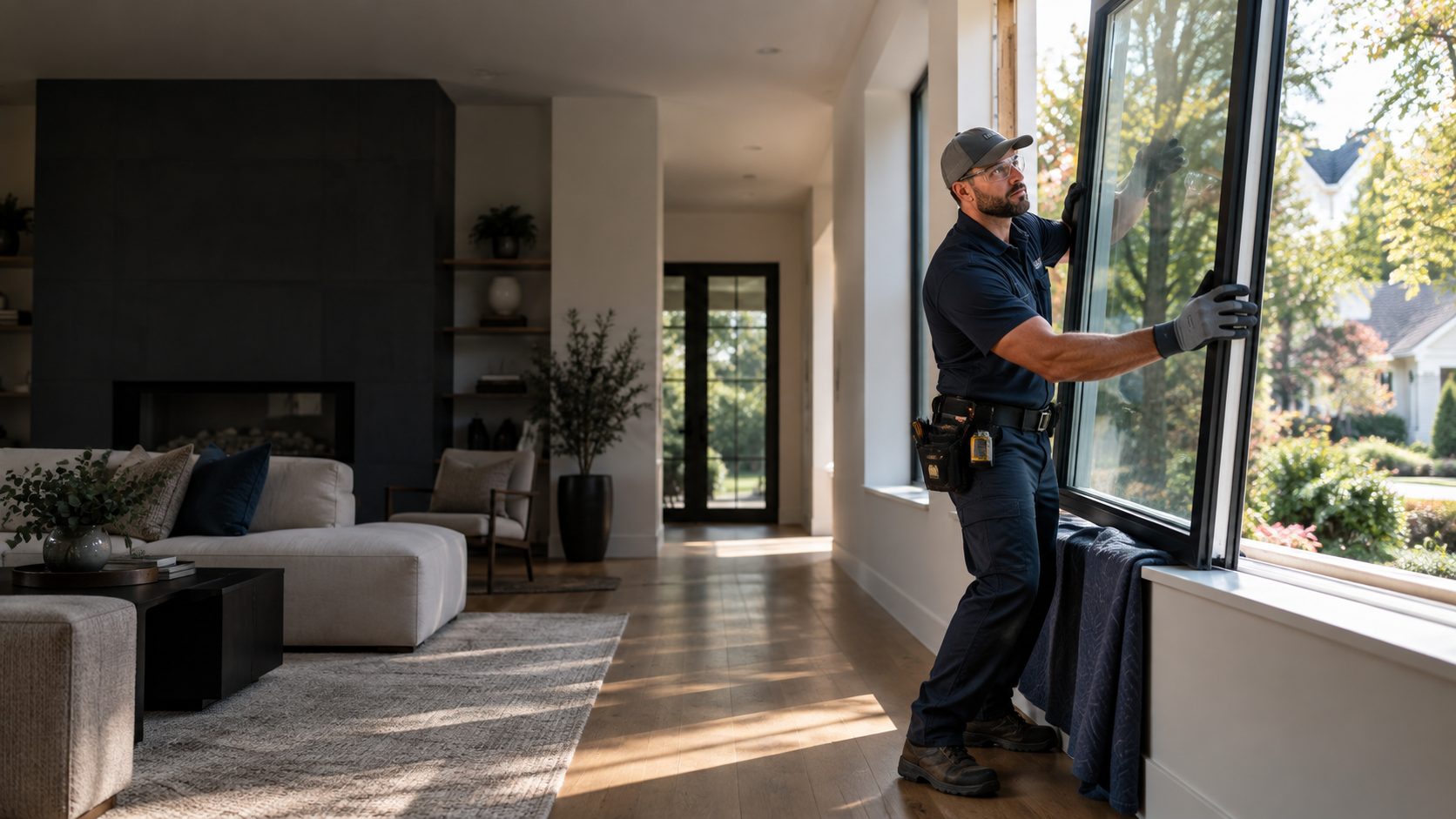
IGU replacement is not a one-process-fits-all operation — the specific procedure, challenges, and considerations change significantly depending on your window style, and the DMV housing stock includes virtually every type. Double-hung windows, the most common residential style across Fairfax County, Montgomery County, and Prince George's County, require removing the sash from the frame, extracting the failed IGU from the sash, and reinstalling the sash with proper balance adjustment. Casement windows — prevalent in newer construction across Loudoun County and Howard County developments — involve accessing the IGU through the interior stop or exterior glazing bead while the sash remains hinged in the frame, which demands careful work to avoid disturbing the operating hardware and weatherstripping. Bay and bow windows present compound challenges: the angled side units are often custom sizes fabricated at non-standard angles, the fixed center panel may be oversized and heavy, and access can be complicated by built-in window seats or cabinetry common in Bethesda and Chevy Chase homes. Sliding windows and sliding glass doors use large, heavy IGU panels that require two-person handling and precise roller track realignment after reinstallation. Picture windows — large fixed units found in great rooms and living areas — may exceed standard fabrication sizes and require specialty ordering. Our technicians carry specialized glazing tools for each window type and have hands-on experience with the specific manufacturer systems most common in DMV homes, including Andersen, Pella, Marvin, Milgard, and dozens of builder-grade brands installed by regional production builders throughout the 1980s through 2010s.

Commercial IGU Replacement — Office Buildings, Storefronts, and Multi-Family

Insulated glass failure is not limited to residential homes — commercial buildings, office parks, retail storefronts, and multi-family apartment and condo complexes throughout the DMV face the same seal degradation issues at a larger scale. Office buildings along the Dulles Corridor, in Tysons Corner, along Rockville Pike, and throughout downtown DC and Crystal City commonly use curtain wall glazing systems where individual IGU panels are set into aluminum mullion frames. Replacing failed units in curtain wall systems requires knowledge of the specific mullion capture system, exterior access equipment for upper floors, and coordination with building management for tenant notification and security access. Storefront glazing in retail districts — Georgetown, Old Town Alexandria, Bethesda Row, Pike and Rose, and the Mosaic District — often uses oversized single-panel IGUs that are both heavy and highly visible, making quality workmanship and clean installation essential for maintaining the business's professional appearance. Multi-family buildings present volume challenges: a 200-unit condo building where the original IGUs are 20 years old may have 40 to 80 failed units spread across different floors and orientations, requiring a phased replacement plan that coordinates access with individual unit owners and minimizes disruption to occupied spaces. We provide commercial property managers and HOA boards with comprehensive building assessments, phased replacement schedules, and volume pricing that makes systematic IGU replacement far more economical than handling failures individually as complaints arise.

Seasonal IGU Failure Patterns in the DMV — When and Why Windows Fail

The Washington DC metropolitan area's climate creates a distinctive seasonal pattern in IGU seal failures that homeowners should understand for planning purposes. Winter, particularly January and February when overnight temperatures regularly drop into the teens and twenties across Fairfax, Montgomery, and Prince George's Counties, is when most failures become visible — the large temperature differential between heated interiors and freezing exteriors causes maximum condensation inside units whose seals have recently failed. However, the actual seal damage often occurs during the preceding summer. July and August in the DMV bring sustained temperatures above 90 degrees with humidity frequently exceeding 70 percent, causing the gas inside IGU cavities to expand aggressively and pump against aging sealant barriers at their maximum stress level. This summer thermal pumping is the primary mechanical cause of seal failure in our region. Spring brings a secondary wave of visible failures — units that failed during winter but were not noticed because the homeowner attributed the fog to exterior condensation or morning dew suddenly become obvious as the moisture pattern persists into warmer weather. Fall is actually the ideal time to schedule IGU replacement in the DMV: fabrication lead times are shortest because demand is lower, installation conditions are optimal with moderate temperatures that allow sealants to cure properly, and you enter the winter heating season with fully performing windows rather than discovering failures when you need insulating performance most. We see a significant spike in emergency requests every November and December from homeowners who noticed failures too late to schedule proactively — booking your assessment in September or October avoids this seasonal crunch entirely.

For Every Property

Residential & Commercial Insulated Glass (IGU) Repair

Residential insulated glass (igu) repair

Residential Insulated Glass (IGU) Repair

Professional service for homes, condos, and townhomes across the DMV.

Commercial insulated glass (igu) repair

Commercial Insulated Glass (IGU) Repair

Serving offices, retail, restaurants, and buildings of any scale.

Common Questions

Insulated Glass (IGU) Repair FAQ

Fog between double-pane windows means the hermetic seal around the insulated glass unit has failed, allowing moisture-laden outdoor air to infiltrate the cavity. When temperatures change, this moisture condenses on the interior glass surfaces. It cannot be wiped away because it is trapped inside the sealed unit. This is not a cleaning issue — it is a seal failure that requires IGU replacement to fix permanently.

Work we stand behind

See the work, then judge it

Virginia Glass Windows is locally owned and has been doing residential and commercial glass across Northern Virginia, DC and Maryland for over a decade. Bonded and insured, on call around the clock.

Shop drawings

A sealed unit, taken apart

Two lites, an airspace and an edge seal that has to stay airtight for decades while the cavity heats and cools every single day. Turn the model to see the parts, then read the sheets — the fog is a symptom of exactly one of them.

The lites drift apart to show the edge assembly they are bonded to. Drag to orbit, or use the arrow keys once the model has focus.

Unit
30″ × 40″

8.3 sq ft · 1/8 + 1/2 + 1/8

Weight
27 lb

1-person set · suction cup handles

Sealed
U 0.27

SHGC 0.35 · VT 0.68

After seal failure
U 0.62

VT drops to 0.62 as the staining builds

Four sheets on one failure

The DMV sits in climate zone 4A (Mixed-Humid) — roughly 4,200 heating degree days and 1,450 cooling degree days a year. That is a lot of expansion and contraction for one bead of sealant to absorb.

IG-01 · Edge seal, enlarged section

Scale 4:1

IG-01 · EDGE SEAL, ENLARGED SECTIONairspacePrimary seal · PIBA bead of polyisobutylene against the glass.This is the vapour line. When it fails, the unit fogs.Spacer · desiccantPerforated on the airspace side, so the beads can drywhatever moisture gets past. Finite capacity.Secondary sealPolysulphide or silicone in the channel. Holds the twolites together — the structural half of the edge.Setting blockThe unit stands on this, never on the frame, and neverwhere it can block the weep.Nothing in this detail can be reached once the unit is made. That is why a fogged unit is replaced, not repaired.

IG-02 · Why a failed seal fogs

Scale NTS

IG-02 · WHY A FAILED SEAL FOGS1SealedThe airspace heats in the sunand cools at night. Pressurerises and falls; nothing moves.2Seal breachedThe primary seal loses grip.Every cooling cycle now drawshumid outside air into it.3Desiccant saturatedThe beads take up moistureuntil they can hold no more.That capacity is fixed.4Fog, then etchingDew forms on the inner faces.Minerals left by each cyclestain the glass for good.THE DRIVER — DAILY PRESSURE CYCLE IN THE CAVITYsun on the glassovernightsun again

IG-03 · Spacer material and the cold edge

Scale NTS

IG-03 · SPACER MATERIAL AND THE COLD EDGEA · Aluminium spacerconductivity ≈160 W/m·Kcold reachesto hereRoll-formed aluminium bar.Conducts about as well as anythingin the wall, right round the edge.B · Stainless spacerconductivity ≈16 W/m·Kcold reachesto hereThin-wall stainless.An order of magnitude better thanaluminium, still a metal bridge.C · Warm-edge (foam / composite)conductivity ≈0.2–0.3 W/m·Kcold reachesto hereSilicone foam or composite bar.Roughly a thousandth of aluminium.The edge stays near room temperature.Condensation on the room side always starts at the bottom edge.That is the coldest strip of glass in the opening, because the spacer is bridging it, and it is where thehumid room air settles. A warm-edge bar moves that strip above the dew point for most of the winter.Material conductivities are order-of-magnitude figures for the bar itself, not whole-window ratings.

IG-04 · Which surface is the moisture on?

Scale NTS

IG-04 · WHICH SURFACE IS THE MOISTURE ON?AOn surface #1 — outsideThe unit is workingDew on the outside of the glass ona clear morning means the outer liteis cold, which means very little heatis reaching it. Wipe it off.BOn surface #4 — room faceHumidity, not the glassCondensation you can wipe off frominside is room air meeting cold glass.Ventilation, a humidifier setting, ora cold edge at the spacer.CBetween the litesThe seal has failedIf it will not wipe off from eitherside it is inside the unit, wherenothing can reach it. The unit isreplaced; the sash and frame stay.The test takes five seconds: wipe the outside, then the inside.If it is still there after both, it is in the unit, and that is the only one of the three that needs glass.

Wipe both sides before you call anyone.

If the haze is still there, it is inside the unit — and that is the one case where new glass is the answer rather than a cleaner.

(703) 470-7867

Ready for Insulated Glass (IGU) Repair?

Upload photos for a free estimate, or call for same-day service. Bonded and insured across DC, Maryland and Virginia.