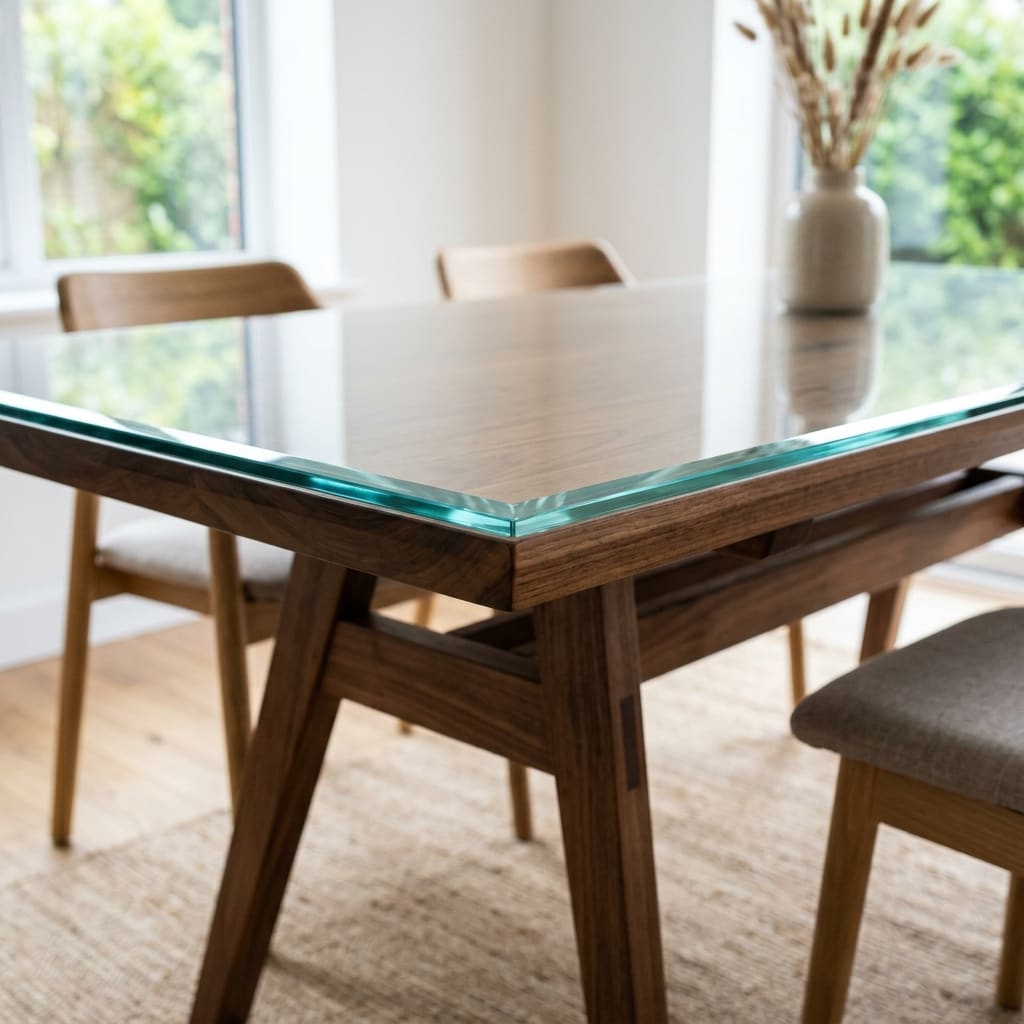
Specialty glass Block 99% of UV Rays — Protect Your Furniture and Take the Heat Out of a Room

Professional Window Tinting & Film Installationin DC, MD & VA

Professional window film for homes and businesses across the DMV. Solar control films turn back the infrared before it is inside the room, security films hold glass together during break-ins and storms, and decorative films add privacy without replacing your existing glass.

  • 24/7 Emergency Service
  • DC · Maryland · Virginia
  • Free photo estimates

Bonded & Insured

Residential and commercial

24/7 Emergency

Seven days a week

Free Estimates

No obligation

Locally Owned

Residential and commercial

Upfront Pricing

Never an overtime charge

99%

UV Blocked

Spectrally

Selective options

Interior

Or exterior grade

Ceramic

And spectrally selective film

Types we handle

Window Tinting & Film: what we work on

Each of these is a different assembly with its own hardware, tolerances and code path. Drawings, not stock photos.

Solar control film, sectionFilm laid on the room side of the glass: adhesive, the reflective layer, and a scratch-resistant hard coat. Infrared is turned back while visible light carries through.FILMIR TURNED BACK

Solar Control Film

Turns back the near infrared — the invisible half of the energy arriving at the glass — while letting the visible band through. Available from nearly invisible ceramic formulations to moderately tinted options. The usual answer for a DMV room that cooks through the afternoon in a window nobody wants to replace.
Security film, sectionA thick multi-ply film bonded to the room side. When the lite is struck the glass fractures, but the film holds the fragments as a sheet and the opening stays closed.FILMGLASS HELD AS A SHEET

Security Film

Bonds to glass and holds it together when broken, delaying forced entry and preventing dangerous glass fragmentation during storms. Available from 4-mil residential grade to 15-mil commercial ballistic grade. Adds a security layer to ground-floor windows, storefronts, and glass adjacent to entry doors throughout the DMV area.

Ceramic film, sectionA ceramic nanoparticle layer instead of a metallised one. It rejects heat without the metal that would attenuate a phone or GPS signal passing through the glass.FILMNO SIGNAL LOSS

Ceramic Film

The most advanced window film technology — uses ceramic nanoparticles to reject heat without the metallic look or electronic interference of older films. Nearly invisible from both inside and outside, ceramic film delivers top-tier heat rejection while maintaining crystal-clear views and allowing full cell phone and GPS signal strength.

Privacy film, sectionA diffusing layer that scatters transmitted light, so daylight still comes through while the view through the glass is broken up.FILMLIGHT SCATTERED

Privacy & Frosted Film

Frosted, one-way mirror, and gradient films provide daytime privacy without blocking natural light or requiring blinds. Popular for ground-floor offices, bathroom windows, conference rooms, and medical facilities in the DMV. Available in multiple opacity levels from lightly frosted to fully opaque for complete visual privacy.

Decorative film, sectionA printed or etched-effect layer carried on the same adhesive and hard-coat build-up as any other applied film.FILMPRINTED LAYER

Decorative Film

Custom-printed branding films, etched-glass appearance films, patterned designs, and gradient options that add visual interest while serving functional purposes. Used by DMV businesses for storefront branding, office partitions, conference room privacy, and architectural accents without commissioning specialty glass.

Anti-graffiti sacrificial film, sectionA clear sacrificial layer that takes the scratching and etching. When it is damaged it peels off the glass and a new layer goes on.FILMPEELS OFF, GLASS INTACT

Anti-Graffiti Film

A clear sacrificial film that protects storefront and commercial glass from scratches, acid etching, and graffiti tags. When the film is damaged, it is simply peeled off and replaced instead of the glass underneath. Essential protection for retail storefronts and ground-floor commercial glass in urban DMV locations.

Every hour costs you more

Why you need window tinting & film now

Delaying repair doesn't save money — it multiplies the damage.

01

Excessive Heat and Glare

South and west-facing windows turn rooms into greenhouses through a DMV summer, and the air conditioning runs all afternoon trying to keep up. Glare forces you to close blinds, blocking the light and views that make the space desirable in the first place.

02

UV Damage to Interiors

UV radiation passes through standard glass and irreversibly damages interiors — hardwood floors fade, leather cracks, artwork loses vibrancy. The damage is cumulative and cannot be undone once it has happened. Window film blocks 99% of UV while staying clear.

03

Security Vulnerability

Standard glass is the weakest point in any building's security. Security film bonds to the glass and holds it together when broken, delaying forced entry and preventing dangerous fragmentation during storms or break-in attempts.

04

Privacy Without Sacrificing Light

Ground-floor windows face constant tension between natural light and visual privacy. Window film provides one-way daytime privacy — you see out, others cannot see in. Frosted and gradient films offer permanent privacy with a clean architectural look.

What You Get

Window Tinting & Film Benefits

Every service comes with our commitment to quality, speed, and transparency.

01

Take the Heat Out of a Room

Solar films work on the infrared band, which is where roughly half the energy arriving at a window sits and where none of it is visible.

02

Block 99% of UV Rays

Protects floors, furniture, artwork, and fabrics from fading — effective even with clear, nearly invisible films.

03

Enhanced Security

Security films (4-mil to 15-mil) hold glass together when shattered, delaying forced entry and preventing dangerous fragmentation during storms.

04

Glare Reduction

How much glare comes off depends on how much visible light the film passes — the one property you choose by eye, from samples held on your own glass.

05

Privacy Without Blinds

Frosted, one-way mirror, and decorative films provide daytime privacy without blocking your outward view.

06

Preserve Your Existing Glass

Applied directly to existing glass — no window replacement needed. Films can be removed and updated later, which glass replacement cannot be.

Window Tinting & Film on a job site in the DMV
Solar control film, sectionFilm laid on the room side of the glass: adhesive, the reflective layer, and a scratch-resistant hard coat. Infrared is turned back while visible light carries through.FILM + HARD COATIR TURNED BACK
Applied film — section
The detail behind it

Specified before it is ordered

Every window tinting & film job starts with the assembly, not the pane. What the frame is, how the glass is captured, which code applies to that opening — those decide the specification, and the specification decides whether the repair lasts.

  • Safety glazing specified to the code for the opening
  • Same-day service for most jobs
  • Free photo estimates with no obligation
  • Bonded and insured, residential and commercial

Get a Free Window Tinting & Film Estimate

Upload photos of the glass and we will come back with an itemized estimate. No home visit needed, no obligation.

Upload Photos Now
Our Process

How Window Tinting & Film Works

A simple, transparent process from first contact to completed job.

01

Consultation

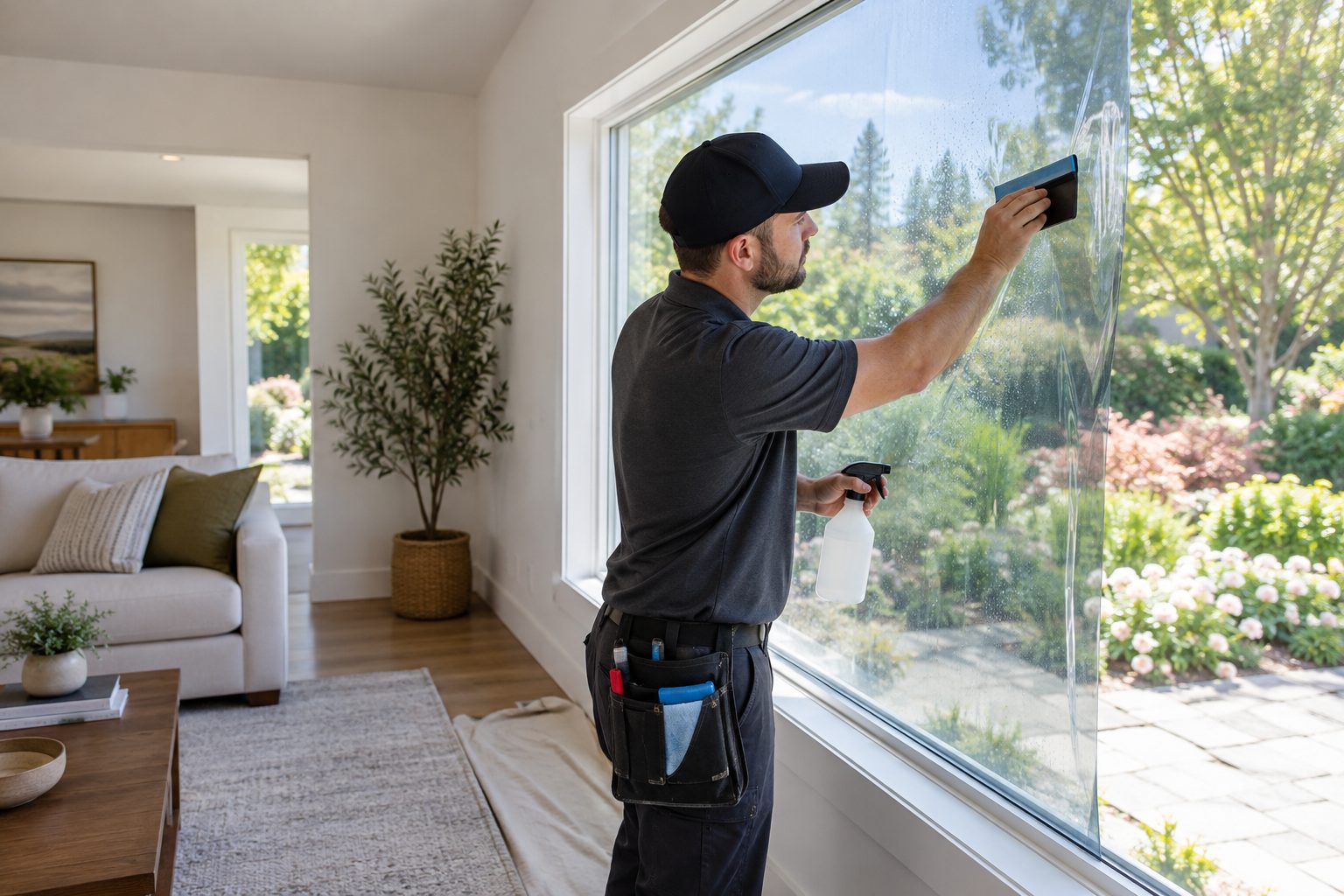
We assess your windows, discuss your goals, and recommend film products. We bring samples so you can see each option in your actual space.

02

Window Preparation

Each window is thoroughly cleaned to remove all dirt and residue. Proper surface prep is the most critical step for long-term film performance.

03

Precision Application

Film is cut to exact dimensions and applied using a wet technique that allows precise positioning and eliminates air bubbles.

04

Inspection & Cure

We inspect for adhesion, edge seal quality, and clarity. Film takes 15 to 30 days to fully cure — small water pockets disappear as the film dries.

The Transformation

Before & After Window Tinting & Film

Before

Damaged, inefficient glass compromising safety and comfort.

After

Crystal-clear, professionally installed glass restoring beauty and performance.

Warning Signs

Signs You Need Window Tinting & Film

Rooms that become uncomfortably hot during afternoon sun exposure, especially south-facing and west-facing rooms.
Faded or discolored furniture, hardwood floors, artwork, or fabrics near windows with significant sun exposure.
Air conditioning that runs all afternoon in summer and still never quite holds the room.
Glare on computer monitors and television screens that forces you to close blinds and lose your views.
Ground-floor windows where passersby can see into your home or office, compromising your privacy.
Storefront windows that are vulnerable to graffiti, scratching, or vandalism.
Concerns about glass breakage during severe storms or the security vulnerability of accessible ground-floor windows.
Conference rooms or offices where you need visual privacy without blocking natural light.
UV-related skin concerns for occupants who sit near windows for extended periods throughout the workday.
Older single-pane or non-coated windows that transfer excessive heat in summer and cold in winter.

Types of Window Film for DMV Homes and Businesses

Solar control films reject heat while maintaining clear views, from nearly invisible ceramic to moderately tinted. Security films hold glass together when broken (4-mil residential to 15-mil commercial). Decorative films include frosted, etched-glass appearance, gradient privacy, and custom branding. Anti-graffiti films provide a sacrificial surface that protects storefront glass and can be replaced when damaged. Each type is available in multiple performance levels and appearance options.

Where Film Actually Helps in the DMV Climate

Glass is the weakest thermal element in almost any wall, and south and west elevations are where a DMV summer does its damage. Film works on the solar half of that problem: it changes what the sun does to a room rather than what the room loses in January. That is the right trade where the glazing is sound, the units are not fogged and replacement is not on the table. It is the wrong trade where the room is cold in winter as well as hot in summer, because that is a U-factor problem and only the glazing itself can move it.

Security Film for DMV Homes and Storefronts

Glass protected by security film cracks but stays in place, creating a barrier that requires sustained effort to breach. For residential homes, 8-mil film on ground-floor windows deters forced entry. For commercial storefronts, 12 to 15-mil film protects inventory while meeting insurance requirements. Security film also contains glass during severe weather, preventing interior damage from flying shards. Every installation includes edge-to-edge coverage for maximum holding strength.

Ceramic Film Technology: The Premium Choice

Ceramic film uses nanoparticles to reject solar heat without the metallic appearance or electronic signal interference of older films. You get heat rejection comparable to heavily tinted metallic films while maintaining a virtually clear appearance. Cell phones, GPS, Wi-Fi, and garage door openers all function normally. Ceramic films also hold their colour rather than shifting the way a dye does as it ages.

For Every Property

Residential & Commercial Window Tinting & Film

Residential window tinting & film

Residential Window Tinting & Film

Professional service for homes, condos, and townhomes across the DMV.

Commercial window tinting & film

Commercial Window Tinting & Film

Serving offices, retail, restaurants, and buildings of any scale.

Common Questions

Window Tinting & Film FAQ

It depends on the product, on how much sun that particular window gets, and on what the glass underneath is. The same film on a north elevation and on a west elevation will not age at the same rate, and a dyed film and a ceramic one do not age the same way at all — a dye shifts colour, a ceramic layer does not. Manufacturers publish their own durability terms product by product, and we hand you that documentation for the film you choose rather than quoting a figure that may not describe your windows.

Work we stand behind

See the work, then judge it

Virginia Glass Windows is locally owned and has been doing residential and commercial glass across Northern Virginia, DC and Maryland for over a decade. Bonded and insured, on call around the clock.

Shop drawings

What the film actually does to the light

A live model with the solar bands drawn as paths through the glass, then four plates: what a film is made of, why a nearly clear one can still reject heat, how the three film families differ, and the order the work has to happen in.

ultraviolet — stopped at the filmnear infrared — turned back outvisible light — carries on through

WT-01 · Film construction — section

Scale Magnified

FILM — SECTION, HUGELY MAGNIFIEDroom sideScratch-resistant hardcoatthe room-facing surface, and the only part you ever touchPolyester carrierthe structural film — thickness here is what makes a security filmThe performing layerdye, a sputtered metal or ceramic particles — the film is named for itSecond polyester carrierlaminated to the first; more layers means a thicker, tougher filmMounting adhesivepressure sensitive, activated by the slip solution during fittingRelease linerpeeled off on the bench and thrown away — never applied to the windowyour existing glass — unchangedexteriorThe whole stack is thinner than a sheet of paper, and every layer in it does one job.Which layer is the performing one is the entire difference between a dyed film, a metallised one and a ceramic one —the rest of the build-up barely changes.

WT-02 · The solar spectrum

Scale Diagrammatic

WHAT ARRIVES AT THE GLASSULTRAVIOLETVISIBLENEAR INFRARED3004007001000150020002500wavelength, nanometresWHAT A SPECTRALLY SELECTIVE FILM DOES WITH EACHultraviolet — blockedabsorbed in the film stack beforeit can reach the room.visible — passedthe band your eye works in, so theview and the daylight survive.near infrared — rejectedturned back out as heat before itcan warm anything in the room.Roughly half of the energy under that curve is in the infrared — invisible, and the part you feel as heat.

WT-03 · Dyed, metallised, ceramic

Scale NTS

THE THREE FAMILIESDyedenergy held in the film as heatHow it worksColour in the polyester absorbs energy and holds it in the film.What to watchAbsorbed heat has to go somewhere, and the dye itself fades with the years.MetallisedHow it worksA sputtered metal layer reflects energy back out before it is absorbed.What to watchReads as a mirror from outside, and the metal layer can interfere with signals.CeramicHow it worksNon-conductive ceramic particles reject infrared without a metal layer.What to watchNearly clear and it does not block signals. The most involved to make.Film goes on the glass you already have. New glass changes the glass.For reference, the same data set behind our other tools puts a clear single pane at a solar heat gaincoefficient of 0.79 with a U-factor of 1.04, and a Low-E double unit with argon at 0.35 and 0.27. Film works onthe solar side of that ledger, not the conductive side: it changes what the sun does to a room, and leaves thewinter heat loss through the glass roughly where it was.Which is exactly why it suits a room that cooks in August and a window nobody wants to replace.

WT-04 · Application sequence

Scale NTS

SEQUENCEcentre outwards, overlapping, edges last01Strip and cleanBlades, scrub, squeegee, edges last. Anything left on the glass becomes a permanent lump under the film.02Cut to the glassThe film is sized on the window itself, not on a table, so it follows the actual edge rather than the nominal one.03Wet both facesSlip solution on the glass and on the adhesive. It is what lets the sheet be moved into position instead of grabbing on contact.04Lay and squeegee outFrom the centre outwards, in overlapping passes, driving the solution and the air ahead of the blade.05Trim and edgeA consistent gap at the perimeter so the film is not sitting in the wet of the frame, then a hard final pass on every edge.06CureSmall pockets of remaining solution look like haze or dimples and clear as they dry. Nothing is judged until that is finished.Ninety per cent of a film installation is the preparation.Anything left on the glass — a fleck of paint, ahair, old adhesive — is sealed under the filmpermanently, and shows from both sides.Haze and small water pockets after fittingare the solution drying out, not a fault.

Four things worth knowing before you call

Two about the light, two about the glass the film has to live on.

Physics

Half the energy arriving is invisible

Sunlight through a window is not only what you can see. A large share of the energy sits in the near infrared, above 700 nanometres, where the eye reads nothing at all — which is why a room can be uncomfortably hot without being noticeably bright. A spectrally selective film works on that band, and that is how a nearly clear film can still take heat out of a room.

Family

Dyed, metallised and ceramic fail differently

A dyed film absorbs and holds energy, and the dye itself changes over the years. A metallised film reflects, which works well but reads as a mirror from outside and can interfere with what passes through the glass. A ceramic film uses non-conductive particles, so it stays close to clear and leaves signals alone. The choice is usually about appearance and about what else the window has to let through.

Glass

Film and the glass under it have to agree

An absorbing film on a large, partly shaded or already tinted pane raises the temperature difference across the glass, and annealed glass has a limited tolerance for that. So the glass type, the size, the orientation and the shading pattern all get checked before a film is specified — and for sealed units, whether the manufacturer permits film at all without affecting their terms.

Scope

Film changes the sun, not the winter

It sits on the glass you already have, so it works on solar gain and on glare rather than on conductive heat loss. Our glazing data puts a clear single pane at a solar heat gain coefficient of 0.79; a Low-E double unit with argon is at 0.35, and it also drops the U-factor from 1.04 to 0.27. Film moves the first number and leaves the second roughly alone — which is the right trade for a room that cooks in August in a window nobody wants to replace.

Sometimes the answer is the glass, not the film

If the unit is already fogged, the seal has gone and film will not help it. If the room is cold in winter as well as hot in summer, the U-factor is the number that has to move, and that means the glazing rather than a coating on it.

Tell us the room, the direction it faces, and what the glass already is.

Those three decide the film. Single or double, clear or already tinted, and which way the sun comes in.

(703) 470-7867

Ready for Window Tinting & Film?

Upload photos for a free estimate, or call for same-day service. Bonded and insured across DC, Maryland and Virginia.