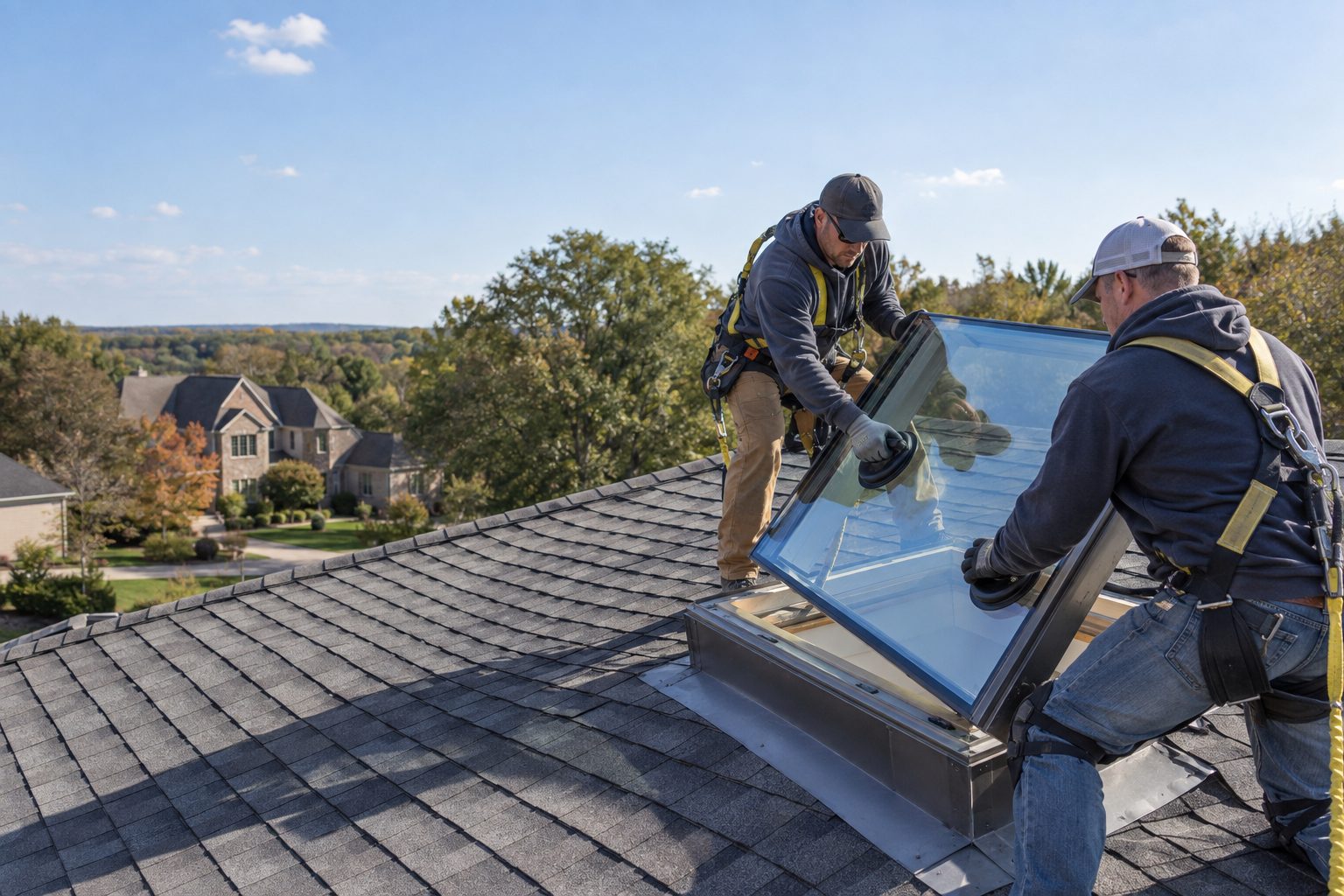
Skylight Maintenance and Repair Guide for DMV Homeowners
A skylight that is working correctly is one of the best things in a home. A skylight that is leaking, fogged, or cracked is one of the most expensive problems. After years of skylight glass work across the DMV, here is what every skylight owner needs to know.
Mike Reynolds
Lead Glass Technician & Owner
In This Article
Skylights in the DMV: The Specific Challenges
Skylights are simultaneously one of the most appealing and one of the most maintenance-intensive glass installations in a home. The appeal is obvious — natural light from above, the view of sky and seasons, the dramatic illumination of interior spaces that no window can replicate. The maintenance challenge is less obvious until something goes wrong: a skylight faces every weather event the DMV throws at it from a horizontal or near-horizontal exposure that standard vertical windows never have to contend with.
Horizontal glass retains water. It accumulates debris — leaves, pine needles, pollen, bird droppings — that traps moisture and accelerates deterioration of sealants and frames. It takes direct snow and ice load. It absorbs maximum solar radiation in summer, with glass surface temperatures regularly reaching 160 to 180 degrees Fahrenheit — higher than any vertical window. And it must seal perfectly against driving rain and wind-blown water from any direction, which is a harder sealing challenge than a vertical window where gravity assists drainage away from the frame.
In the DMV specifically, the combination of summer heat (higher solar load than milder northern climates), winter ice and snow (more than southern climates), and the frequency and intensity of thunderstorms (one of the highest in the eastern US) makes skylight maintenance more demanding than in most other regions. This is not a reason to avoid skylights — properly maintained, they are worth it — but it is a reason to maintain them proactively rather than reactively.
Annual Skylight Inspection: What to Check and When
I recommend a twice-annual inspection for skylights in the DMV: once in late March or April (after winter stress and before spring rain season) and once in September or October (after summer heat stress and before fall and winter). The March inspection catches winter damage and addresses it before spring rains arrive. The October inspection ensures the skylight is in good condition before snow and ice loads.
The inspection checklist for each event: examine the flashing at the skylight perimeter from the exterior — look for lifted, corroded, or displaced flashing sections that would allow water infiltration under the flashing plane. Check the perimeter sealant on the glass-to-frame joint — sealant that is cracked, pulled away, or missing creates an immediate water infiltration path. Check the frame itself for any visible cracks, distortion, or deterioration of the frame material. If the skylight opens, check the hinge hardware and the perimeter seal for the operable sash. From the interior, look at the ceiling and frame adjacent to the skylight for any staining or discoloration that indicates past or current moisture intrusion.
If you cannot access your skylight from the roof safely, this is one situation where paying for a professional inspection is worth it. Discovering a failed flashing seal during an inspection is far less expensive than discovering it after a storm event has allowed water to infiltrate the roof deck and ceiling structure.
The Three Most Common Skylight Problems
In order of frequency in the DMV: seal failure producing fogging (the same IGU seal failure that affects double-pane windows, but accelerated in skylights by higher thermal cycling), flashing failure producing water intrusion, and glass breakage from hail or debris impact.
Fogged skylights are a more common complaint than homeowners expect because the thermal cycling of a horizontal glass surface is more extreme than vertical windows. The same sun-to-shade, hot-to-cold cycle that stresses vertical window IGU seals runs harder and faster on a horizontal skylight that absorbs maximum solar radiation and cools dramatically on clear nights. Fogged skylights are addressed the same way as fogged windows: the failed IGU needs to be replaced. Most skylight manufacturers make replacement IGUs for their frame systems; when the original manufacturer's replacement is available, it is typically the cleanest repair option.
Flashing failures are the most serious skylight problem because they introduce water into the roof structure and ceiling, where the damage can be extensive before it becomes visible. The flashing system around a skylight is more complex than a simple roof penetration — it requires step flashing along the sides, head flashing at the upslope side, and sill flashing at the downslope side, all coordinated with the roofing material. When flashing fails, it needs to be replaced by someone who understands both roofing and the specific skylight frame system. We work closely with roofing contractors on skylight flashing repairs throughout the DMV.
Glass breakage in skylights is relatively uncommon because all skylights are manufactured with safety glass (tempered or laminated), but it does occur from severe hail events and from tree limb impact during DMV storms. Tempered skylight glass, when broken, shatters completely — leaving an immediate weather opening that needs emergency coverage until the glass can be replaced. Laminated skylight glass, by contrast, holds together after breakage — it is damaged but still provides weather protection temporarily while a replacement is sourced. This is one of the stronger arguments for laminated rather than tempered glass in skylights in the storm-prone DMV climate.
Skylight Glass Replacement: What Is Involved
Replacing skylight glass requires accessing the skylight from the roof. In most cases, the glass is removed from above — the old glass is lifted out of the frame channel, the frame is cleaned, and the new glass or replacement IGU is installed and sealed from the roof surface. The safety and access requirements of roof work mean this is not a DIY project for most homeowners, and it requires proper safety equipment and technique to work safely on roof surfaces.
For standard residential skylights from manufacturers like Velux, Fakro, Andersen, and others, replacement glass and IGU assemblies are available and the glass replacement is a straightforward operation for a technician familiar with the specific frame system. For older or less common skylights where the original manufacturer is no longer active or the specific replacement part is not available, we can fabricate custom replacement glass to the required dimensions and edge profile.
Insulated glass replacement in a skylight also requires attention to the edge seal and setting block system. Skylights use a slightly different bedding and drainage approach than vertical windows — water management at the glass perimeter is critical to preventing water infiltration through the glass-to-frame interface. If you have had a skylight fogged or leaking and have not had the glass replaced previously, contact us at (703) 470-7867 to discuss what the replacement involves for your specific skylight model.
When to Replace the Skylight vs. Just the Glass
If the frame is in good condition — no structural distortion, no corroded frame components, flashing intact and undamaged — glass-only replacement in the existing frame is the appropriate and cost-effective repair. A skylight frame that has been properly maintained can outlast multiple glass replacements.
Frame replacement becomes appropriate when the frame has deteriorated beyond what repair can address: severe corrosion of aluminum frame sections, distortion that has compromised the frame's ability to hold glass correctly, or degraded weatherstripping that cannot be replaced in kind. Full skylight replacement also makes sense when a significant roof renovation is planned — the most cost-effective time to replace a skylight is when the roofing is already being replaced, because the flashing work is part of the roofing project and the incremental cost of the skylight replacement itself is much lower than a standalone skylight project.
Send us photos of your skylight via our photo estimate tool — interior and exterior photos showing the glass condition, the frame, and any visible flashing — and we will give you an initial assessment of whether glass-only repair or full replacement is the appropriate path for your situation.
About the Author
Mike Reynolds
Lead Glass Technician & Owner
With over 15 years of experience in window and glass repair across the DC, Maryland, and Virginia area, Mike shares practical expertise to help homeowners and businesses make informed decisions about their glass repair and replacement needs.
Need Help With Your Glass?
Our experts are ready to help with any window or glass issue. Free estimates, same-day service available across DC, MD & VA.
More Guides
View All
How to Tell If Your Window Glass Needs Repair or Replacement
8 min read
Stress Cracks in Windows: Causes, Prevention & Solutions for DMV Homeowners
7 min read
Foggy Windows: Why Double-Pane Seals Fail & What to Do About It
9 min read
Glass Replacement in Historic DMV Homes: Preservation Meets Performance
9 min readExplore More Resources
Helpful Guides
Common Problems
Related Pages
Our Services
24/7 Emergency
Board-Up & Glass
Licensed & Insured
DC, MD & VA
300+ Areas
DMV Coverage
Same-Day Service
When You Need It
Ready to Get Started?
Get a free estimate for any window or glass service across the DMV area.