Stress Cracks in Windows: Causes, Prevention & Solutions for DMV Homeowners
The DMV area's extreme temperature swings — from sub-freezing winters to 95-degree summers — make stress cracks one of the most common window problems we repair. Here's what causes them and what to do.
Mike Reynolds
Lead Glass Technician & Owner
In This Article
What Are Stress Cracks?
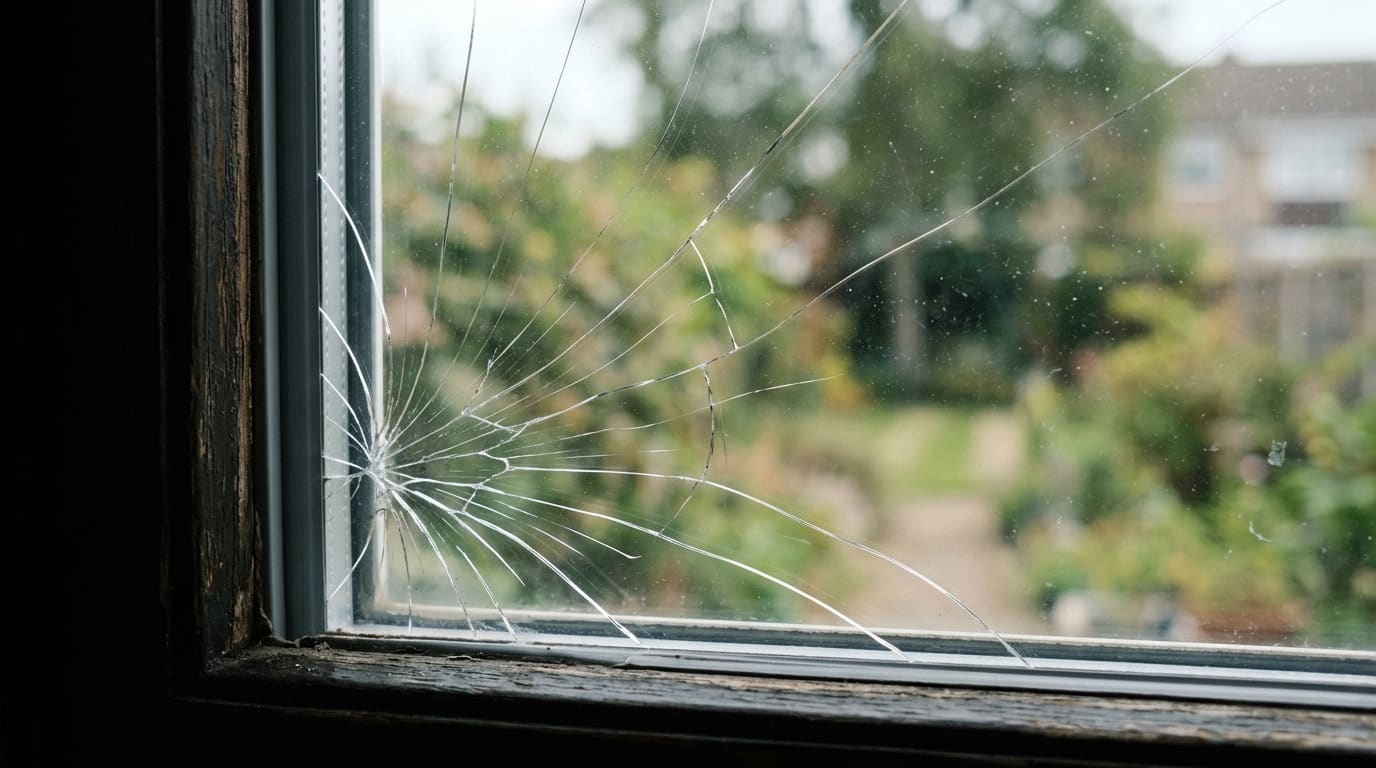
Stress cracks develop when different areas of a glass pane expand at different rates due to temperature differentials. Unlike impact cracks that radiate from a clear strike point, stress cracks typically start at or near the edge of the glass and travel inward in a gentle curve. They appear without any visible cause — no rock hit the window, no ball struck it — seemingly appearing overnight.
Why the DMV Climate Is Especially Hard on Glass
The Washington DC metropolitan area experiences one of the widest annual temperature ranges on the East Coast. Summer highs regularly exceed 95 degrees Fahrenheit, while winter lows drop well below freezing. That is a 120-degree annual swing — and the daily cycling between hot afternoon sun and cooler nights adds thousands of expansion-contraction cycles over the life of each pane of glass.
South-facing and west-facing windows in DMV homes take the worst punishment. Direct afternoon sun can heat the exposed center of a glass pane to 140 degrees while the edges tucked into the frame remain 40 to 60 degrees cooler. This differential creates the tension that eventually initiates a crack at the weakest point — usually the edge where the glass was cut during manufacturing.
Common Triggers in DMV Homes
- A heating vent blowing directly onto a cold window pane in winter creates an instant temperature gradient across the glass surface
- New shade structures, trees, or neighboring construction that partially shadows a window creates uneven heating across the pane
- An existing chip or nick at the glass edge acts as a stress concentration point where cracks originate
- Improper installation that does not allow thermal expansion space between the glass and frame
Prevention Strategies
Redirect heating vents away from window glass. Use interior blinds or cellular shades to moderate the temperature differential between the glass surface and the room. Address any chips or nicks at the glass edge promptly — these are the starting points for future stress cracks. When having glass replaced, ensure your technician leaves proper clearance between the glass edge and the frame channel for thermal expansion.
Repair Options
Unfortunately, stress cracks cannot be repaired — once the glass has cracked, it needs to be replaced. The good news is that replacing just the glass pane in your existing frame is straightforward and cost-effective. Use the replacement as an opportunity to upgrade to Low-E or tempered glass if appropriate for the window location.
About the Author
Mike Reynolds
Lead Glass Technician & Owner
With over 15 years of experience in window and glass repair across the DC, Maryland, and Virginia area, Mike shares practical expertise to help homeowners and businesses make informed decisions about their glass repair and replacement needs.
Need Help With Your Glass?
Our experts are ready to help with any window or glass issue. Free estimates, same-day service available across DC, MD & VA.
Related Articles
Continue reading about guides
More Guides
View All
Explore More Resources
Common Problems
Free Tools
24/7 Emergency
Board-Up & Glass
Licensed & Insured
DC, MD & VA
300+ Areas
DMV Coverage
Same-Day Service
When You Need It
Ready to Get Started?
Get a free estimate for any window or glass service across the DMV area.