NFRC Window Ratings Explained: What the Numbers Actually Mean for Your DMV Home
That little NFRC sticker on a replacement window contains more useful information than most homeowners realize — and misreading it can mean choosing glass that performs great in Minnesota but poorly in a DC summer. Here is how to read it correctly for the DMV climate.
Mike Reynolds
Lead Glass Technician & Owner
In This Article
What Is the NFRC and Why Does It Matter?
The National Fenestration Rating Council is the independent organization that standardizes how window and door energy performance is tested and labeled in the United States. Before NFRC ratings became standard in the early 1990s, window manufacturers used a patchwork of proprietary metrics that made meaningful comparison nearly impossible. Today, any window sold in the US carries an NFRC label with standardized ratings tested under controlled laboratory conditions.
Understanding these ratings matters because choosing glass based on the wrong metric is a common and expensive mistake. A window with a low U-factor — excellent thermal insulation — may have a high solar heat gain coefficient that turns your south-facing living room into a greenhouse every July afternoon. The right specification depends on your climate zone, your window orientation, and your primary energy concern. The DMV's mixed heating-and-cooling climate requires a more nuanced specification than simpler climates.
U-Factor: The Thermal Insulation Rating
U-factor measures the rate of heat transfer through the window system — the lower the number, the better the insulation. It is the window equivalent of R-value, except expressed inversely: R-value measures resistance to heat flow (higher is better), while U-factor measures rate of heat flow (lower is better). U-factor of 1.0 means 1 BTU of heat passes through each square foot of window per hour per degree Fahrenheit of temperature difference. A U-factor of 0.25 means one-quarter as much heat transfer under the same conditions.
For the DMV climate, which has genuine winters that require heating as well as hot summers, a U-factor of 0.30 or lower is the appropriate baseline for any replacement insulated glass unit. Quality double-pane Low-E argon windows typically achieve U-factors in the 0.22 to 0.28 range. Single-pane glass sits around 0.90 to 1.10 — three to four times worse. This numerical difference directly translates to heating bills: each window with a failed or absent insulating gas fill and no Low-E coating is costing you measurably more to heat and cool than a properly specified replacement would.
ENERGY STAR's Northern-Central climate zone (which covers most of the DMV) requires a U-factor of 0.30 or lower for window certification. This is a reasonable minimum — better windows are available and often worth the incremental cost.
SHGC: Solar Heat Gain Coefficient
Solar heat gain coefficient measures what fraction of solar radiation incident on the window passes through to the interior as heat. An SHGC of 0.40 means 40 percent of solar energy hitting the window becomes heat inside the room. Lower SHGC means less solar heat gain — better for summer cooling but less passive solar benefit in winter.
This is where the DMV specification diverges from colder-climate thinking. In Minnesota or Maine, a high SHGC on south-facing windows is desirable because passive solar gain reduces winter heating loads significantly and summer overheating is rarely a concern. In the DMV, summer cooling costs are substantial and cooling capacity is stressed during DC's brutal July and August heat. The summer solar penalty from a high-SHGC window on a south or west-facing exposure often outweighs the modest winter benefit of passive solar gain.
For most south-facing and west-facing windows in DMV homes, an SHGC of 0.25 or lower (often labeled as "solar control" Low-E) is the appropriate specification. For north-facing windows where direct sun is not a concern, an SHGC of 0.35 to 0.40 is acceptable and preserves diffuse daylight transmission. East-facing windows land in between — morning sun is lower-angle and less intense than afternoon west sun, so moderate SHGC is appropriate.
Visible Transmittance: How Much Daylight Gets Through
Visible transmittance (VT) is the fraction of visible light that passes through the window. Higher VT means brighter rooms with more natural light. A VT of 0.50 means half of available visible light passes through. Single-pane clear glass has VT around 0.90. Double-pane Low-E glass typically ranges from 0.45 to 0.70 depending on the specific coating.
The tension between SHGC and VT is where window specifications get interesting. Very low-SHGC coatings that provide excellent solar heat rejection tend to reduce VT as well — they are essentially more reflective or absorptive across more of the spectrum. Modern selective coatings have improved the SHGC/VT ratio considerably: a high-quality selective coating can achieve an SHGC of 0.22 with a VT of 0.52, whereas older reflective coatings of similar SHGC might only achieve VT of 0.30. This ratio — VT divided by SHGC, sometimes called the light-to-solar-gain ratio or LSG — is a useful comparative metric. Values above 1.5 indicate good selectivity; above 2.0 is excellent for a combination of daylight and solar control.
Air Leakage: The Often-Ignored Number
Air leakage (AL) measures how much air infiltrates through the window assembly under a standardized pressure differential. Lower is better. NFRC-certified windows must achieve AL of 0.30 or lower; good quality windows are in the 0.01 to 0.10 range. In practical terms, air leakage is often the largest single source of heat loss in an older window — more significant than the thermal conductance of the glass itself.
In DMV homes with older vinyl or aluminum windows from the 1980s and 1990s, degraded weatherstripping and worn gaskets can push effective air leakage far above the original rating. A window that tested at AL 0.10 when new might be functionally at 0.50 or higher after 20 years of compressed weatherstripping and UV-degraded gasket material. We regularly find that drafty windows in DC and Maryland homes are drafty because of weatherstripping failure, not glass failure — though both issues may exist simultaneously.
Condensation Resistance: Relevant for DMV Winters
Condensation resistance (CR) rates how well a window resists interior condensation on a scale of 0 to 100 — higher is better. Condensation forms on window surfaces when the glass or frame surface temperature drops below the dew point of the room air. In a DMV home in January with interior humidity of 35 percent and outdoor temperatures below 20 degrees, window interior surfaces need to stay above approximately 37 to 40 degrees Fahrenheit to avoid condensation.
Windows with high U-factors (poor insulation) run colder interior surfaces and condense more readily. This matters beyond annoyance — chronic condensation on window sills and frames contributes to mold growth and wood rot in older homes. If you have noticed condensation and moisture damage around your window frames in winter, improving the window's CR by upgrading to better-insulated glass is often a more effective solution than running a dehumidifier.
Applying This to Your Glass Replacement Decision
When we discuss glass replacement options with DMV clients, we translate these numbers into practical guidance: for a south-facing bedroom window in a Bethesda colonial, a low-solar-gain Low-E unit with U-factor around 0.25 and SHGC around 0.22 is the right specification. For a north-facing bathroom window in a Capitol Hill rowhouse, a moderate-gain coating with U-factor 0.28 and SHGC 0.35 preserves more diffuse light without the solar heat gain concern. The numbers mean something specific to your situation.
Our technicians discuss NFRC specifications as part of every glass replacement estimate — we do not just hand you a glass and install it, we help you understand what you are getting and why. Send us photos of your windows for a free custom quote that includes specific glass specifications appropriate for each window's orientation and your home's energy priorities. Call (703) 470-7867 to speak with a technician directly.
About the Author
Mike Reynolds
Lead Glass Technician & Owner
With over 15 years of experience in window and glass repair across the DC, Maryland, and Virginia area, Mike shares practical expertise to help homeowners and businesses make informed decisions about their glass repair and replacement needs.
Need Help With Your Glass?
Our experts are ready to help with any window or glass issue. Free estimates, same-day service available across DC, MD & VA.
Related Articles
Continue reading about energy efficiency
More Energy Efficiency
View All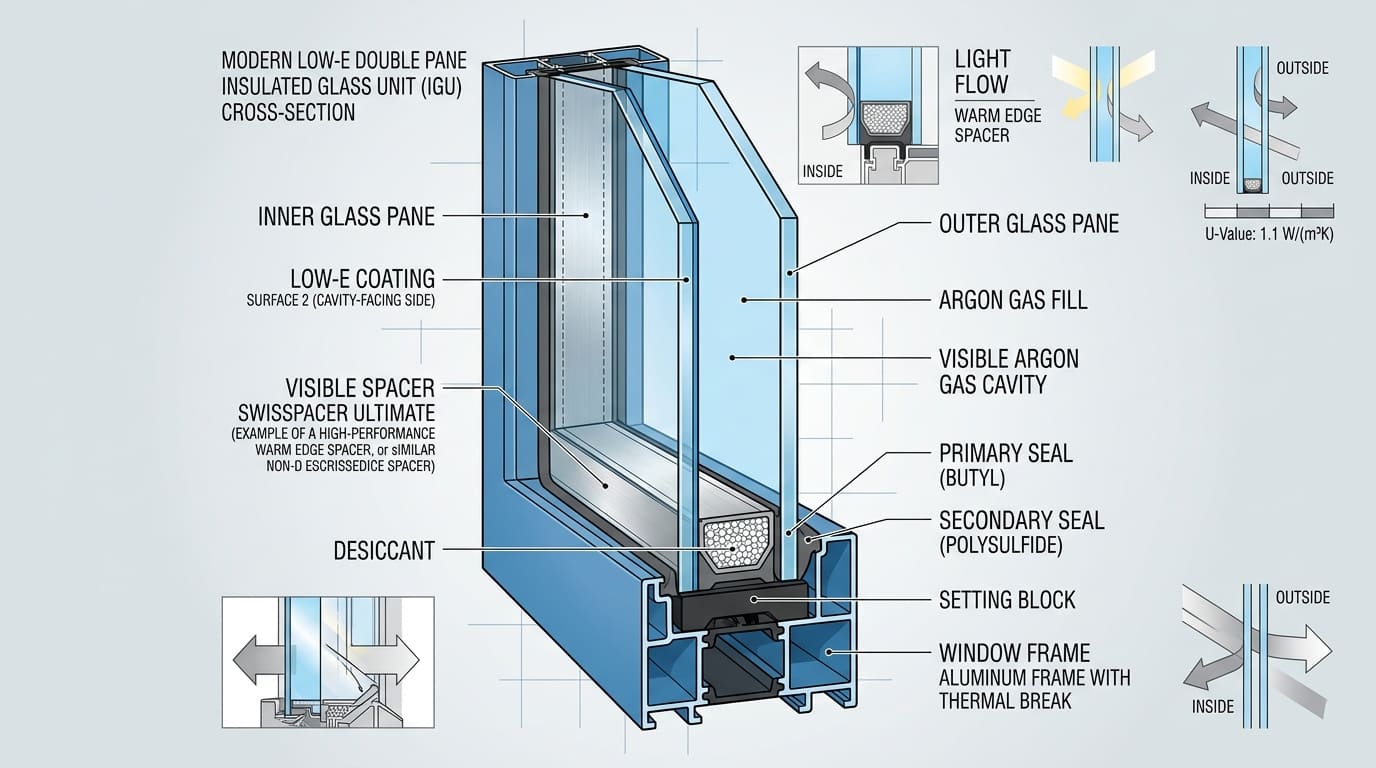
Energy-Efficient Glass Upgrades for DMV Homes: Low-E, Argon & Beyond
10 min read
Low-E Glass Explained: Is It Worth the Upgrade for Your DMV Home?
7 min read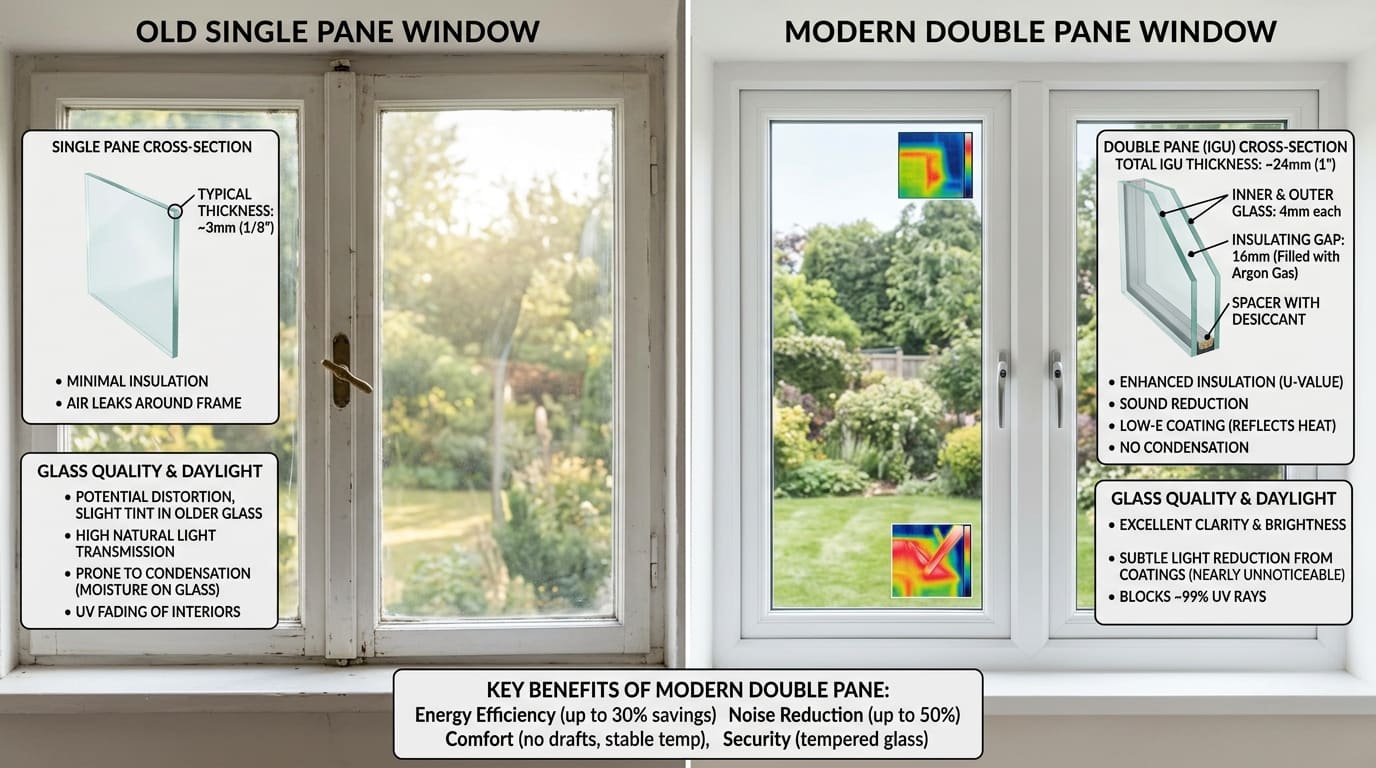
When to Upgrade from Single-Pane to Double-Pane Windows in the DMV
8 min read
How Glass Replacement Saves Money on Energy Bills in the DMV
7 min readExplore More Resources
Helpful Guides
Common Problems
24/7 Emergency
Board-Up & Glass
Licensed & Insured
DC, MD & VA
300+ Areas
DMV Coverage
Same-Day Service
When You Need It
Ready to Get Started?
Get a free estimate for any window or glass service across the DMV area.