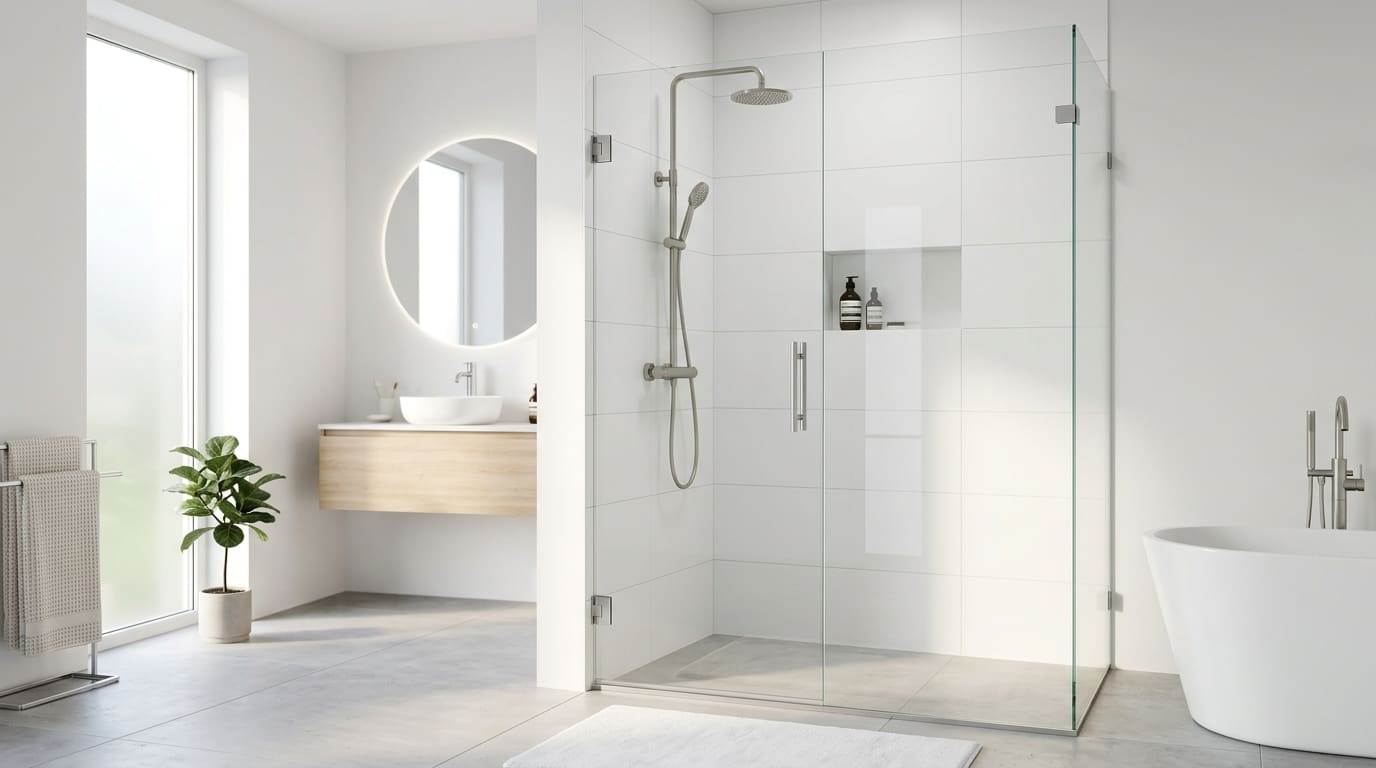
2026 Glass Shower Design Trends for DMV Bathrooms: What Is Actually Worth Doing
Shower glass has moved well beyond the chrome-framed clear glass enclosure of ten years ago. In 2026, the DMV bathrooms I am installing glass in look dramatically different — here is what is trending and what those trends actually cost.
Mike Reynolds
Lead Glass Technician & Owner
In This Article
Why Shower Glass Has Become a Design Focal Point
The bathroom remodel has become the signature home improvement project in the DMV's competitive housing market. In neighborhoods like Friendship Heights, North Bethesda, and Arlington's Clarendon corridor where high-density condos and renovated rowhomes trade regularly, an updated bathroom — particularly a master bath — is among the top value-adding renovations. And in a bathroom renovation, the shower glass is frequently the single most visible design element in the room.
What I see on jobsites in 2026 is the continuation of a shift that started around 2019 and has accelerated considerably: homeowners moving away from framed and semi-framed shower enclosures toward frameless and near-frameless designs, and simultaneously becoming much more sophisticated about glass type, thickness, and texture options. The "default" shower glass choice — clear tempered in an aluminum frame — is being replaced by a much wider range of specifications that reflect genuine design intent.
Frameless and Semi-Frameless: The Continuing Dominant Trend
The shift to frameless shower enclosures has been underway for years and shows no sign of reversing. Frameless enclosures use heavy-duty 3/8-inch or 1/2-inch tempered glass with minimal hardware — typically low-profile chrome, matte black, or brushed gold hinges, clips, and a single frameless channel at the base — rather than the full aluminum frame channel that surrounds the glass on all four sides in traditional framed enclosures.
The visual effect of frameless glass is a significant open-ness that makes bathrooms feel larger — particularly relevant in the DMV where master bathrooms in older homes and condos are often modest in size. Removing the visual bulk of aluminum frame channels can make a 50-square-foot bathroom feel notably more spacious. For smaller bathrooms in Capitol Hill rowhouses, Dupont Circle condos, and 1980s-era Northern Virginia colonials, this is a genuine and meaningful design improvement.
Semi-frameless designs — where the fixed panels have minimal framing but the door is frameless — offer a more affordable middle ground that achieves most of the visual openness of fully frameless at lower material cost. For homeowners who want the look but are working with a tighter budget, semi-frameless is often the right design decision.
Glass Texture: The 2026 Shift to Fluted and Reeded Glass
The single most notable emerging trend in shower glass I am seeing in 2026 is the use of textured glass — specifically fluted (also called reeded) glass with its distinctive vertical ridge pattern. Fluted glass has been used in interior design contexts for several years, but its adoption in shower enclosures has accelerated significantly in the past 12 to 18 months.
The appeal is both visual and functional. The regular ridge pattern creates a distinctive, spa-like aesthetic that reads as sophisticated without being fussy. It also provides semi-privacy — the ridges diffuse the view through the glass, allowing light to pass while reducing the visibility through the shower enclosure without resorting to the old frosted-sandblasted look that tends to read as dated.
Practical considerations with fluted shower glass: the textured surface is more difficult to clean than smooth glass, and the ridges can trap soap residue and water minerals more readily. This matters more in the DMV's moderately hard water areas — Montgomery County and northern Virginia have water hardness that deposits visible minerals on glass surfaces faster than softer water areas. If you choose fluted shower glass, plan on more attentive cleaning and a good daily squeegee habit.
Low-Iron Ultra-Clear Glass: The Quality Upgrade Most Homeowners Have Never Heard Of
Standard clear float glass has a slight green-blue tint caused by iron content in the glass batch. This tint is invisible in small panes but becomes visible at the edges and through thick glass — most obviously in the 3/8-inch and 1/2-inch glass used in frameless shower enclosures, where you can see the distinct green edge color at the top and bottom of the glass panel.
Low-iron glass — also called ultra-clear or starphire glass — reduces the iron content significantly, producing glass that is almost perfectly colorless. The edges are nearly white rather than green, and the glass appears crisper and more neutral in color. In bathroom applications where the glass is a prominent visual element, especially when combined with white tile, marble, or light-colored finishes, the difference between standard clear and low-iron glass is visible and meaningful to a trained eye.
Low-iron glass costs more than standard glass — typically 15 to 25 percent premium on the glass cost — but for a frameless enclosure that is the focal point of a master bath renovation, the additional cost relative to the total project budget is modest. In the bathrooms I have installed it in across Bethesda, McLean, and DC, the clients who chose low-iron consistently note the quality difference when they see it installed.
Hardware Finishes: Matte Black and Brushed Nickel Have Replaced Chrome as the Default
Hardware finish choices for shower glass have shifted considerably. Polished chrome, which was the standard for decades, has been largely supplanted by matte black in contemporary designs and brushed nickel in transitional designs. Brushed gold is a more assertive choice that works in certain high-contrast bathroom palettes but is less universally applicable.
From an installation standpoint, hardware finish is largely independent of glass specification — you choose the finish that matches your other bathroom hardware (faucets, towel bars, light fixtures) and we source the shower hardware in that finish. The practical consideration is consistency: mixing hardware finishes in a small bathroom is visually chaotic. Whatever finish you choose for the shower hardware, it should match or deliberately contrast (as a designed choice) with the other metal elements in the room.
Steam Shower Glass: Specific Requirements
Steam showers — fully enclosed shower enclosures designed to retain steam at higher temperatures and humidity than a standard shower — require specific glass and installation specifications. All glass in a steam enclosure must be fully tempered. The enclosure must be genuinely airtight at all glass-to-tile, glass-to-glass, and hardware interfaces, which requires specific gasket and seal details that differ from a standard wet shower enclosure. The ceiling or roof panel of a steam enclosure requires a slope to prevent steam condensation from dripping — flat ceiling glass in a steam enclosure creates an uncomfortable and operationally problematic drip pattern.
Steam shower glass is an area where installation quality matters enormously. A leaky steam enclosure is a persistent water damage problem for the surrounding structure. We regularly see steam shower installations in DMV homes where inadequate gaskets and seals have allowed steam to infiltrate wall framing over years, producing mold and structural damage that is expensive to remediate. If you are building or renovating a steam shower, invest in proper gasket systems and specify installation by someone who understands steam enclosure requirements specifically.
Getting a Shower Glass Quote
Shower glass is one of the most rewarding glass projects to work on because the design impact in the finished room is so significant. The variables — frameless vs. semi-frameless, glass type and thickness, texture, hardware finish — require a site visit and measurement to specify accurately. Send us photos of your existing shower or bathroom space via our photo estimate tool and we will give you an initial assessment and arrange a site visit to measure and discuss options in detail. Call (703) 470-7867 for shower glass consultations throughout DC, Maryland, and Virginia.
About the Author
Mike Reynolds
Lead Glass Technician & Owner
With over 15 years of experience in window and glass repair across the DC, Maryland, and Virginia area, Mike shares practical expertise to help homeowners and businesses make informed decisions about their glass repair and replacement needs.
Need Help With Your Glass?
Our experts are ready to help with any window or glass issue. Free estimates, same-day service available across DC, MD & VA.
Related Articles
Continue reading about guides
More Guides
View All
How to Tell If Your Window Glass Needs Repair or Replacement
8 min read
Stress Cracks in Windows: Causes, Prevention & Solutions for DMV Homeowners
7 min read
Foggy Windows: Why Double-Pane Seals Fail & What to Do About It
9 min read
Glass Replacement in Historic DMV Homes: Preservation Meets Performance
9 min readExplore More Resources
Helpful Guides
Common Problems
Related Pages
Our Services
24/7 Emergency
Board-Up & Glass
Licensed & Insured
DC, MD & VA
300+ Areas
DMV Coverage
Same-Day Service
When You Need It
Ready to Get Started?
Get a free estimate for any window or glass service across the DMV area.