Understanding and Fixing Window Condensation
Window condensation can signal a problem or just indicate high humidity. Virginia Glass Windows explains the difference and what to do for DMV homeowners dealing with condensation.
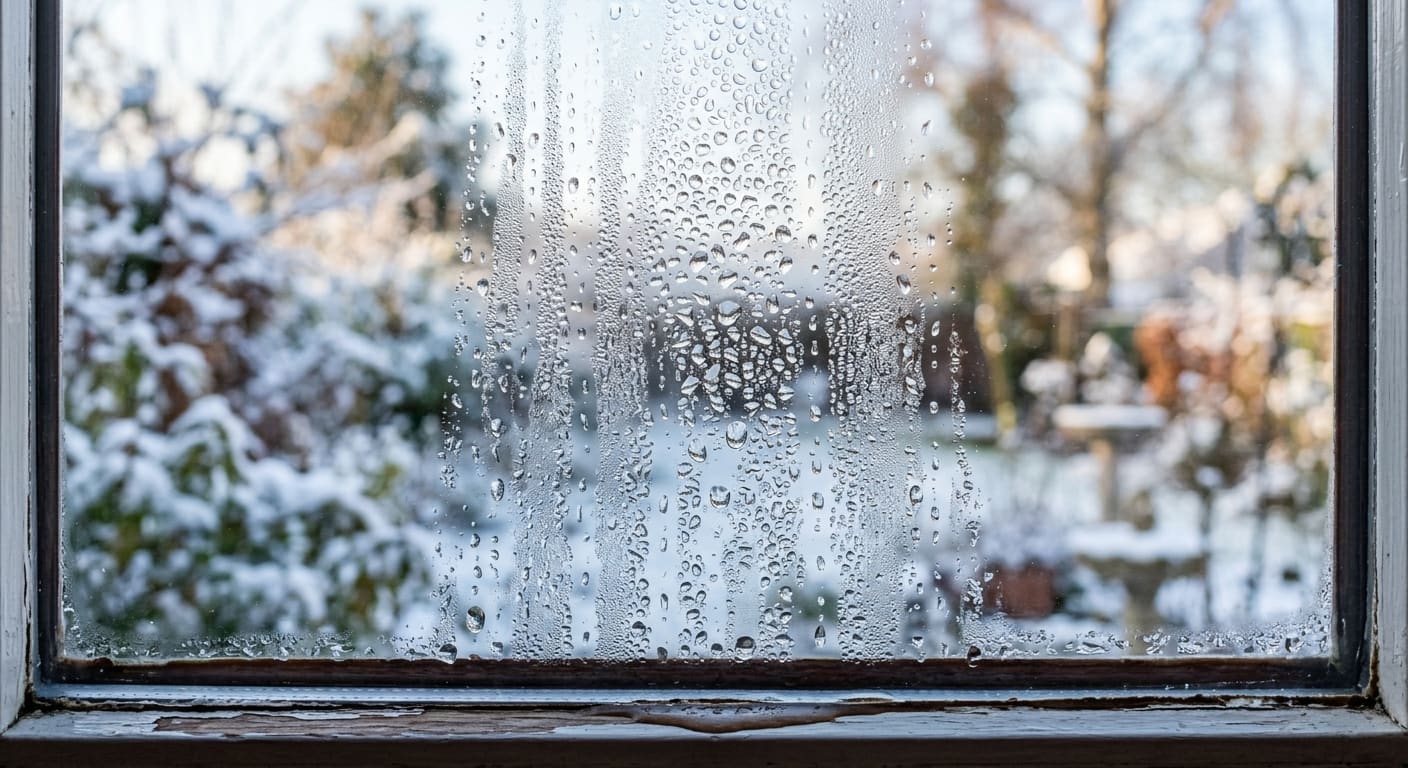
Types of Window Condensation
Window condensation occurs in three locations, and the location tells you exactly what is happening: on the interior glass surface, on the exterior glass surface, or between the panes (inside the IGU cavity).
Interior condensation (inside your home, on the room-facing glass surface) forms when the glass surface temperature is below the dew point of the room air. This is a humidity issue, not a window defect. You can wipe it away — it is on the surface.
Exterior condensation (on the outside of the glass) is actually a sign of a well-insulating window. If the glass is so well-insulated that its outer surface stays cold enough for outdoor dew to form on it, that means little heat is passing through — the opposite of a poorly performing window.
Between-pane condensation (inside the IGU) is the only type that indicates a window problem: seal failure. The moisture cannot be wiped away from either side. This requires IGU replacement.
Managing Interior Condensation
The DMV's humid climate makes interior condensation particularly common. Washington DC and its Maryland and Virginia suburbs experience very high relative humidity for extended periods, especially in summer and during winter thaws.
The most effective solution is humidity control. Keep interior relative humidity below 45 percent in winter. Ventilate bathrooms and kitchens aggressively after use. Consider a whole-house dehumidifier if condensation is chronic.
Improving window insulation reduces condensation by keeping the glass surface temperature higher. Upgrading from single-pane to double-pane, or adding interior storm inserts, raises the interior glass surface temperature significantly and reduces condensation risk.
Ensuring adequate warm air circulation near windows — from baseboard heaters, supply registers positioned below windows, or ceiling fans — also helps by moving warm room air across the glass surface.
When Condensation Signals a Problem
Condensation on the exterior wall surface adjacent to a window (rather than on the glass) indicates water infiltration, not humidity. This requires investigation of the window flashing, caulking, and drainage.
Condensation that runs down the glass and leaves mineral stains on the sill indicates chronic condensation that should be addressed to prevent sill rot and water damage.
If interior condensation forms at very low humidity (below 30 percent), the window is performing very poorly — either single-pane or a failed double-pane — and should be assessed for replacement.
Need Help With Your Glass?
Send us a photo of your window or glass issue and get a free estimate within hours. Our experts serve all of DC, Maryland, and Virginia.
Common Questions
Frequently Asked Questions
Answers to common questions about this topic from our DMV glass experts.
Keep Reading
Related Guides
Explore More Resources
Related Articles
Common Problems
Related Pages
Our Services
Ready to Get Started?
Get a free estimate from our glass experts. Same-day service available across DC, MD & VA.