Wine Cellar Glass: Doors, Walls & Climate Control Design
A glass-enclosed wine cellar showcases your collection beautifully — but the glass must maintain precise temperature and humidity. Here is how to design a wine room with glass that performs as well as it looks.
Mike Reynolds
Lead Glass Technician & Owner
In This Article
Why Glass Wine Cellars Require Specialized Glazing
A properly maintained wine cellar operates at 55 to 58 degrees Fahrenheit with 60 to 70 percent relative humidity — conditions dramatically different from the typical 72-degree, 40-percent-humidity living space adjacent to it. This temperature and humidity differential across the glass creates unique engineering challenges that standard residential glass is not designed to handle. The glass must provide thermal insulation comparable to a wall, prevent condensation on the warm side, block UV radiation that damages wine, and maintain these properties reliably for decades.
When a glass wine cellar is designed with standard glass, the consequences are predictable and costly: condensation forms on the warm side of the glass (the living room side), dripping onto floors and causing water damage; the cooling system runs continuously trying to overcome the thermal losses through inadequate glass; energy costs soar; and the glass panels may develop stress cracks from the sustained temperature differential across them. Proper glazing specification is not optional for a glass wine cellar — it is the foundation of a successful installation.
In the DMV area, where luxury homes in Potomac, Great Falls, McLean, Bethesda, and Georgetown increasingly feature glass-enclosed wine rooms as a design statement and entertaining feature, the demand for properly engineered wine cellar glass has grown substantially. Getting it right requires understanding the specific thermal, moisture, and UV performance requirements that differentiate wine cellar glass from standard architectural glazing.
Insulated Glass for Temperature Control
The thermal performance of wine cellar glass must prevent heat transfer from the warm living space into the cool cellar interior. Standard double-pane insulated glass with a U-factor of around 0.30 is insufficient for most wine cellar applications — the heat gain through the glass overwhelms the cooling system and causes temperature fluctuations that damage wine over time. Wine cellar glass specifications typically call for triple-pane insulated glass units (IGUs) with low-E coatings and gas fills that achieve U-factors of 0.20 or better.
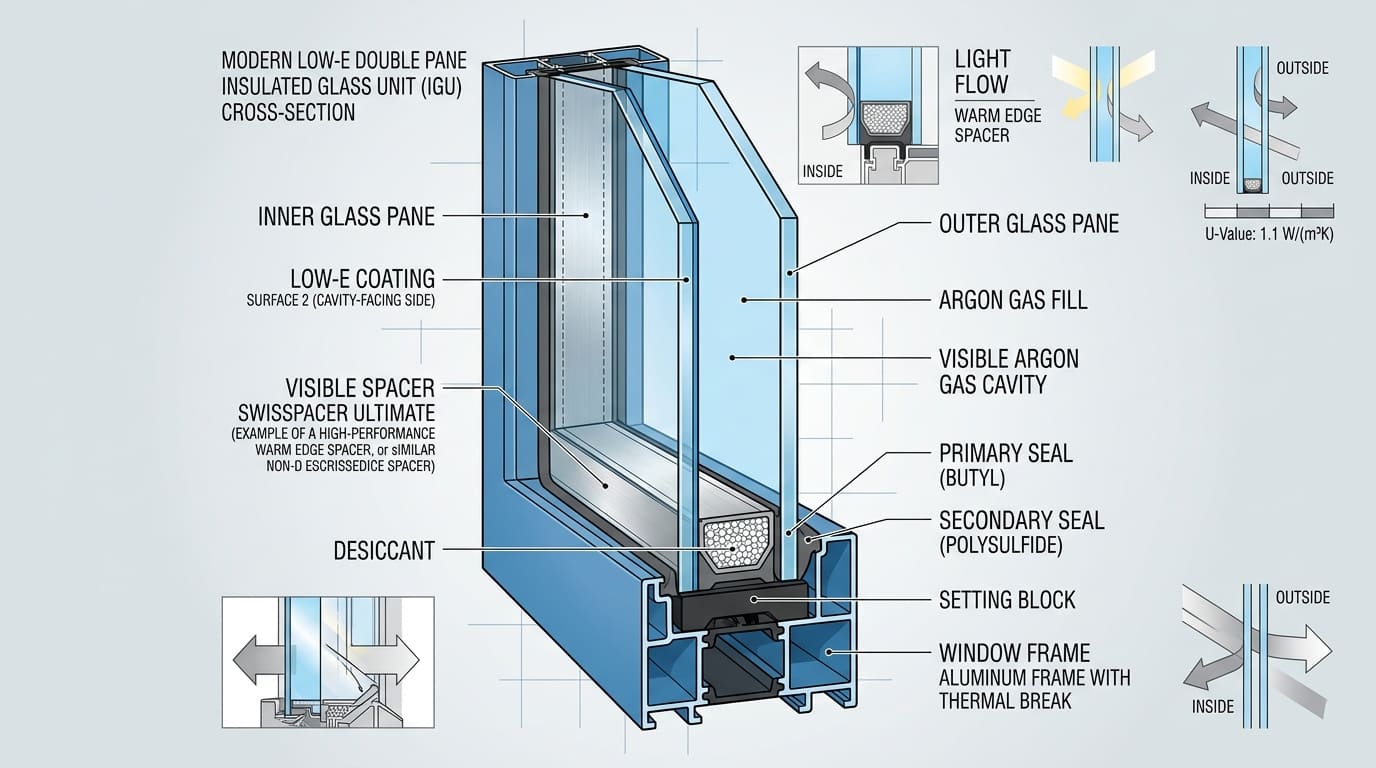
Triple-pane IGUs for wine cellars typically consist of three panes of glass separated by two gas-filled spaces. Low-E coatings on the interior surfaces (surfaces 2 and 5 in a triple-pane configuration) reduce radiant heat transfer, while argon or krypton gas fills in the spacer cavities reduce conductive and convective heat transfer. The result is glass that insulates nearly as well as an insulated wall, maintaining the temperature differential between the wine cellar and the adjacent living space without excessive load on the cooling system.
The spacer system between the glass panes is critical in wine cellar applications because of the high humidity on the cellar side. Warm-edge spacers — made of structural foam, silicone, or composite materials rather than aluminum — reduce thermal bridging at the glass edge and minimize condensation risk along the perimeter of the glass panel. In a wine cellar application where humidity levels are deliberately maintained at 60 to 70 percent, a cold glass edge caused by an aluminum spacer will condense moisture that can lead to mold growth, wood damage, and visible water staining.
Wine Cellar Door Options
The wine cellar door is typically the most prominent glass element and the one that must balance thermal performance with daily operation. Hinged glass doors in full-height configurations are the most popular choice for display-oriented wine cellars. A full-lite glass door — with glass extending from near the floor to near the top of the frame — provides maximum visibility and makes the wine collection a visual centerpiece of the adjacent room.
For thermal performance, wine cellar doors should use the same triple-pane IGU specification as the surrounding glass walls. The door frame must incorporate thermal breaks — insulating barriers within the frame profile that prevent the metal frame from conducting heat across the temperature boundary. Without thermal breaks, the door frame becomes a thermal bridge that conducts heat into the cellar and creates condensation on the frame surface. High-quality wine cellar door frames use thermally broken aluminum, fiberglass, or engineered composite materials that resist heat transfer while providing the structural rigidity needed to support heavy triple-pane glass.
Door seals and weatherstripping are critical for maintaining the cellar's controlled environment. Magnetic seals, compression gaskets, and automatic door bottoms (which drop a seal against the threshold when the door closes) work together to create an airtight closure. The seal must be vapor-tight to prevent warm, dry air from the living space from entering the cellar and disrupting the humidity balance. For wine cellars with glass walls on multiple sides, a vestibule entry — two doors in sequence — provides an additional thermal buffer and minimizes the temperature disruption each time the cellar is accessed.
UV Protection for Wine Preservation
Ultraviolet radiation is one of the most damaging environmental factors for wine. UV light triggers chemical reactions in wine — particularly in delicate white wines, champagne, and light-bodied reds — that cause premature aging, off-flavors, and a condition wine professionals call "lightstrike." Wine bottles use colored glass (green, brown, or amber) to filter UV, but clear-bottled wines and wines stored for long periods benefit from additional UV protection in the cellar environment.
Low-E coatings on wine cellar glass inherently block a significant portion of UV radiation — typically 75 to 85 percent — as a side benefit of their thermal performance function. For wine cellars where the glass faces a sunlit room or receives direct sunlight at any time of day, additional UV protection is advisable. Laminated glass with a UV-blocking interlayer can filter 99 percent or more of UV radiation while maintaining visual clarity. This level of protection is particularly important for wine cellars with south-facing or west-facing glass walls in DMV homes, where afternoon sun can deliver substantial UV exposure.
LED lighting inside the wine cellar is preferable to incandescent or halogen lighting because LEDs produce virtually no UV radiation. If the cellar interior is illuminated, the light source itself should not contribute to UV exposure. Dimmer controls allow the lighting to be turned off when the cellar is not being viewed or accessed, further minimizing light exposure to the collection.
Custom Wine Room Design in DMV Homes
Designing a glass wine cellar involves coordinating multiple trades and disciplines: the glass specification and installation, the cooling system design and installation, the racking and storage system, the flooring and wall finishes, the lighting, and the electrical and plumbing rough-in. The glass elements must be planned early in the design process because they affect the structural requirements (glass walls are heavier than standard walls), the cooling load calculation (the thermal performance of the glass directly determines the cooling system size), and the construction sequence.
Popular wine cellar locations in DMV homes include basement conversions (taking advantage of the naturally cool below-grade temperature), under-staircase alcoves (a space-efficient option for smaller collections), and dedicated rooms adjacent to dining or entertaining areas (maximizing the display impact). Glass walls between the wine cellar and the dining room or kitchen create a dramatic visual connection that makes the wine collection part of the home's design narrative. Some DMV homeowners are incorporating glass-enclosed wine features into open living plans — a glass wine tower visible from multiple rooms, or a glass wine wall dividing the dining and living areas.
Virginia Glass Windows works with wine cellar designers, HVAC contractors, and custom builders throughout Washington DC, Maryland, and Virginia to provide precision-engineered glass for wine cellar projects. From initial consultation on glass specifications through fabrication and installation, we ensure that your wine cellar glass delivers the thermal performance, UV protection, and visual impact your collection deserves. Contact us at (703) 470-7867 to discuss your wine cellar glass project.
About the Author
Mike Reynolds
Lead Glass Technician & Owner
With over 15 years of experience in window and glass repair across the DC, Maryland, and Virginia area, Mike shares practical expertise to help homeowners and businesses make informed decisions about their glass repair and replacement needs.
Need Help With Your Glass?
Our experts are ready to help with any window or glass issue. Free estimates, same-day service available across DC, MD & VA.
Related Articles
Continue reading about guides
More Guides
View All
How to Tell If Your Window Glass Needs Repair or Replacement
8 min read
Stress Cracks in Windows: Causes, Prevention & Solutions for DMV Homeowners
7 min read
Foggy Windows: Why Double-Pane Seals Fail & What to Do About It
9 min read
Glass Replacement in Historic DMV Homes: Preservation Meets Performance
9 min readExplore More Resources
Helpful Guides
Common Problems
Our Services
24/7 Emergency
Board-Up & Glass
Licensed & Insured
DC, MD & VA
300+ Areas
DMV Coverage
Same-Day Service
When You Need It
Ready to Get Started?
Get a free estimate for any window or glass service across the DMV area.