
Sliding Glass Door Problems: Rollers vs Glass — How to Diagnose What Is Wrong
Before you call for glass replacement on a sliding patio door, it is worth understanding whether the glass is actually the problem. A lot of sliding door complaints — hard to open, drafty, noisy — trace back to rollers and tracks, not the glass. Here is how to tell the difference.
Mike Reynolds
Lead Glass Technician & Owner
In This Article
The Roller vs. Glass Diagnostic Question
I get calls regularly from DMV homeowners who have decided they need new patio door glass because their sliding door has been getting progressively harder to use over the past year or two. In probably a third of those calls, the actual problem is the rollers — the small wheeled assemblies at the bottom of the door panel that ride in the track — not the glass at all. Replacing glass when the rollers are the problem solves nothing and costs money unnecessarily. Understanding the difference before you call is worth spending a few minutes on.
Conversely, there are homeowners who have been adjusting and lubricating their tracks for years, adding WD-40 whenever the door gets sticky, assuming it is a track problem — when what is actually happening is that a stress crack in the glass panel has progressed to the point where the panel is slightly out of square in the frame, causing the binding they keep trying to fix with lubrication. Getting the right diagnosis the first time saves time, money, and repeated failed fix attempts.
The diagnostic approach is systematic. You are looking at three things: the glass panel condition, the track and roller condition, and the frame condition. Each one has specific failure signatures that are distinct from the others.
Diagnosing Roller Problems
Roller problems are the most common cause of a sliding door that is getting harder to use over time. The rollers on a residential sliding patio door are small — typically 1 to 1.5 inches in diameter — and they bear the full weight of the glass panel, which can run from 50 to over 120 pounds depending on the door size and glass type. After 10 to 20 years of daily use in the DMV climate (which cycles the door through wide temperature swings every season, causing the frame to expand and contract repeatedly), roller bearings wear out, the roller housing springs weaken, and the wheels themselves can develop flat spots from accumulated grit in the track acting as an abrasive.
The key diagnostic sign of roller problems is that the door becomes progressively harder to open and close over time, without any visible damage to the glass. The door may feel like it is dragging — a resistance that starts smoothly and builds as you push — rather than catching at a specific point. Looking at the bottom edge of the door panel while someone else slowly slides it open, you may be able to see the roller assemblies — they should be round and rolling smoothly. A flat-spotted or failed roller wobbles or does not spin freely.
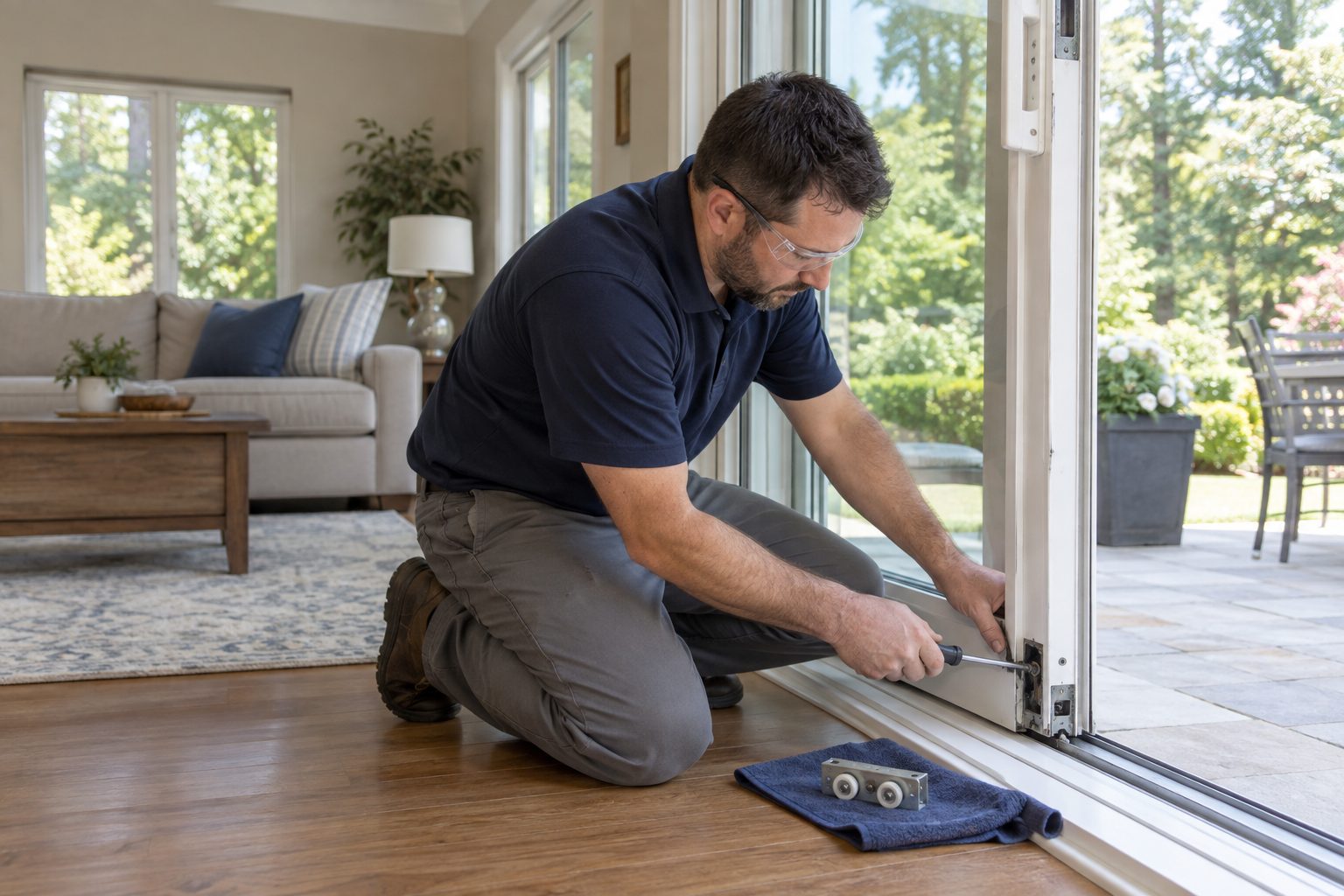
The adjustment test: most sliding doors have adjustment screws on the bottom of the door panel, accessible through holes or slots in the panel frame. These screws raise and lower the door on the rollers. If turning the adjustment screw noticeably changes the door operation — making it easier or harder — the rollers still have some functional life and the door may need adjustment rather than roller replacement. If adjustment does nothing, the rollers need replacement.
Track problems — bent, corroded, or debris-clogged tracks — produce a different feel than roller problems. A track problem typically creates a specific catching point as the door passes over the damaged section, rather than the general increasing resistance of worn rollers. Shining a flashlight along the track and looking for debris, bends, or raised sections usually identifies track problems quickly.
Diagnosing Glass Problems
Glass problems in sliding doors break into two categories: visible damage (cracks, chips, broken panels) and invisible damage (failed IGU seals causing fogging). Both are straightforward to identify with direct inspection.
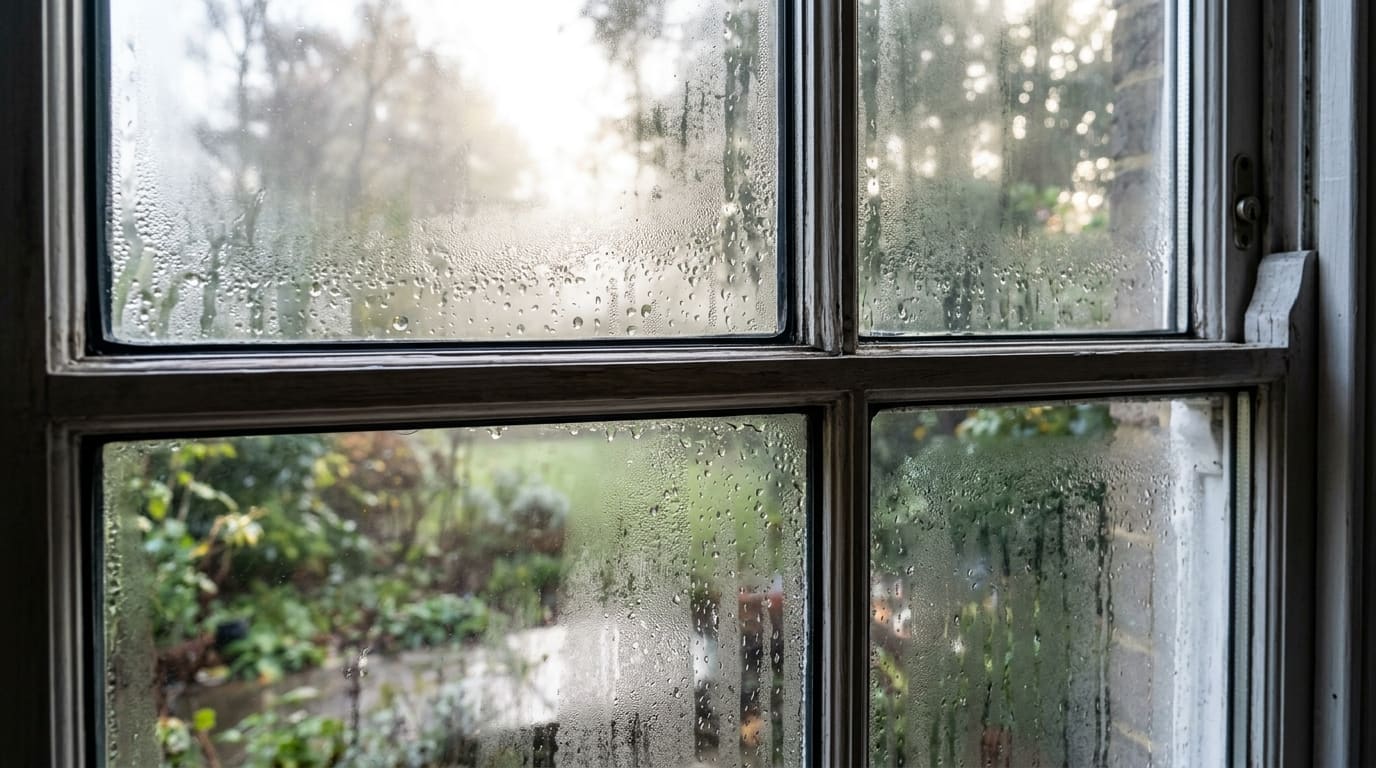
Fogged sliding door glass — the persistent cloudy or hazy appearance between the panes of a double-pane panel — is the most common glass-related complaint in sliding doors. It indicates a failed IGU seal, identical to the fogging that occurs in any double-pane window. The fog is between the panes and cannot be cleaned off from either surface. If you see this, the IGU needs replacement — no roller work will address it. See our guide on why double-pane seals fail for the full explanation.
Stress cracks in sliding door glass panels are less common than in fixed windows because the panels move and flex slightly, which can actually relieve some thermal stress. But they do occur — particularly in south or west-facing doors that experience extreme thermal cycling, or in older panels where edge chips have created stress concentration points. A stress crack in a sliding door panel typically starts at the edge of the glass (where it is supported in the frame) and runs inward, similar to stress cracks in any other window. The door may still slide and operate normally with an early-stage stress crack, but the crack will grow and eventually the panel will need replacement.
When You Need Both Roller AND Glass Work
The scenario I see occasionally in older sliding doors is that both the rollers and the glass need attention simultaneously. A door that has had worn rollers for an extended period may have allowed the panel to ride unevenly in the track, creating abnormal stress on the glass edges. Over time, this can initiate edge chips or stress cracks that would not have occurred with properly functioning rollers. The right repair in this case addresses both: new rollers plus glass replacement, in that order — rollers first so that the new glass installs into a properly supported and operating door system.
The reverse can also happen: a cracked glass panel that has developed significant distortion may be contributing to binding and unusual drag in a door that would otherwise slide smoothly. Replacing the glass in this case restores the panel geometry and may resolve the binding without any roller work needed.
DIY vs Professional for Roller and Track Work
Track cleaning and lubrication are straightforward DIY tasks — vacuum out debris, scrub with a stiff brush and mild cleaner, lubricate with silicone spray. Roller adjustment is also DIY-accessible: it requires only a screwdriver and five minutes. Roller replacement is within the capability of a handy homeowner with the right replacement roller assembly and basic hand tools, but it requires lifting the door panel out of the track — a two-person job due to weight — and correctly identifying the replacement roller type for your door brand and model.
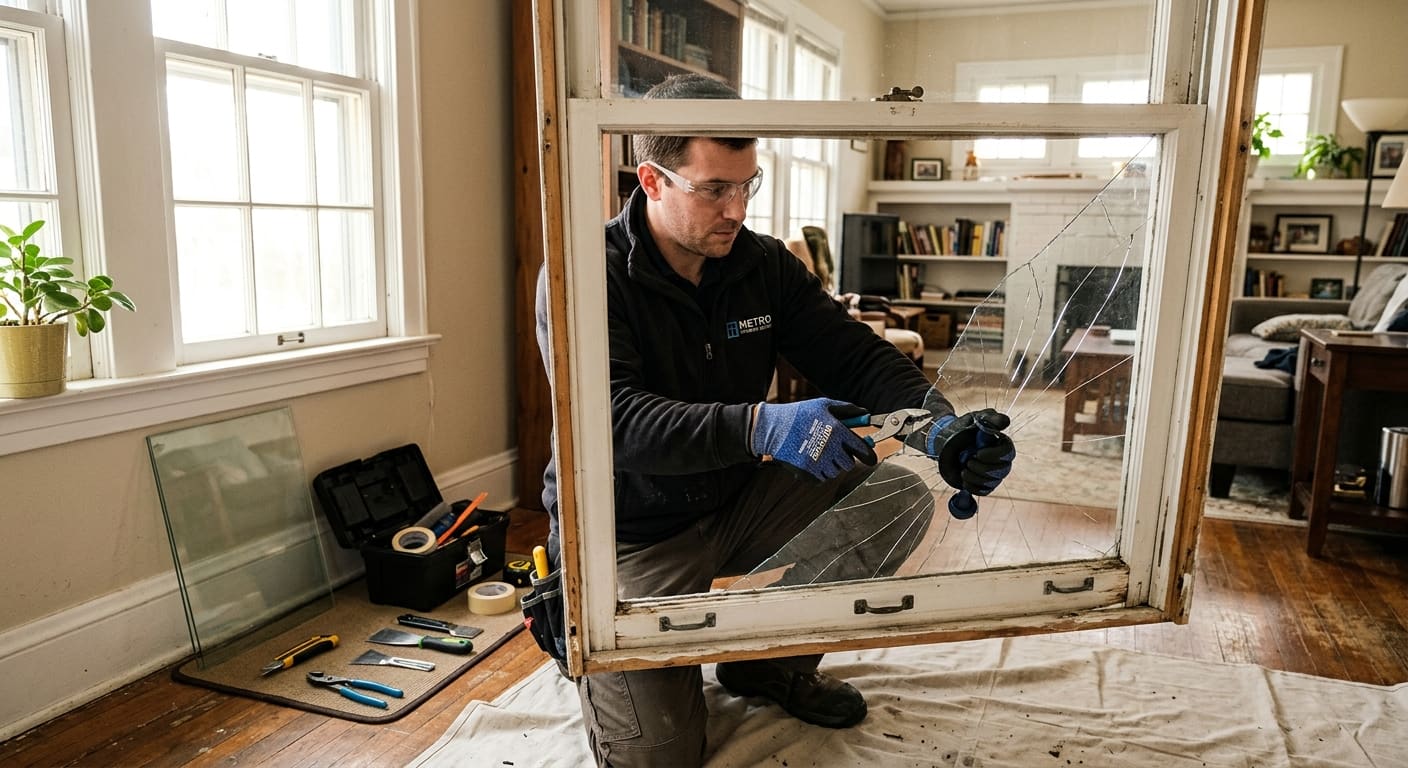
Glass replacement in a sliding door is a job for a professional. The glass panels in sliding doors are heavy, unwieldy, and must be precisely sized for the frame. Handling large glass panels safely requires proper equipment and technique, and an incorrectly sized or improperly installed replacement panel creates ongoing problems. At Virginia Glass Windows, we handle sliding door glass replacement throughout the DMV — call (703) 470-7867 or send photos and we will tell you whether you are looking at a glass issue, a roller issue, or both.
About the Author
Mike Reynolds
Lead Glass Technician & Owner
With over 15 years of experience in window and glass repair across the DC, Maryland, and Virginia area, Mike shares practical expertise to help homeowners and businesses make informed decisions about their glass repair and replacement needs.
Need Help With Your Glass?
Our experts are ready to help with any window or glass issue. Free estimates, same-day service available across DC, MD & VA.
Related Articles
Continue reading about glass repair

Explore More Resources
Helpful Guides
Common Problems
Related Pages
Our Services
24/7 Emergency
Board-Up & Glass
Licensed & Insured
DC, MD & VA
300+ Areas
DMV Coverage
Same-Day Service
When You Need It
Ready to Get Started?
Get a free estimate for any window or glass service across the DMV area.