Basement Egress Window Glass Options: Codes, Safety, and Below-Grade Performance
Basement egress windows serve dual roles: they must provide a viable emergency escape route and they must function as real windows in finished living space. Getting both right in the DMV climate requires understanding the code requirements and the unique challenges of below-grade glass.
Mike Reynolds
Lead Glass Technician & Owner
In This Article
What Makes Basement Egress Windows Different
Basement egress windows exist at the intersection of building code compliance, emergency safety, and everyday livability. In a finished basement serving as a bedroom, home office, or recreation room in a DMV home, the egress window must simultaneously meet the specific dimensional requirements of IRC Section R310, provide adequate natural light and ventilation, withstand the moisture and humidity challenges of a below-grade installation, and ideally contribute to the energy efficiency of the finished space.
These requirements sometimes pull in different directions. The largest possible glass area satisfies egress requirements and maximizes daylight, but it also maximizes surface area for thermal loss and condensation in winter. The most energy-efficient glass may be thicker and heavier than standard, affecting the opening force requirements. And the security vulnerabilities of basement windows — they are at or below grade, often partially screened by landscaping, and less visible to neighbors — argue for glass specifications that address forced entry risk alongside the other requirements.
Understanding how to navigate these competing requirements for a specific basement window installation in the DMV starts with the code minimum and builds from there based on the priorities of the specific application.
IRC R310: The Baseline Egress Requirements
Section R310 of the International Residential Code, adopted throughout the DMV with local amendments, establishes the minimum dimensions for egress openings in basement sleeping rooms and basement habitable spaces. These are the clear opening dimensions — the unobstructed opening through which a person can actually pass, not the overall window frame size.
The minimum clear opening area is 5.7 square feet for windows where the sill height is more than 44 inches above the floor, and 5.0 square feet for windows at 44 inches or less. The minimum clear opening height is 24 inches; the minimum clear opening width is 20 inches. The sill height — measured from the finished floor to the bottom of the clear opening — cannot exceed 44 inches. All of these are measured with the window in its fully open position.
The glass area of the window, the clear opening dimensions, and the maximum sill height all need to be satisfied simultaneously. A window with a large glass area can still fail egress requirements if the sash design limits the clear opening below the minimum. Casement windows that crank fully open typically provide the best clear opening area relative to their glass area — the entire sash swings clear, providing an opening essentially equal to the full glass area. Sliding windows where only half the window slides open require twice the glass area to achieve the same clear opening. Single-hung and double-hung windows are in between, depending on how far the sashes open.
Glass Options for Below-Grade Installations
Below-grade windows face moisture and condensation challenges that above-grade windows do not. The ground surrounding a basement window maintains a relatively constant temperature year-round — cooler than summer air but warmer than winter air — and this moderating effect on the frame and glass can help or hurt depending on the season. In winter, the ground-temperature effect keeps the frame warmer than a fully above-grade window, which can reduce condensation risk. In summer, the frame temperature stays cooler than an above-grade window that absorbs direct sun.
The primary moisture challenge for basement windows is the higher humidity in below-grade environments and the risk of ground water infiltration through poorly sealed window well installations. IGU seal failures happen more quickly in basement windows than in above-grade windows in some installations, primarily because of higher ambient humidity levels and the difficulty of maintaining proper drainage in window wells. Regular window well cleaning and drainage maintenance extends the life of basement window IGU seals significantly.
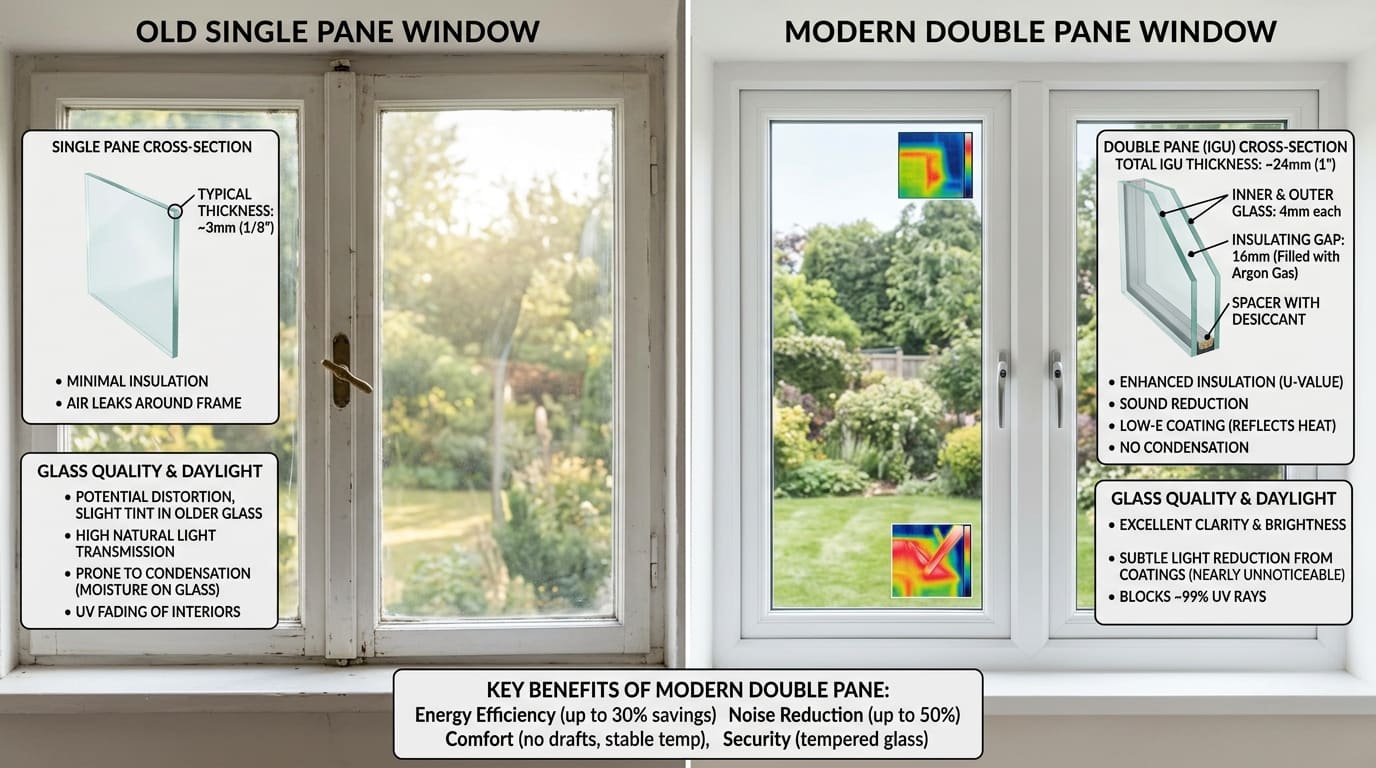
For below-grade installations, double-pane insulated glass with Low-E coating is the right specification for any finished basement serving as habitable space. The Low-E coating improves the condensation resistance of the glass — the interior surface of a Low-E unit runs warmer than a clear glass unit of the same construction, reducing the risk of condensation on the interior glass surface on cold winter nights. Argon fill provides the standard 15-20% improvement in thermal performance that it provides in all double-pane installations.
Security Glass for Basement Windows
Basement windows are a preferred point of entry for residential burglars in the DMV area. Their below-grade or at-grade position makes them less visible from the street and from neighboring properties. The compact size required to meet egress minimum dimensions while fitting within a foundation wall opening means many basement windows use thinner glass than standard above-grade windows. And window wells, which are required for below-grade egress windows, provide partial concealment from casual observation.
Laminated glass in basement egress windows provides meaningful security improvement over standard tempered or clear glass. The interlayer in laminated glass holds the pane together when broken, requiring sustained effort and creating significant noise to breach. For a residential burglar whose priority is speed and silence, a laminated basement window is a significantly less attractive target than one with standard glass. The cost premium for laminated glass in a basement egress window is modest relative to the security benefit — and unlike security bars or grilles, laminated glass does not obstruct the egress function that the window is required to provide.
Security bars or grilles over basement windows are prohibited on egress windows unless they have a quick-release mechanism operable from inside without tools or special knowledge. Permanently fixed bars on an egress window violate building codes across the DMV because they eliminate the emergency escape function. If you currently have fixed security bars on any egress window in your basement, replacing them with a quick-release system or removing them entirely is a code compliance requirement, not an option.
Window Well Considerations for Below-Grade Glass
The window well — the excavated area and retaining structure outside a below-grade window — is as important to the long-term performance of the glass as the glass itself. A poorly drained window well fills with water during heavy DMV rain events, saturates the soil against the foundation, and creates the moisture conditions that accelerate frame deterioration and IGU seal failure. A window well cover — clear polycarbonate dome or grate cover — keeps out rain and debris while still permitting emergency egress when needed.
For egress window wells, the clear opening requirements of R310 apply to the window well itself as well as the window: the well must be at least 9 square feet in area with a minimum horizontal dimension of 36 inches, and wells deeper than 44 inches must have a permanently fixed ladder or steps. A window well that meets these dimensions with a clear polycarbonate cover provides both weather protection and the egress access required by code.
Virginia Glass Windows installs and replaces basement egress window glass throughout Washington DC, Maryland, and Virginia. We assess the existing window installation, verify egress compliance dimensions, and recommend glass specifications appropriate for the specific basement environment and security context. Contact us at (703) 470-7867 or send photos for a free evaluation of your basement window needs.
About the Author
Mike Reynolds
Lead Glass Technician & Owner
With over 15 years of experience in window and glass repair across the DC, Maryland, and Virginia area, Mike shares practical expertise to help homeowners and businesses make informed decisions about their glass repair and replacement needs.
Need Help With Your Glass?
Our experts are ready to help with any window or glass issue. Free estimates, same-day service available across DC, MD & VA.
Related Articles
Continue reading about glass repair
More Articles
View All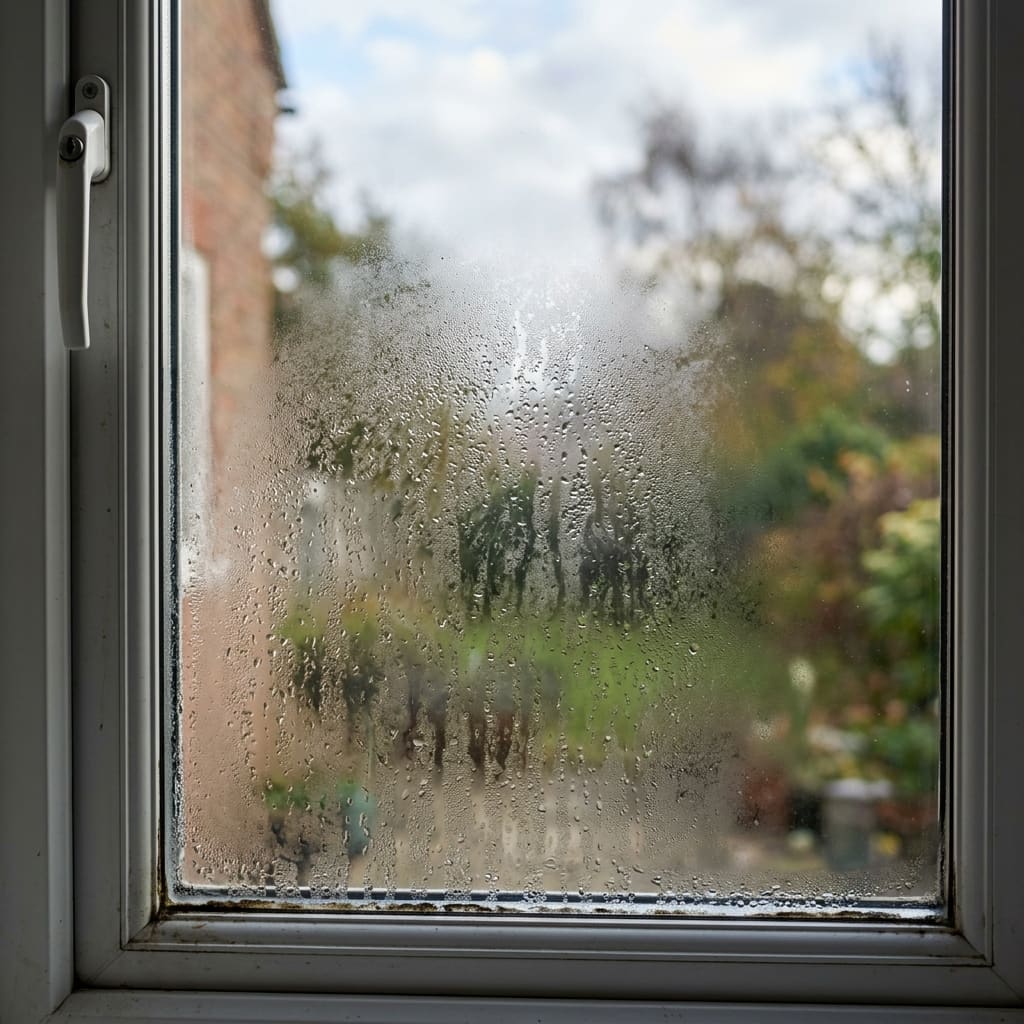
Condensation Between Window Panes: Why It Happens and What Actually Fixes It
9 min read
Replacing Glass in Aluminum Frame Windows: Challenges, Methods, and When to Upgrade
8 min read
Cathedral Ceiling and Clerestory Window Glass: The Unique Challenges and Solutions
8 min read
7 Signs You Need Window Glass Replacement (Don't Ignore #3)
8 min readExplore More Resources
Helpful Guides
Common Problems
Related Pages
Our Services
24/7 Emergency
Board-Up & Glass
Licensed & Insured
DC, MD & VA
300+ Areas
DMV Coverage
Same-Day Service
When You Need It
Ready to Get Started?
Get a free estimate for any window or glass service across the DMV area.