Condensation Between Window Panes: Why It Happens and What Actually Fixes It
Condensation between the panes of a double-pane window is one of the most misunderstood problems in home maintenance. It looks like a cleaning issue, but it is actually a structural failure inside the sealed glass unit. Here is what is actually happening and what the options are.
Mike Reynolds
Lead Glass Technician & Owner
In This Article
Understanding What You Are Actually Seeing
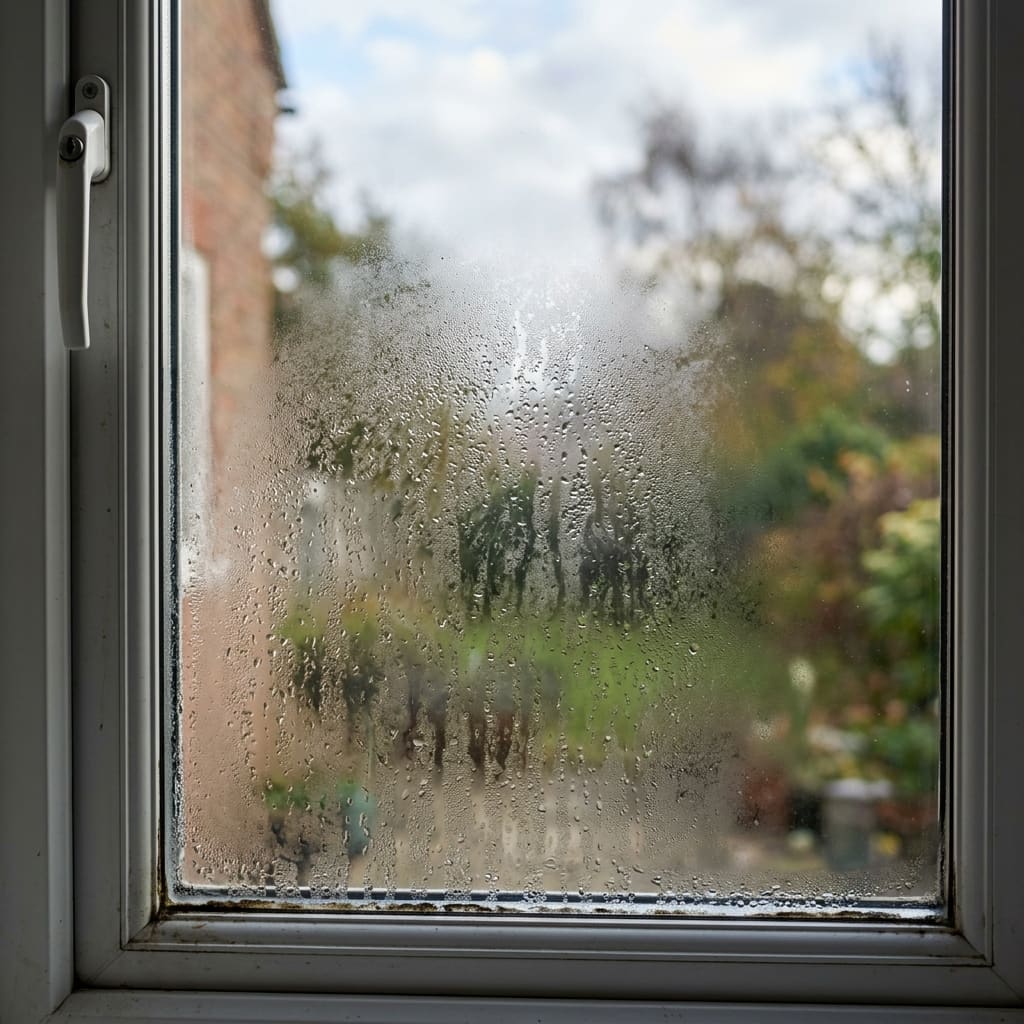
The hazy, foggy, or condensation-streaked appearance between the panes of a double-pane window is not on the glass surface — it is inside the sealed space between the two panes. You cannot clean it from the exterior, you cannot clean it from the interior, and wiping the glass with any cleaner will have no effect because the moisture causing the appearance is trapped between two panes of glass in a hermetically sealed unit.
What you are looking at is the consequence of a failed perimeter seal on your insulated glass unit (IGU). Every double-pane window is a factory-sealed assembly: two panes of glass separated by a spacer, with the cavity between them filled with air or an inert gas (usually argon), and the entire perimeter sealed with a primary sealant and a secondary structural sealant. This sealed system is designed to prevent atmospheric moisture from entering the cavity and to retain the insulating gas fill.
When the seal fails — and all IGU seals eventually fail, typically after 15 to 25 years in normal conditions — outdoor air carrying humidity begins infiltrating the cavity. The desiccant material inside the spacer absorbs this moisture initially, which is why early-stage seal failures sometimes produce fog that appears on cold mornings and then clears as the glass warms. Once the desiccant is fully saturated, the moisture remains visible as persistent fogging, streaking, or — in advanced cases — visible droplets on the interior glass surfaces within the cavity.
What Causes Seal Failures in the DMV
The primary mechanism of IGU seal failure is thermal fatigue — the repeated stress of thermal expansion and contraction cycling over years of daily temperature changes. Every day, solar heating causes the gas in the cavity to expand, which pushes outward on the seal perimeter. Every night, cooling causes the gas to contract, creating a slight inward pull on the seal. This daily pumping action, multiplied over thousands of cycles per year, fatigues the seal materials until microscopic cracks form and the hermetic barrier is breached.
The DMV climate accelerates this process. Our seasonal temperature range — from below 20°F in January cold snaps to over 95°F in August — creates larger daily and seasonal temperature swings than milder climates. South-facing and west-facing windows experience more intense thermal cycling than north-facing windows because of direct solar exposure, which is why seal failures in DMV homes often appear first on the sunny side of the house.
Specific conditions that accelerate seal failure beyond normal thermal fatigue include: installation defects where the glass was improperly supported, allowing the panel to flex under wind loading; building settlement that changes the frame geometry and creates stress on the glass edge and seal; high interior humidity that creates greater moisture pressure differential across the seal; and cleaning products with ammonia or other aggressive chemicals that degrade seal materials over time when used repeatedly in the joint area.
The Progression of Seal Failure
Understanding the progression of failure helps you make better decisions about timing repairs and understanding why some windows look worse than others even in the same building.
Stage 1: The desiccant in the spacer is still functional. Morning fog appears on cold days and clears as the day warms. This stage may last months to years after the first breach occurs, depending on how large the breach is and how humid the outdoor air is during the period. In a DMV summer, when outdoor humidity regularly exceeds 70-80%, Stage 1 may progress to Stage 2 rapidly. In a dry winter, progression may slow.
Stage 2: The desiccant is saturated. Fog is persistent — visible in all conditions, not just cold mornings. The window consistently appears hazy. The insulating gas fill is gone, replaced by humid air, and the window is performing significantly below its rated thermal performance. If you have felt how much colder a fogged window feels on the interior surface on a winter night compared to a functioning window, you have experienced the performance difference directly.
Stage 3: Mineral deposits form on the interior glass surfaces within the cavity. Dissolved calcium, silica, and other minerals from the infiltrating moisture deposit on the glass surfaces as the moisture evaporates and re-condenses in cycles. These deposits appear as white streaks, crystalline patterns, or a permanent milky haze. At this stage, even if the seal could somehow be repaired, the glass surfaces within the cavity are permanently etched — the window cannot be restored to clarity.
Why Defogging Is Not a Real Solution
You will find services advertising "window defogging" that drill small holes in the IGU, inject a cleaning solution, add desiccant pellets, and reseal the holes. This process temporarily removes the visible fog in most cases. But it does not repair the original failed seal. The original failure path is still present, outdoor air continues to infiltrate, and the desiccant added during defogging saturates again — typically within one to three years, sometimes faster.
The defogging process also introduces new vulnerabilities: the drilled holes create additional potential failure points even after resealing, and the original insulating gas fill cannot be restored. The thermal performance improvement from defogging is minimal because the window operates on air rather than argon regardless of whether the visible fog is present. You are paying for a temporary cosmetic improvement while the underlying performance problem continues. For the same money, a proper IGU replacement would be a permanent solution.
The Permanent Solution: IGU Replacement
Replacing the failed insulated glass unit with a new factory-sealed unit is the only permanent solution. The replacement unit is fabricated to the exact dimensions of the failed unit, the old unit is removed from the frame, and the new unit is installed and sealed. The process takes 30 to 60 minutes per window and creates minimal disruption.
The replacement is also an opportunity to upgrade from whatever glass specification the original windows had to current high-performance glass. Many DMV homes from the 1980s and 1990s have original clear glass double-pane units with no Low-E coating — the performance baseline that existed before modern energy-efficient coatings became standard. Upgrading to Low-E argon IGUs during a seal failure replacement provides better thermal performance than the windows had when new. The cost difference between replacing with the same specification versus upgrading to Low-E is modest relative to the total project cost.
For multiple windows in the same home failing around the same time — a common pattern when windows were installed in the same year and the seals age together — volume pricing for whole-home IGU replacement makes the project significantly more economical than addressing windows one at a time. Contact Virginia Glass Windows at (703) 470-7867 or send photos of your fogged windows for a free assessment and quote. We assess the number and severity of failures in your home and provide a comprehensive replacement plan.
About the Author
Mike Reynolds
Lead Glass Technician & Owner
With over 15 years of experience in window and glass repair across the DC, Maryland, and Virginia area, Mike shares practical expertise to help homeowners and businesses make informed decisions about their glass repair and replacement needs.
Need Help With Your Glass?
Our experts are ready to help with any window or glass issue. Free estimates, same-day service available across DC, MD & VA.
Related Articles
Continue reading about glass repair
More Articles
View All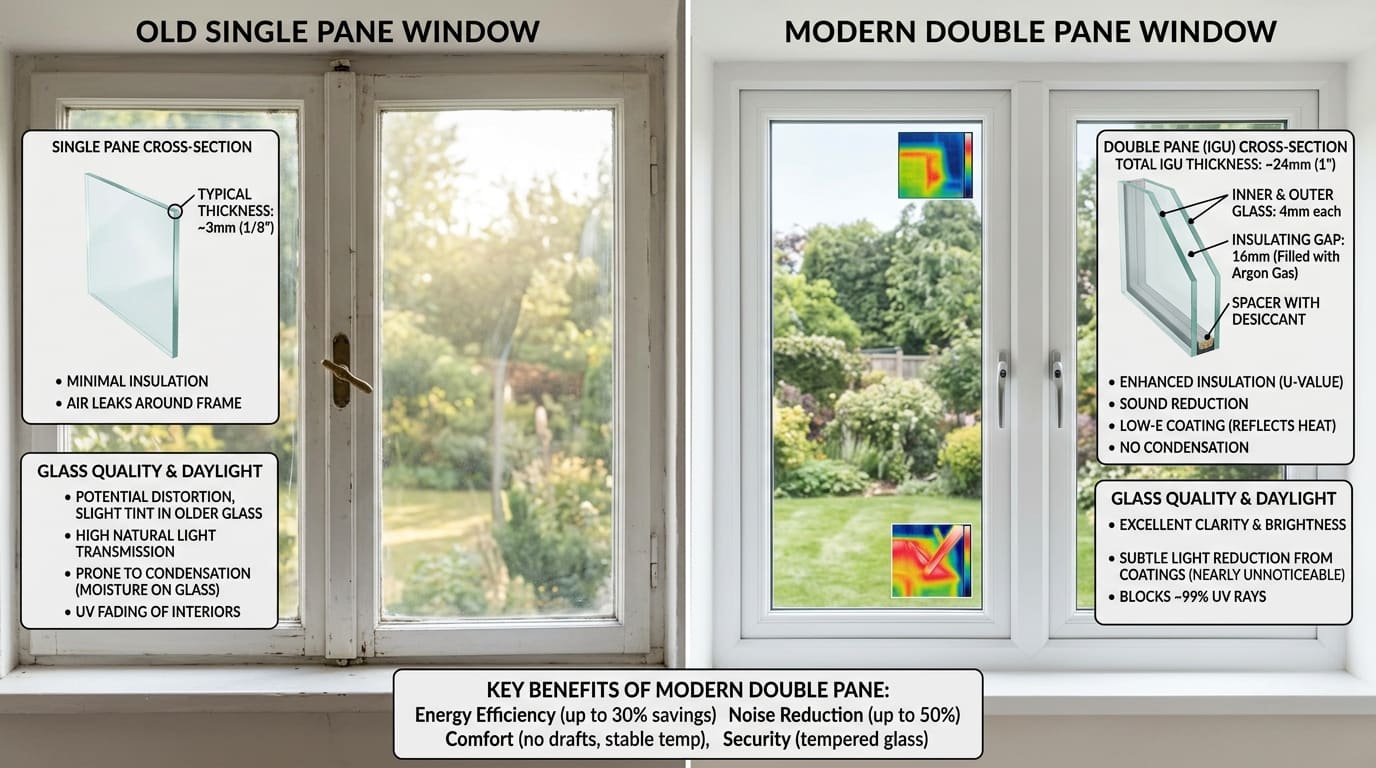
Basement Egress Window Glass Options: Codes, Safety, and Below-Grade Performance
8 min read
Replacing Glass in Aluminum Frame Windows: Challenges, Methods, and When to Upgrade
8 min read
Cathedral Ceiling and Clerestory Window Glass: The Unique Challenges and Solutions
8 min read
7 Signs You Need Window Glass Replacement (Don't Ignore #3)
8 min readExplore More Resources
Helpful Guides
Common Problems
Related Pages
Our Services
24/7 Emergency
Board-Up & Glass
Licensed & Insured
DC, MD & VA
300+ Areas
DMV Coverage
Same-Day Service
When You Need It
Ready to Get Started?
Get a free estimate for any window or glass service across the DMV area.