Fireplace Glass Guide: Types, Safety & Replacement
Guide to fireplace glass doors and inserts. Tempered, ceramic, and Pyroceram glass types. Safety codes for fireplace glass. Energy efficiency benefits. Expert service from Virginia Glass Windows.
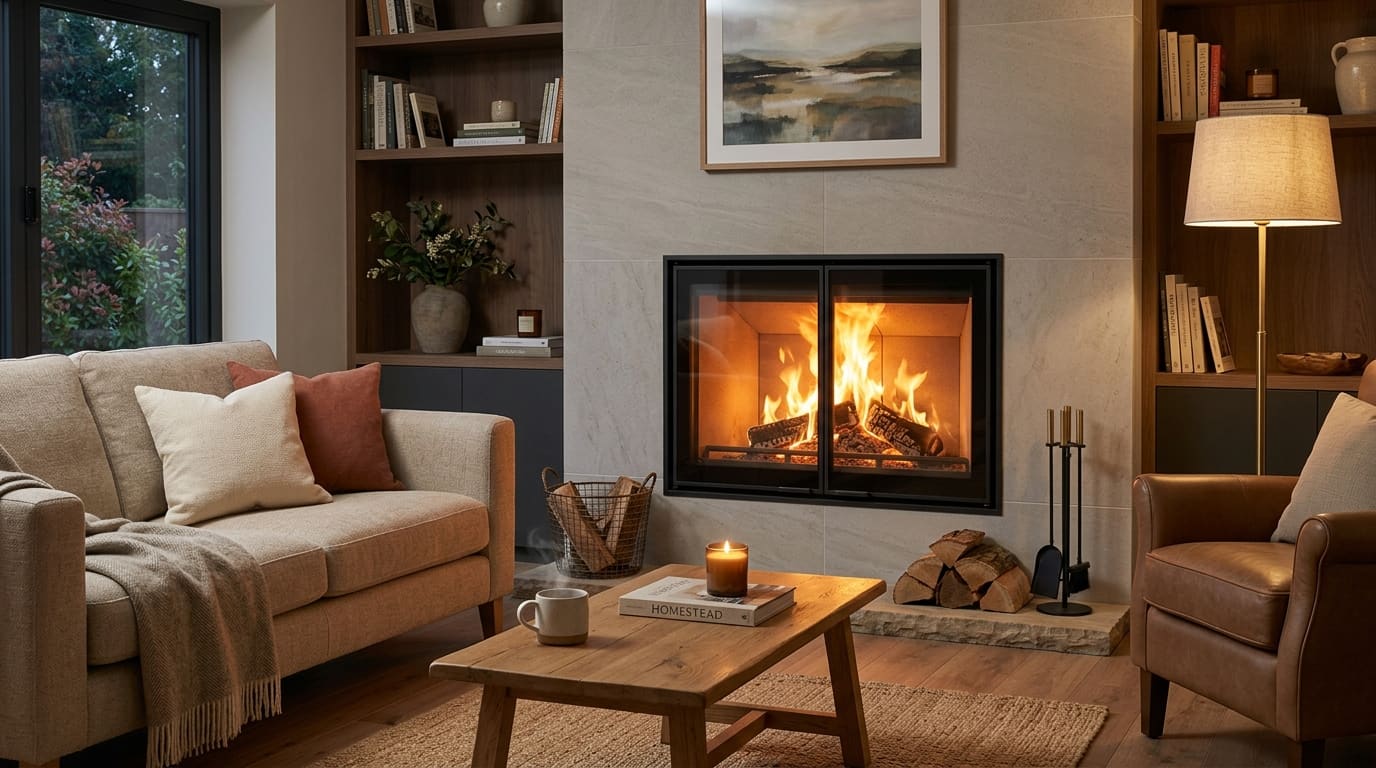
Why Fireplace Glass Matters
Fireplace glass doors and inserts serve multiple critical functions: they prevent sparks and embers from escaping into your living space, dramatically improve fireplace energy efficiency, reduce indoor air quality problems from open fireplaces, and add aesthetic value to one of your home most prominent architectural features. In DMV homes, where fireplaces are common in properties ranging from colonial Georgians in Alexandria to mid-century moderns in Bethesda, properly specified fireplace glass is both a safety necessity and a comfort upgrade.
Not all glass can withstand the extreme temperatures of a fireplace. Standard window glass, even tempered safety glass, will crack and shatter when exposed to fireplace heat. Fireplace applications require specialized heat-rated glass designed to withstand sustained temperatures of 400 to 1,400 degrees Fahrenheit depending on the application. Understanding which glass type is appropriate for your specific fireplace is essential.
Virginia Glass Windows provides expert fireplace glass services including replacement glass for existing doors, custom glass doors for open fireplaces, glass for gas fireplace inserts, and glass for wood-burning stove doors. We carry the full range of heat-rated glass types and custom-cut panels to your exact specifications.
Tempered Glass for Fireplace Doors
Tempered glass is the most common and economical option for fireplace doors on traditional wood-burning fireplaces with fireplace doors set at least several inches from the fire. Tempered glass withstands sustained temperatures up to approximately 400 to 450 degrees Fahrenheit, which is adequate for most fireplace door applications where the glass is separated from the flames by the depth of the firebox.
The key limitation of tempered glass is thermal shock resistance. Tempered glass can crack if subjected to rapid temperature changes — such as cold water splashing on hot glass. It also cannot withstand direct flame contact. For these reasons, tempered glass is appropriate for fireplace doors that maintain a safe distance from the fire but is not suitable for wood stove doors, gas fireplace inserts with close-proximity burners, or any application where the glass may contact flames directly.
Virginia Glass Windows stocks tempered fireplace glass in standard thicknesses and can custom-cut panels to fit any fireplace door frame. We verify that tempered glass is the appropriate choice for your specific fireplace configuration before cutting. If your application requires higher heat resistance, we recommend ceramic or Pyroceram glass as described in the following sections.
Ceramic Glass: Extreme Heat Resistance
Ceramic glass (often sold under the brand name NeoCeram or Robax) is a transparent glass-ceramic material that withstands continuous temperatures up to 1,300 to 1,400 degrees Fahrenheit — far beyond the capability of tempered glass. It is the standard choice for wood-burning stove doors, gas fireplace inserts, and any application where the glass is in close proximity to flames or high-temperature surfaces.
Unlike tempered glass, ceramic glass has exceptional thermal shock resistance. It can handle rapid temperature changes without cracking, which is critical in fireplace applications where cold air can hit hot glass when a stove door is opened or when a gas fireplace is ignited from cold. The coefficient of thermal expansion for ceramic glass is near zero, meaning it barely expands or contracts with temperature changes.
Ceramic glass costs significantly more than tempered glass but is essential for high-heat applications. In the DMV area, where many homes have wood-burning stoves for supplemental heating and gas fireplace inserts for convenience, ceramic glass is one of the most commonly replaced fireplace components. Virginia Glass Windows stocks ceramic glass in standard stove door sizes and cuts custom sizes for unique applications.
Pyroceram and Specialty Fireplace Glass
Pyroceram is a specific brand of glass-ceramic material developed by Corning that has become a generic term for high-temperature transparent ceramics in the fireplace industry. It is functionally similar to NeoCeram and Robax ceramic glass, withstanding continuous exposure to temperatures around 1,200 to 1,300 degrees Fahrenheit. Pyroceram panels are found in many factory-built fireplaces and stove models.
Self-cleaning ceramic glass is a premium option that uses a special surface coating to burn off soot deposits at high temperatures. This pyrolytic coating reduces the frequency of manual glass cleaning, which is particularly appealing for wood-burning fireplace and stove owners who struggle with soot buildup on the viewing glass. The self-cleaning function activates during high-temperature burns, gradually restoring glass clarity.
Tinted ceramic glass is available in bronze, gray, and other colors for aesthetic purposes. Some fireplace manufacturers specify tinted ceramic glass to match their design aesthetic or to reduce visible flame intensity. When replacing tinted ceramic glass, it is important to match the original tint for proper appearance. Virginia Glass Windows identifies the correct glass type, tint, and thickness for your specific fireplace or stove model.
Safety Codes and Requirements
Fireplace glass installations must comply with several safety standards. UL 127 (factory-built fireplaces), UL 1482 (room heaters), and UL 737 (fireplace stoves) all specify requirements for glass panels including heat resistance, impact resistance, and proper mounting. When replacing fireplace glass, the replacement must meet or exceed the specifications listed in the fireplace or stove manufacturer documentation.
In the DMV area, fire codes administered by local fire marshals require that fireplace installations meet the listing requirements of the appliance manufacturer. Using incorrect glass — such as substituting standard tempered glass for ceramic in a wood stove — violates the appliance listing and creates a serious fire and injury hazard. If the glass cracks during operation, hot embers and combustion gases can escape into the living space.
Gas fireplace inserts have additional requirements under ANSI Z21.88 (vented gas fireplace heaters). The glass panel in a gas insert operates as part of the sealed combustion system — it must maintain an airtight seal to prevent combustion gases from entering the living space. Replacement glass must match the manufacturer specifications exactly for thickness, type, and gasket dimensions. Virginia Glass Windows verifies manufacturer specifications before cutting any fireplace glass.
Energy Efficiency Benefits
An open fireplace without glass doors is one of the least energy-efficient heating systems possible. While the fire provides radiant heat to the room directly in front of it, the open chimney draws enormous volumes of heated room air up the flue — often more heat than the fire produces. Studies have shown that an open fireplace can actually increase overall heating costs by creating a net heat loss from the home.
Glass fireplace doors dramatically improve this equation. When the doors are closed, the fireplace draws combustion air from the room at a controlled rate rather than creating an uncontrolled draft. The glass radiates heat from the fire into the room while preventing heated room air from escaping up the chimney. Closing the glass doors when the fire dies down prevents the chimney from drawing heated air out of the home as the fire cools.
For DMV homeowners who enjoy fireplace ambiance but want energy efficiency, glass doors are the single most impactful upgrade. Many DMV homes — particularly older properties in Georgetown, Capitol Hill, Kensington, and Old Town Alexandria — have open fireplaces that benefit enormously from glass door installation. Virginia Glass Windows installs custom-fitted glass doors on existing masonry fireplaces and replaces glass on existing door systems and inserts. Contact us at (703) 470-7867 for a free fireplace glass consultation.
Replacement and Maintenance
Fireplace glass replacement is needed when the glass cracks, chips, or develops permanent clouding from chemical deposits. Ceramic glass in wood stoves commonly develops a white haze from mineral deposits in the wood that can sometimes be cleaned with specialized ceramic glass cleaner but eventually requires replacement. Tempered glass in fireplace doors can develop stress cracks from heat cycling over years of use.
When replacing fireplace glass, accurate measurements are critical. Fireplace glass panels fit into channels or gasket systems with tight tolerances. Oversized panels will not fit, and undersized panels allow air leakage that reduces efficiency and may compromise the combustion seal on gas appliances. Virginia Glass Windows measures existing panels or references manufacturer specifications to ensure exact sizing.
Regular maintenance extends the life of fireplace glass. For wood-burning fireplaces and stoves, clean soot deposits from the glass after every few fires using fireplace glass cleaner (not standard glass cleaner, which can leave residue that burns onto the surface). Inspect gaskets and mounting clips annually and replace as needed. Virginia Glass Windows provides fireplace glass cleaning and maintenance service for DMV homeowners who prefer professional care.
Need Help With Your Glass?
Send us a photo of your window or glass issue and get a free estimate within hours. Our experts serve all of DC, Maryland, and Virginia.
Common Questions
Frequently Asked Questions
Answers to common questions about this topic from our DMV glass experts.
Keep Reading
Related Guides
Explore More Resources
Related Articles
Common Problems
Our Services
Ready to Get Started?
Get a free estimate from our glass experts. Same-day service available across DC, MD & VA.