Tempered vs Laminated Glass: Which Do You Need for Your DMV Home?
Both tempered and laminated glass are called "safety glass" but they work very differently. Here is when each type is required, when each is recommended, and how to choose for your DMV home.
Mike Reynolds
Lead Glass Technician & Owner
In This Article
How Tempered Glass Works
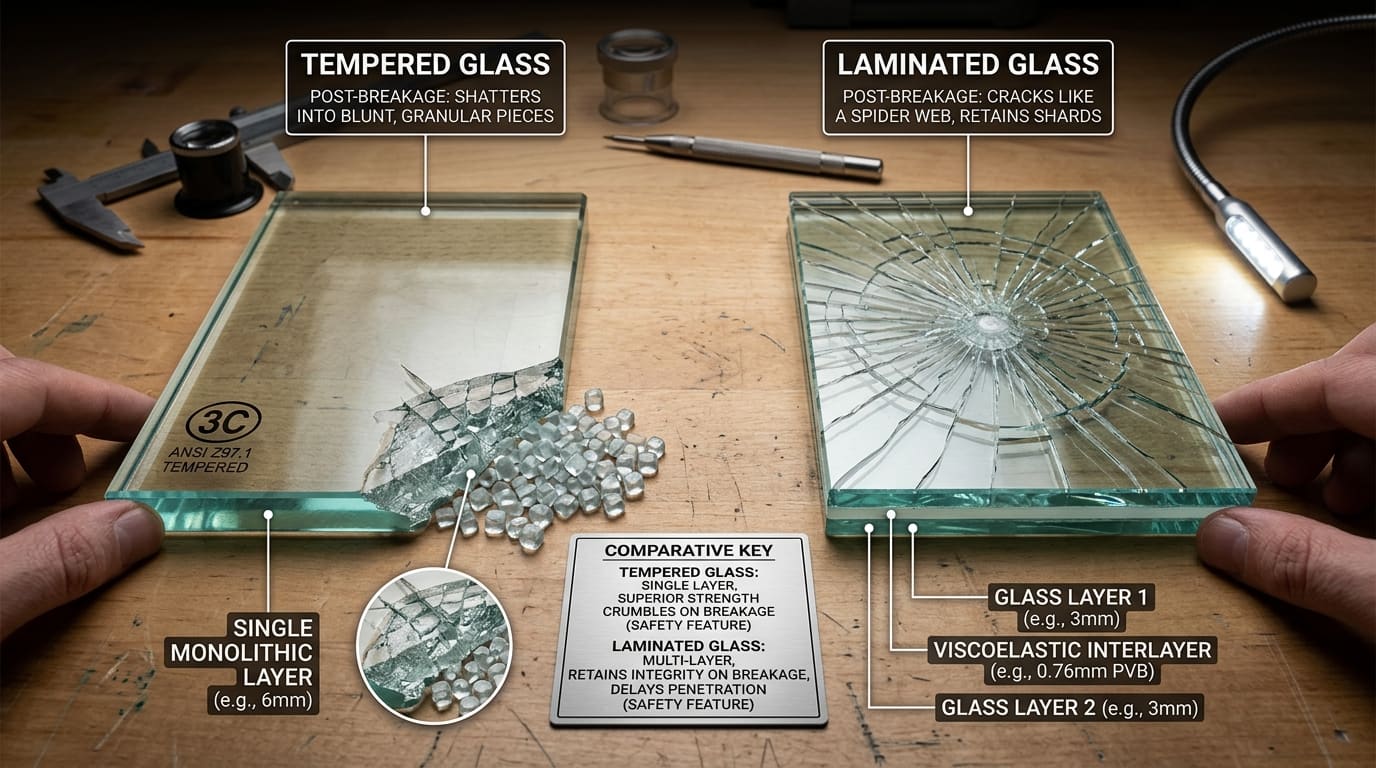
Tempered glass is manufactured by heating standard glass to approximately 1,200 degrees Fahrenheit and then rapidly cooling it with forced air jets. This process creates balanced internal stresses that make the glass roughly four times stronger than annealed glass of the same thickness. When tempered glass breaks, it shatters into thousands of small, blunt pebbles rather than the large, jagged shards produced by standard glass — dramatically reducing injury risk.
How Laminated Glass Works
Laminated glass bonds two or more panes of glass with a tough polyvinyl butyral (PVB) interlayer under heat and pressure. When laminated glass is struck, it cracks but the interlayer holds the broken pieces in place. The glass does not fall out of the frame, maintaining the barrier even when damaged. This is the same technology used in automotive windshields — and the same principle that makes it valuable for residential security and sound reduction.
When Building Code Requires Tempered Glass
Building codes in DC, Maryland, and Virginia require tempered safety glass in specific locations: windows within 18 inches of a door opening, bathroom windows, windows in shower enclosures, windows with a sill height below 18 inches, windows in stairways below 60 inches from the floor, and windows adjacent to walkways. During any glass replacement in these locations, the new glass must be tempered regardless of what was previously installed.
When to Choose Laminated Glass
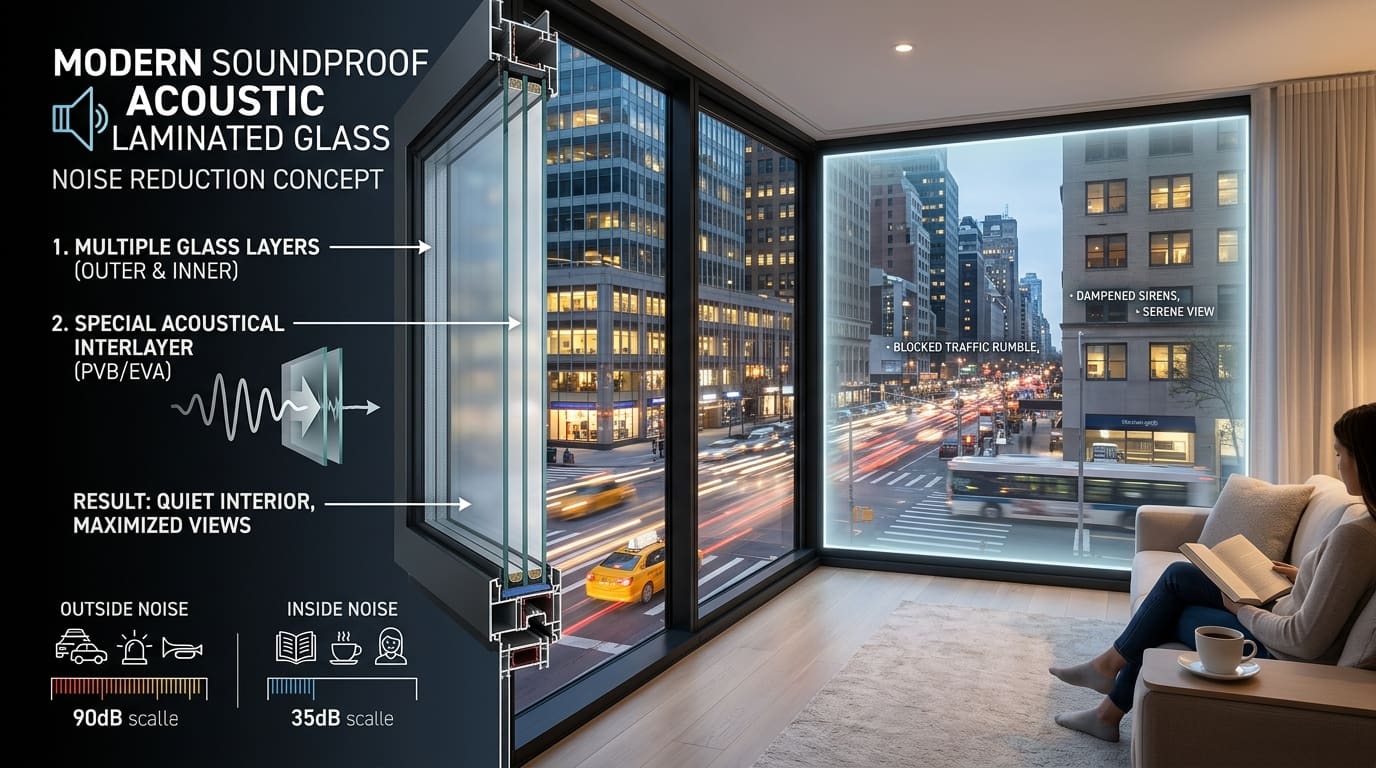
Laminated glass is the better choice for security applications — it holds together when broken, delaying forced entry and preventing the window from being quickly cleared for access. It is also superior for sound reduction, achieving STC ratings 6 to 15 points higher than tempered glass of the same thickness. For DMV homes near airports, highways, or Metro lines, laminated glass provides meaningful noise reduction. Laminated glass also blocks 99 percent of UV radiation, protecting interior furnishings.
Cost Comparison
Tempered glass costs approximately 25 to 50 percent more than standard annealed glass. Laminated glass costs approximately 50 to 100 percent more than standard glass. The premium for each type is justified by the specific benefits they provide — safety compliance for tempered, security and acoustic performance for laminated. For code-required locations, tempered glass is the standard choice. For windows where security or noise reduction is the priority, laminated glass delivers additional value.
Can You Combine Both?
Yes. Tempered laminated glass provides both the shatter-safe characteristics of tempered glass and the hold-together security of laminated glass. This is the premium option for maximum protection and is used in high-security applications, ground-floor windows in vulnerable locations, and areas where both code compliance and security are priorities.
About the Author
Mike Reynolds
Lead Glass Technician & Owner
With over 15 years of experience in window and glass repair across the DC, Maryland, and Virginia area, Mike shares practical expertise to help homeowners and businesses make informed decisions about their glass repair and replacement needs.
Need Help With Your Glass?
Our experts are ready to help with any window or glass issue. Free estimates, same-day service available across DC, MD & VA.
Related Articles
Continue reading about guides
More Guides
View All
How to Tell If Your Window Glass Needs Repair or Replacement
8 min read
Stress Cracks in Windows: Causes, Prevention & Solutions for DMV Homeowners
7 min read
Foggy Windows: Why Double-Pane Seals Fail & What to Do About It
9 min read
Glass Replacement in Historic DMV Homes: Preservation Meets Performance
9 min readExplore More Resources
Helpful Guides
Common Problems
Related Pages
Our Services
24/7 Emergency
Board-Up & Glass
Licensed & Insured
DC, MD & VA
300+ Areas
DMV Coverage
Same-Day Service
When You Need It
Ready to Get Started?
Get a free estimate for any window or glass service across the DMV area.