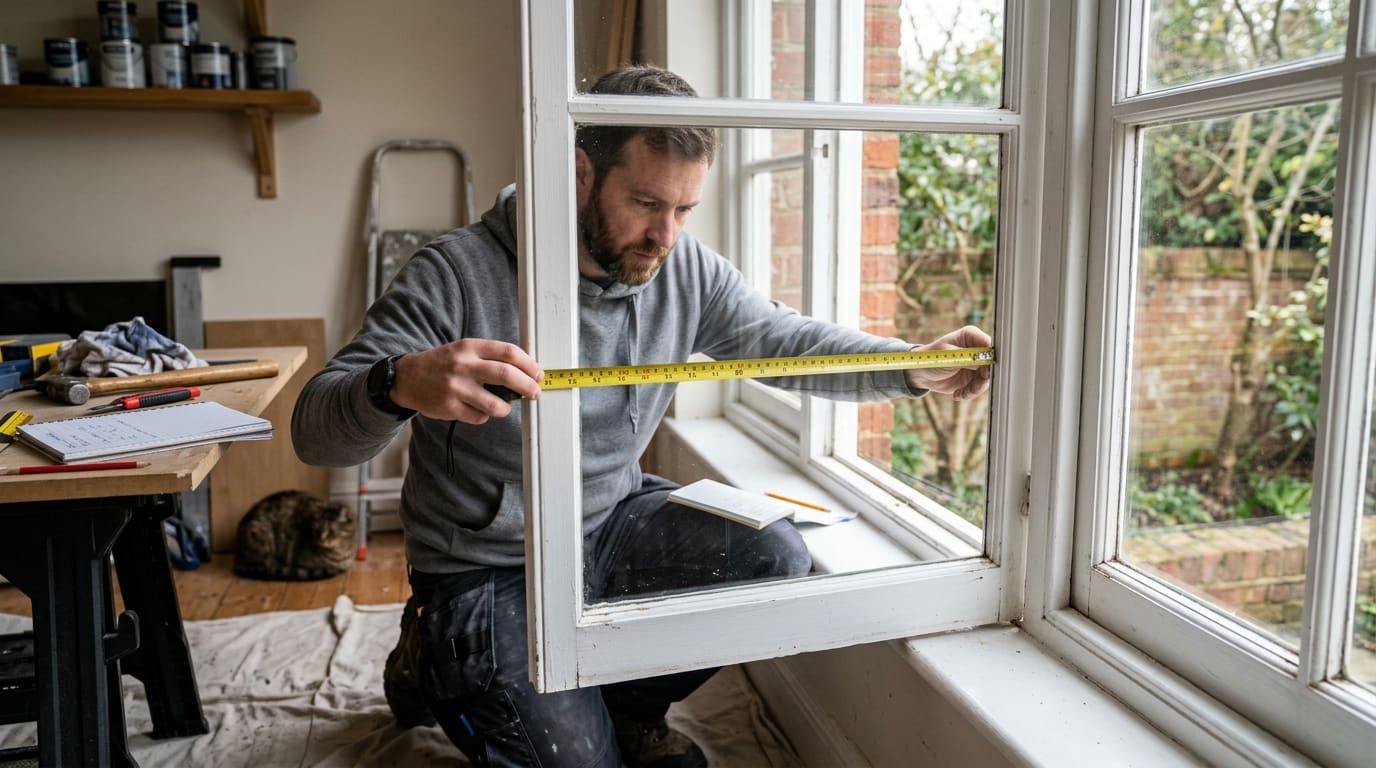
How to Measure Windows for Glass Replacement: Step-by-Step
Accurate measurements are the foundation of a successful glass replacement. Whether you are getting a quote or planning a project, knowing how to measure your windows correctly saves time, money, and frustration.
Mike Reynolds
Lead Glass Technician & Owner
In This Article
Why Accurate Measurements Matter
Glass cannot be trimmed on site like wood or drywall — it must be cut to precise dimensions at the fabrication facility. If your measurements are off by even 1/4 inch, the replacement glass will not fit your frame correctly. An oversized pane cannot be installed at all, while an undersized pane leaves gaps that compromise the seal, the insulation, and the appearance. For insulated glass units (IGUs), the spacer system, gas fill, and perimeter seal are all built to your exact dimensions during manufacturing. Getting accurate measurements before ordering prevents costly re-fabrication delays and wasted materials.
In DMV homes, accurate measurement is especially important because many older homes have settled over decades, causing window frames to shift slightly out of square. Windows in Georgetown rowhouses, Capitol Hill townhomes, and pre-war homes throughout Arlington and Bethesda may have frames that are no longer perfectly rectangular. Measuring at multiple points catches these irregularities and ensures the replacement glass fits the frame as it actually is — not as it was when originally built.
Measuring Single-Pane Windows
For single-pane windows set in glazing compound (common in older wood-frame windows), you need to measure the glass itself — not the visible opening. The glass extends behind the glazing compound and into the frame channel. Measure the visible glass width and add 1/2 inch to account for the glass tucked behind the glazing on each side (approximately 1/4 inch per side). Do the same for the height. This gives you the actual glass dimensions.
If you can access the edge of the glass by carefully removing a small section of glazing compound, measure from the actual glass edge across to the opposite glass edge for the most accurate dimension. Also measure the glass thickness — single-pane residential glass is typically 3/32 inch (single strength) or 1/8 inch (double strength). Replacement glass should match the original thickness unless you are upgrading, in which case the frame channel depth must accommodate the new glass thickness.
Measuring Double-Pane and IGU Windows
Double-pane insulated glass units are held in the frame by stops — snap-in vinyl beads, wood stops, or rubber gaskets depending on your frame type. To measure the IGU, you have two approaches. The easier method is to measure the visible glass and add the amount hidden behind the stops on each side — typically 3/8 to 1/2 inch per side for vinyl frames and 1/4 to 3/8 inch per side for aluminum frames. The more accurate method is to carefully remove one stop to expose the edge of the IGU and measure the actual unit dimensions directly.
For IGU measurements, you also need the overall unit thickness — this is the combined thickness of both glass panes plus the spacer width between them. Common residential IGU thicknesses are 5/8 inch, 3/4 inch, and 1 inch. The replacement IGU must match this overall thickness to fit properly in your frame channel. If you are upgrading from an older air-filled IGU to a modern Low-E argon unit, confirm that the new unit thickness matches your frame — most do, but some older frames have narrow channels that cannot accommodate thicker modern spacer systems.
Taking Measurements: The Three-Point Method
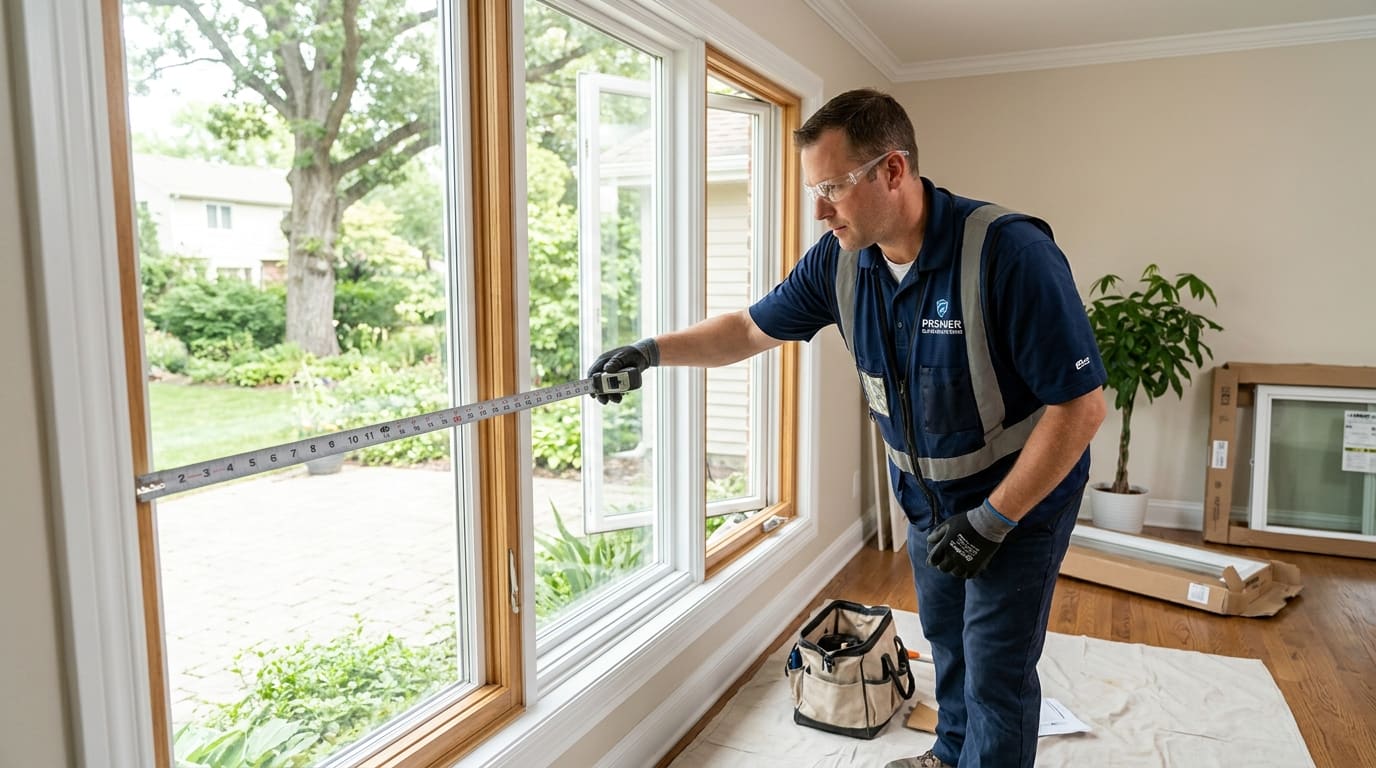
Never rely on a single measurement for width or height. Window frames settle, warp, and shift over time, making the opening slightly different at different points. For the width, measure at three points: near the top, at the middle, and near the bottom of the glass. For the height, measure at three points: near the left side, at the center, and near the right side. Record all six measurements.
The replacement glass is fabricated to the smallest width measurement and the smallest height measurement. This ensures the glass fits at the tightest point of the frame. The small gap at wider or taller points is accommodated by the glazing compound, sealant, or stop system. If the difference between your largest and smallest measurements exceeds 1/4 inch, note this when ordering — it may indicate a frame that needs correction before new glass is installed, or it may require custom shimming during installation.
Measuring Specialty Windows
Arched, circular, triangular, and other non-rectangular windows cannot be measured with simple width-and-height dimensions. For arched windows, you need the straight width at the base of the arch, the height from the base to the peak of the arch, and the radius of the curve. For circular windows, measure the diameter at two perpendicular points. For triangular windows, measure all three sides and all three angles. These measurements are more complex, and small errors have larger consequences because the glass cannot be adjusted after cutting.
For specialty shapes, we strongly recommend professional on-site measurement. Our technicians use digital levels, flexible curve rulers, and physical templates to capture the exact geometry of your window opening. The cost of a measurement visit is included in your project quote and eliminates the risk of ordering glass that does not fit — a risk that with specialty shapes can mean hundreds of dollars in wasted fabrication costs if the measurements are wrong.
Send Us Photos for a Quick Quote
If measuring feels intimidating, our free photo estimate service provides an alternative path to an accurate quote. Send us clear photos of your window from both inside and outside, along with a rough measurement using any tape measure or ruler for scale. Our team can identify the window type, estimate the glass dimensions from the photos, and provide a preliminary quote. When you approve the project, we perform the precision measurement on-site before ordering — ensuring the glass fits perfectly regardless of your measurement experience. Call Virginia Glass Windows at (703) 470-7867 or upload photos through our website to get started.
About the Author
Mike Reynolds
Lead Glass Technician & Owner
With over 15 years of experience in window and glass repair across the DC, Maryland, and Virginia area, Mike shares practical expertise to help homeowners and businesses make informed decisions about their glass repair and replacement needs.
Need Help With Your Glass?
Our experts are ready to help with any window or glass issue. Free estimates, same-day service available across DC, MD & VA.
More Guides
View All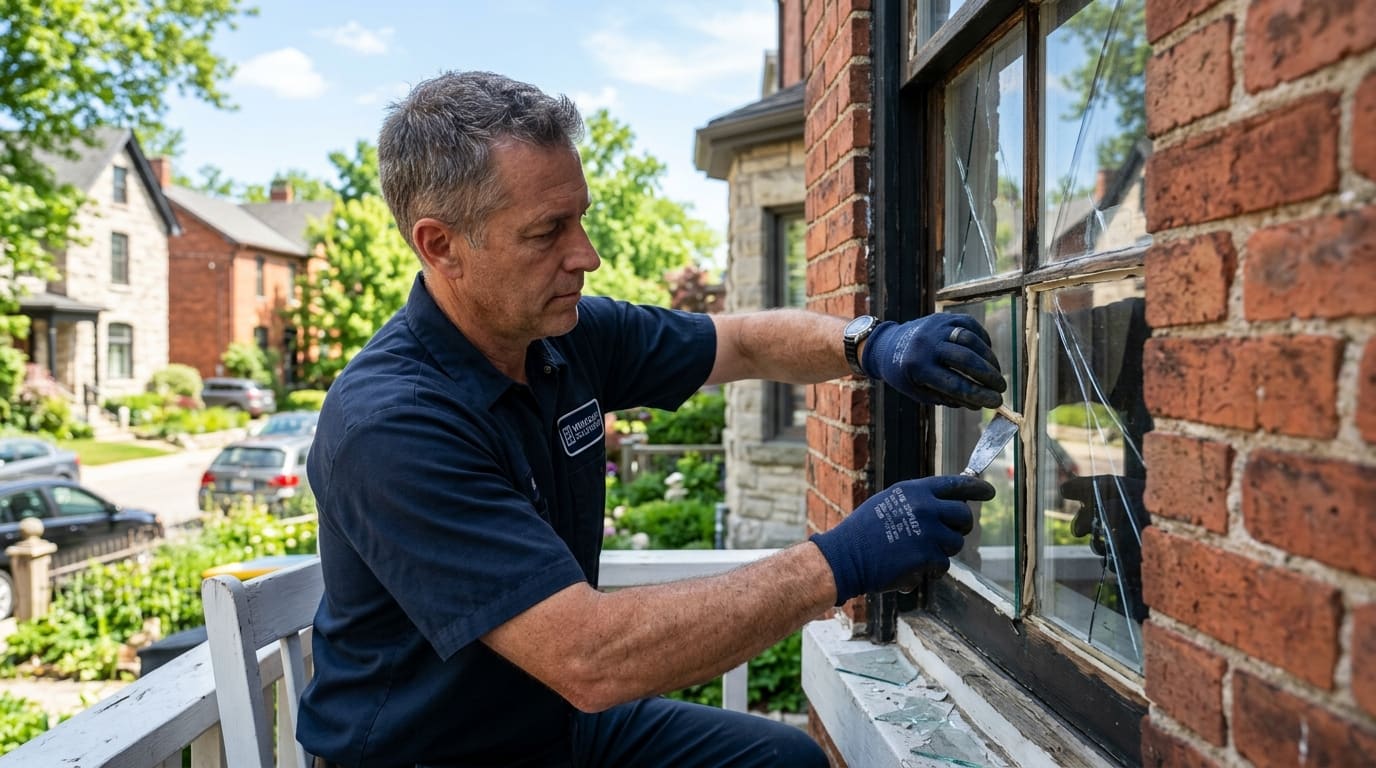
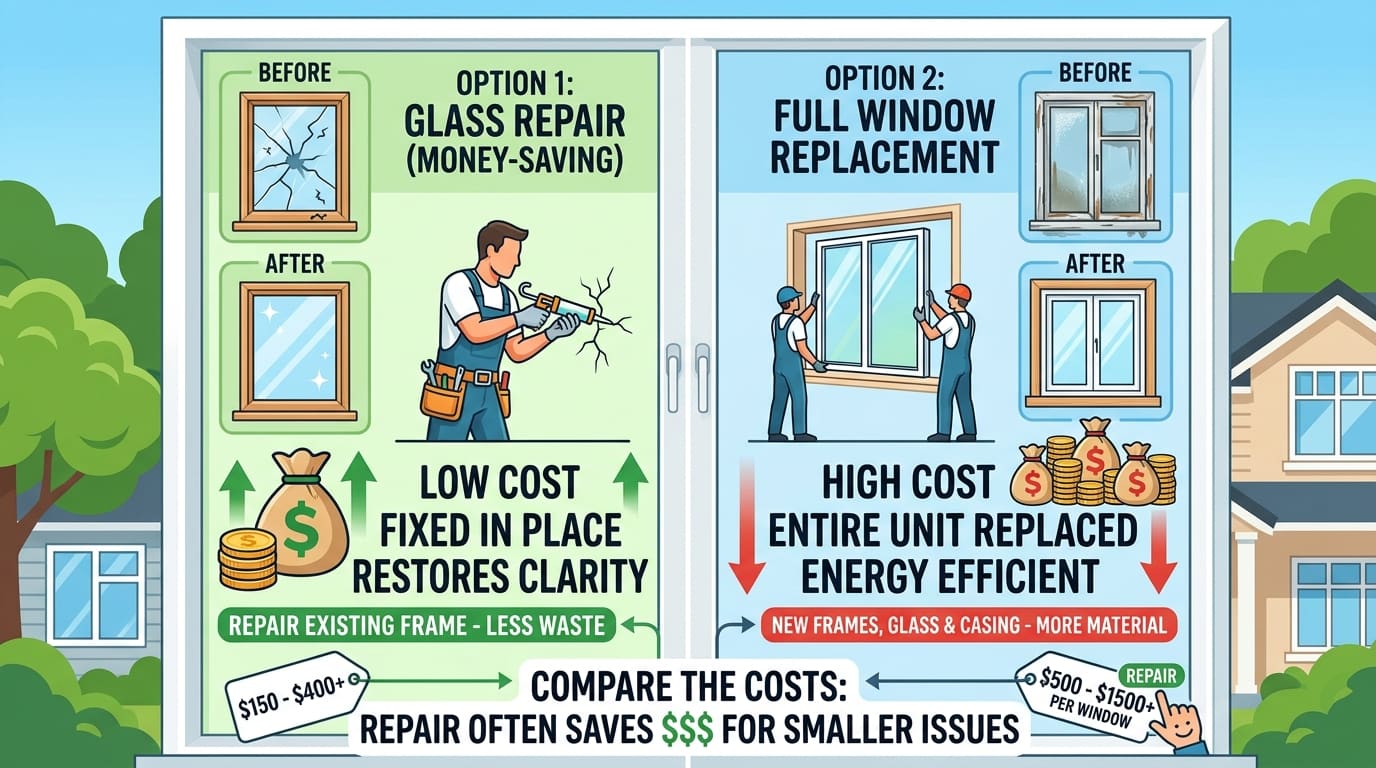
How to Tell If Your Window Glass Needs Repair or Replacement
8 min read
Stress Cracks in Windows: Causes, Prevention & Solutions for DMV Homeowners
7 min read
Foggy Windows: Why Double-Pane Seals Fail & What to Do About It
9 min read
Glass Replacement in Historic DMV Homes: Preservation Meets Performance
9 min readExplore More Resources
Common Problems
24/7 Emergency
Board-Up & Glass
Licensed & Insured
DC, MD & VA
300+ Areas
DMV Coverage
Same-Day Service
When You Need It
Ready to Get Started?
Get a free estimate for any window or glass service across the DMV area.