How to Choose the Right Replacement Glass: A Decision Framework for DMV Homeowners
The number of glass options is genuinely confusing if you have not worked in this trade. Here is a decision framework that walks you through the key choices in plain language — so you can have a real conversation with your glass company rather than just accepting whatever is quoted.
Mike Reynolds
Lead Glass Technician & Owner
In This Article
Start With the Location, Not the Product
The single most useful reframe in choosing replacement glass is to start with where the glass will live rather than what products are available. The right glass for a basement egress window is different from the right glass for a patio door, which is different from the right glass for a master bathroom shower, which is different from the right glass for a storefront. Each location has a specific set of demands — code requirements for safety glass, thermal performance priorities, acoustic environment, maintenance context, budget — and the right choice flows from those demands rather than from a product preference.
I have had many conversations with DMV homeowners who came in asking specifically for "double-pane Low-E" because they had heard it is the best option, or asking to avoid "tempered glass because it shatters." These are starting positions based on partial information, and they sometimes lead to the wrong choice for the specific application. A homeowner asking to avoid tempered glass for a patio door, for example, is asking to avoid the only glass type that is legal in that location under Virginia, Maryland, and DC building codes. The information below is designed to give you a more complete picture so that when you talk to us — or to any glass company — you are asking the right questions rather than asserting preferences based on incomplete context.
Safety Glass: When It Is Required and What the Options Are
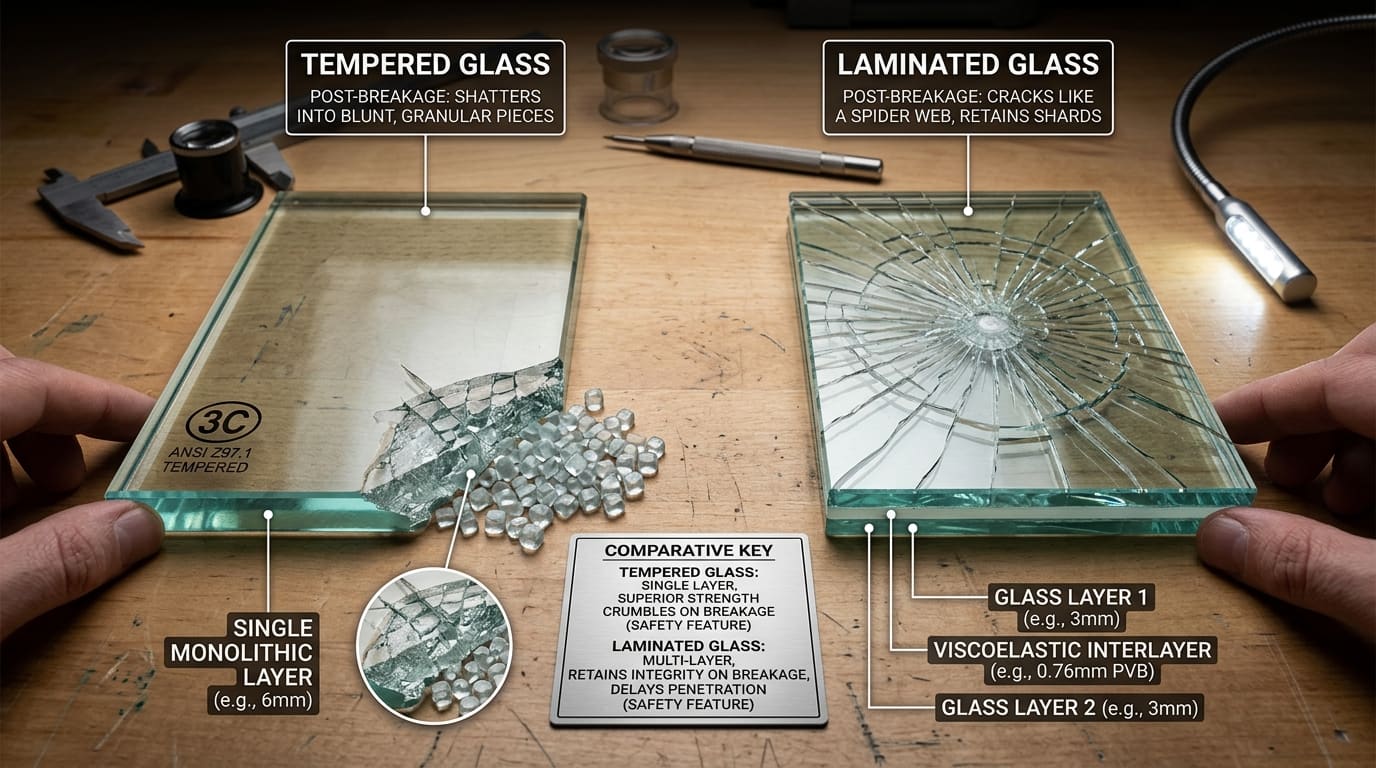
The building code requirement for safety glass — either tempered or laminated — is not optional and applies to specific locations regardless of whether the building is new construction or a renovation replacement. Safety glass is required in all locations within 18 inches of a door opening (sidelights, panels adjacent to door glass), all glass at less than 18 inches above the floor in standard-height walls, all shower and tub enclosures, all glass stair railings, all glass less than 36 inches above a landing at the bottom of stairs, and all glass within 60 inches of the floor in wet locations. In residential bathrooms, this covers virtually all glass.
For most safety glass locations, tempered glass is the standard choice — it is code-compliant, appropriately priced, and the right specification. The exception is locations where you want the glass to remain in the frame after breakage: overhead glazing (skylights), floor-level glass in locations accessible to pets or children, glass near pools, or any location where a shattered pane falling out of the frame is a significant safety concern. For these locations, laminated glass — which holds together as a broken unit rather than shattering — is the better specification. Laminated tempered glass combines both properties — the safe fracture of tempered with the hold-together characteristic of laminated — and is the right choice for the highest-risk applications.
Single Pane vs Double Pane: The Thermal Performance Decision
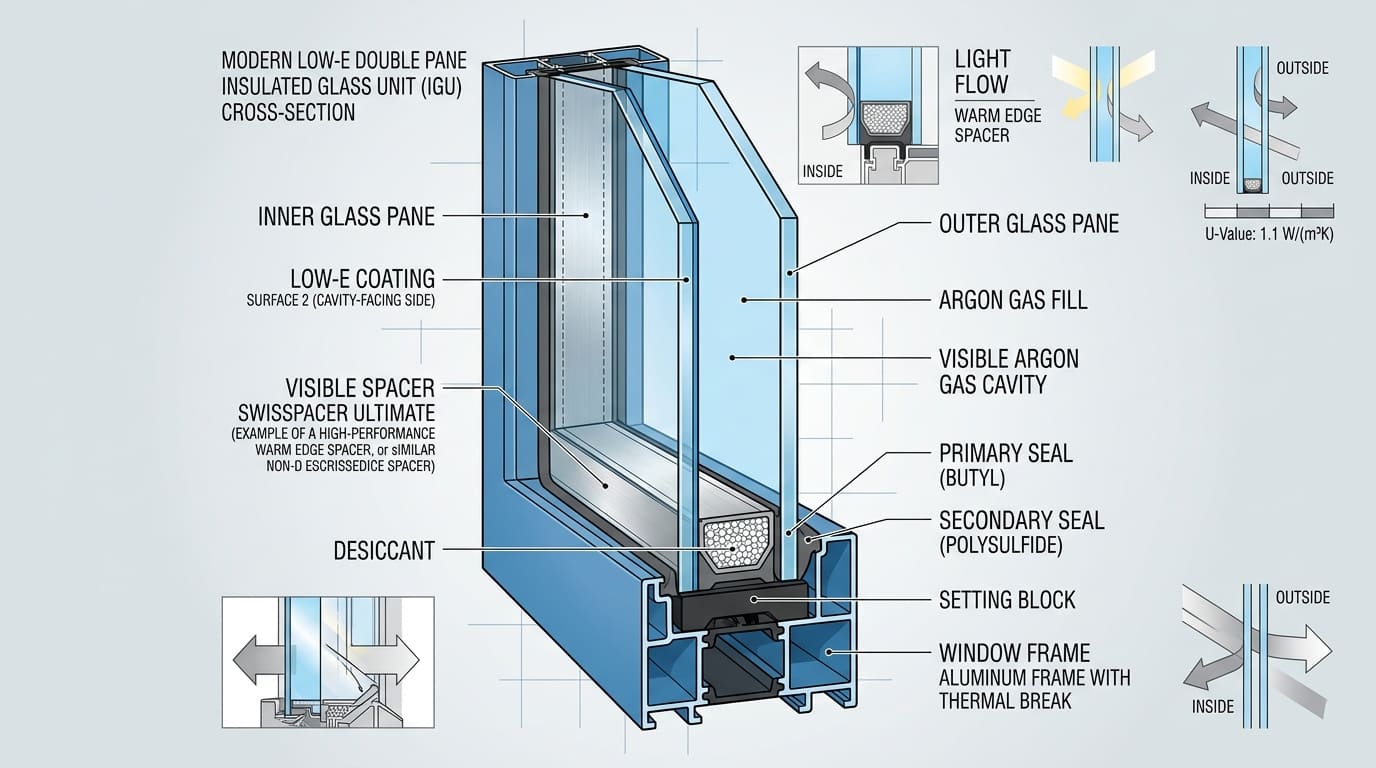
The thermal performance case for double-pane insulated glass over single-pane is so strong in the DMV climate that there is almost no application where single-pane is the right choice in new or replacement work on an occupied conditioned building. The performance difference — roughly a fourfold reduction in heat transmission — translates directly to energy cost, comfort, and reduced condensation in winter. The cost premium for double-pane over single-pane has narrowed significantly over the past decade as IGU production has scaled. For any heated or cooled space in the DMV, the performance justification for double-pane is compelling.
The applications where single-pane might still make sense: unheated outbuildings, sheds, or agricultural structures where energy cost is not relevant; replacement of original single-pane glass in a designated historic structure where the preservation requirements mandate single-pane; or situations where the existing frame cannot accommodate double-pane thickness and full frame replacement is not in the project scope. In these cases, high-quality single-pane is fine. In all other cases, default to double-pane.
Triple-pane glass — three glass layers with two airspaces — delivers another step of thermal performance improvement (U-factor of approximately 0.15 versus 0.25 to 0.30 for double-pane Low-E) but at significantly higher cost and weight. In the DMV climate, which has cold winters but is not in the extreme northern climate zone where triple-pane becomes the standard recommendation, the performance premium of triple-pane over double-pane Low-E is rarely cost-justified for standard residential applications. The exception is very large glass areas (floor-to-ceiling windows, extensive glazing systems) where the reduced thermal load from triple-pane meaningfully reduces HVAC equipment sizing — in those cases, the glass upgrade can offset system cost.
Low-E Glass: Which Specification for Which Application
Low-E (low-emissivity) coatings on glass reduce heat transfer through the glass by reflecting long-wave infrared radiation — essentially, they reduce the amount of heat energy that passes through the glass in either direction. But there are multiple Low-E specifications with meaningfully different solar heat gain characteristics, and the right specification depends on whether you primarily want to keep heat out (summer cooling priority), keep heat in (winter heating priority), or balance both.
For most south and west facing windows in DMV homes — where summer overheating is a real concern — a low-solar-gain Low-E (SHGC 0.20 to 0.27) is the appropriate specification. It minimizes summer solar heat gain while maintaining good U-factor for winter thermal retention. For north-facing windows and for any application where passive solar heat gain in winter is desired (south-facing sunrooms, passive solar designs), a moderate-solar-gain or high-solar-gain Low-E allows more solar heat through while still providing meaningful insulating improvement over clear glass. For most standard DMV residential applications, the low-solar-gain specification is the baseline recommendation because summer cooling is a larger practical concern than winter solar contribution in most house configurations.
Clear vs Tinted vs Privacy Glass
Clear glass is the baseline and the default for most applications — it maximizes natural light and visibility. Tinted glass — gray, bronze, green, or blue body-tinted float glass — reduces solar heat gain and glare through light absorption and adds a color aesthetic that may or may not suit the architectural context. Body-tinted glass was more common in commercial and residential construction in the 1970s through 1990s than it is today; in current residential practice, Low-E coatings have largely replaced tinting as the solar control strategy because they achieve better thermal performance without the visible color cast.
Privacy glass — frosted, satin, obscure, or patterned — is the right choice when visibility restriction is required: bathroom windows, sidelights flanking entry doors in high-pedestrian locations, conference room glass partitions, or any situation where the glass location creates an uncomfortable view corridor. Privacy glass comes in a wide range of transmission characteristics — from barely-frosted (maintains sense of space and light, reduces visibility only modestly) to fully opaque — so the right selection depends on how much light transmission versus privacy restriction is appropriate for the specific location. When we quote privacy glass replacements for DMV clients, we bring samples because the range is difficult to communicate verbally. Call (703) 470-7867 to arrange a consultation where we can show you the options in person.
Putting It Together: A Quick Decision Guide
Here is the quick decision path I walk clients through. First: is safety glass required at this location? If yes, specify tempered (standard) or laminated (where hold-together after breakage is important). Second: is the space conditioned (heated or cooled)? If yes, always double-pane. Third: what is the solar exposure and primary climate control challenge? East/west/south facing with summer heat concern gets low-solar-gain Low-E. North facing or passive solar applications get clear or moderate-gain Low-E. Fourth: is visibility a concern? If yes, specify appropriate privacy glass type based on required opacity level. Fifth: are there any acoustic, security, or specialty requirements that override the above? If yes, acoustic laminated, laminated security glass, or specialty products as discussed.
Most standard residential window replacements in the DMV land at double-pane, low-solar-gain Low-E, argon fill, clear glass, in appropriate safety specification for the location. That is the right specification for most windows, and it is where we start in the conversation unless something specific about your situation changes it. The cases that require more nuanced specification — large glass areas, specialty applications, acoustic requirements, historic contexts — are where we spend more consultation time with clients to make sure the specification actually fits the situation. Give us a call at (703) 470-7867 and we will walk through your specific window with you.
About the Author
Mike Reynolds
Lead Glass Technician & Owner
With over 15 years of experience in window and glass repair across the DC, Maryland, and Virginia area, Mike shares practical expertise to help homeowners and businesses make informed decisions about their glass repair and replacement needs.
Need Help With Your Glass?
Our experts are ready to help with any window or glass issue. Free estimates, same-day service available across DC, MD & VA.
Related Articles
Continue reading about guides
 Guides
Window and Glass Warranties: What Is Actually Covered, What Voids Coverage, and What to Watch Out For
 Guides
Foggy Windows: Why Double-Pane Seals Fail & What to Do About It
 Energy Efficiency
Energy-Efficient Glass Upgrades for DMV Homes: Low-E, Argon & Beyond
More Guides
View All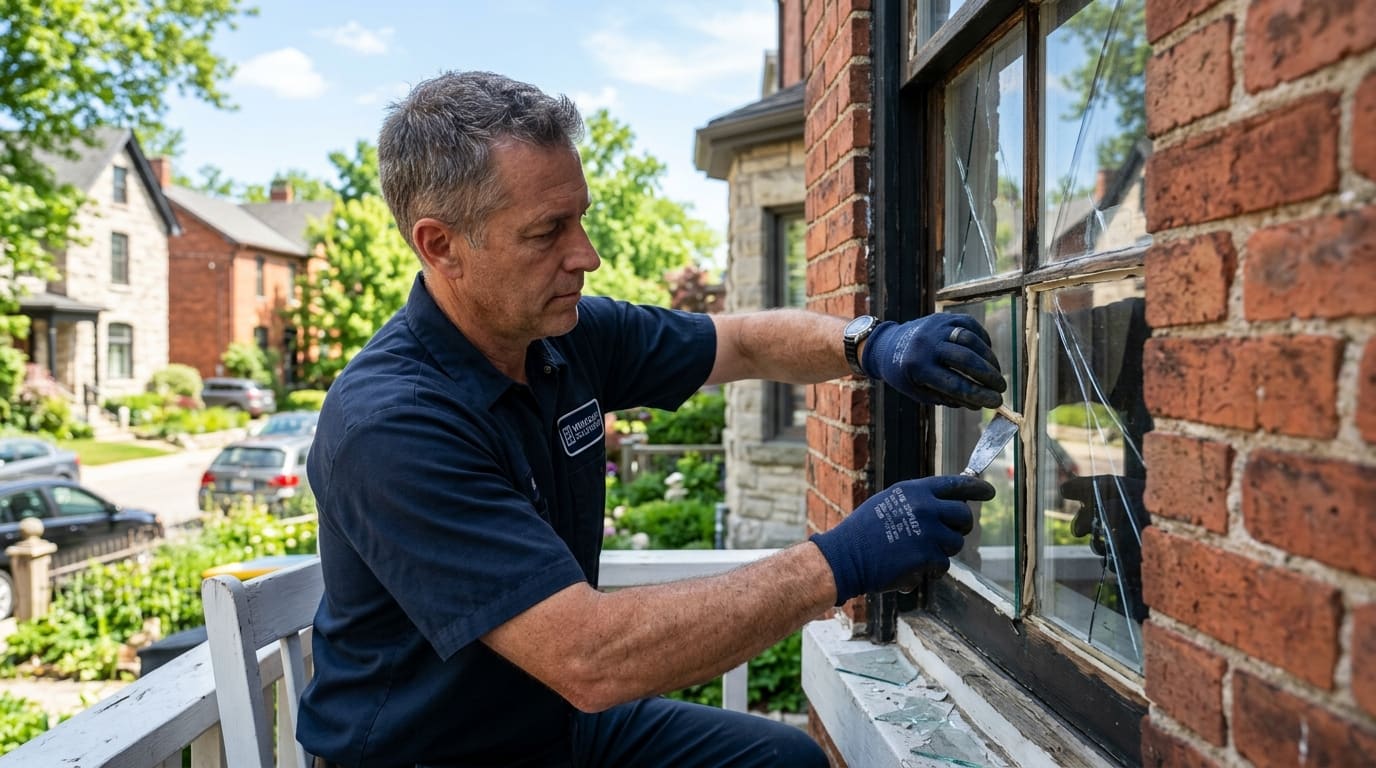
How to Tell If Your Window Glass Needs Repair or Replacement
8 min read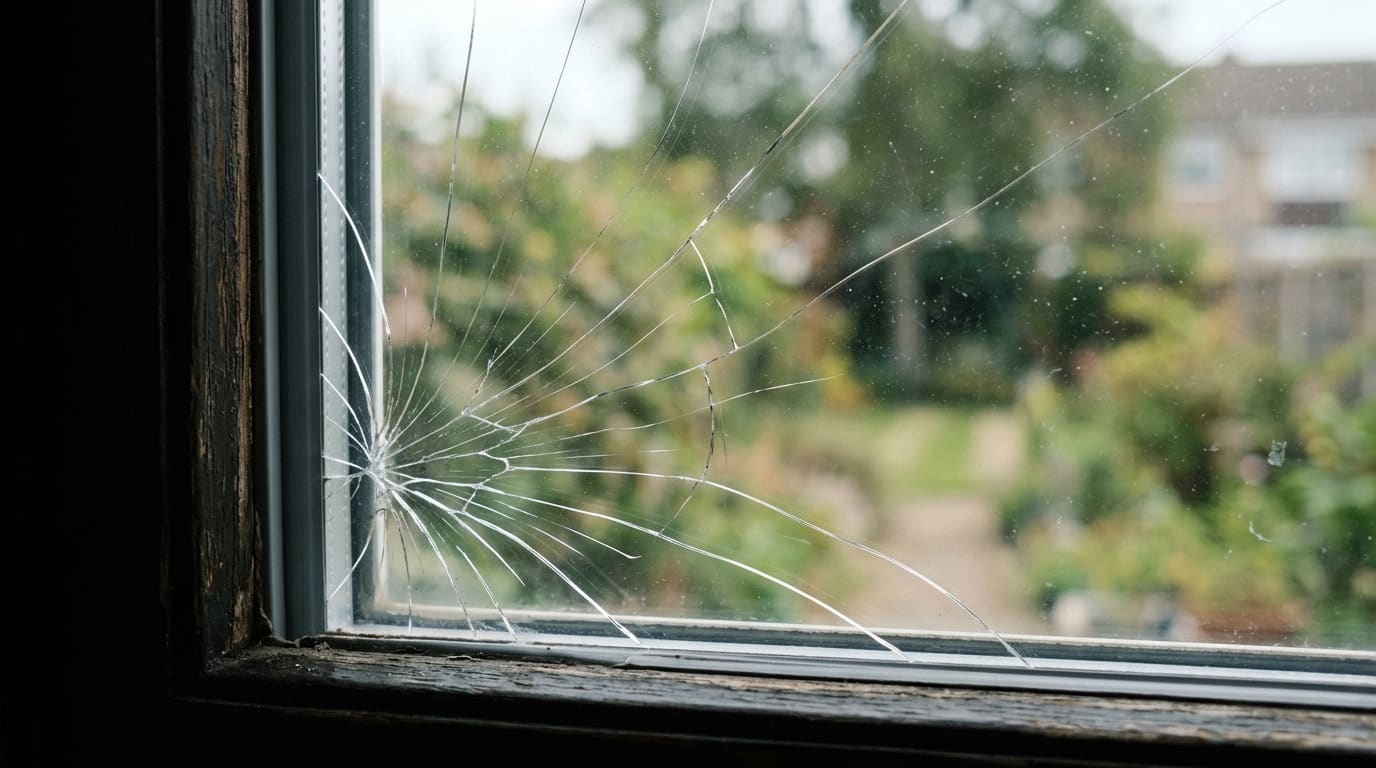
Stress Cracks in Windows: Causes, Prevention & Solutions for DMV Homeowners
7 min readFoggy Windows: Why Double-Pane Seals Fail & What to Do About It
9 min read
Glass Replacement in Historic DMV Homes: Preservation Meets Performance
9 min readExplore More Resources
Helpful Guides
Common Problems
Related Pages
Our Services
24/7 Emergency
Board-Up & Glass
Licensed & Insured
DC, MD & VA
300+ Areas
DMV Coverage
Same-Day Service
When You Need It
Ready to Get Started?
Get a free estimate for any window or glass service across the DMV area.