Entryway Glass: Sidelights, Transoms, Storm Doors, and Getting the Balance of Light, Privacy, and Durability Right
Sidelights and transoms define your entryway and take more everyday abuse than most glass in your home. Here is what actually works for durability, privacy, and light in DMV entryways.
Mike Reynolds
Lead Glass Technician & Owner
In This Article
Why Entryway Glass Deserves More Thought Than It Usually Gets
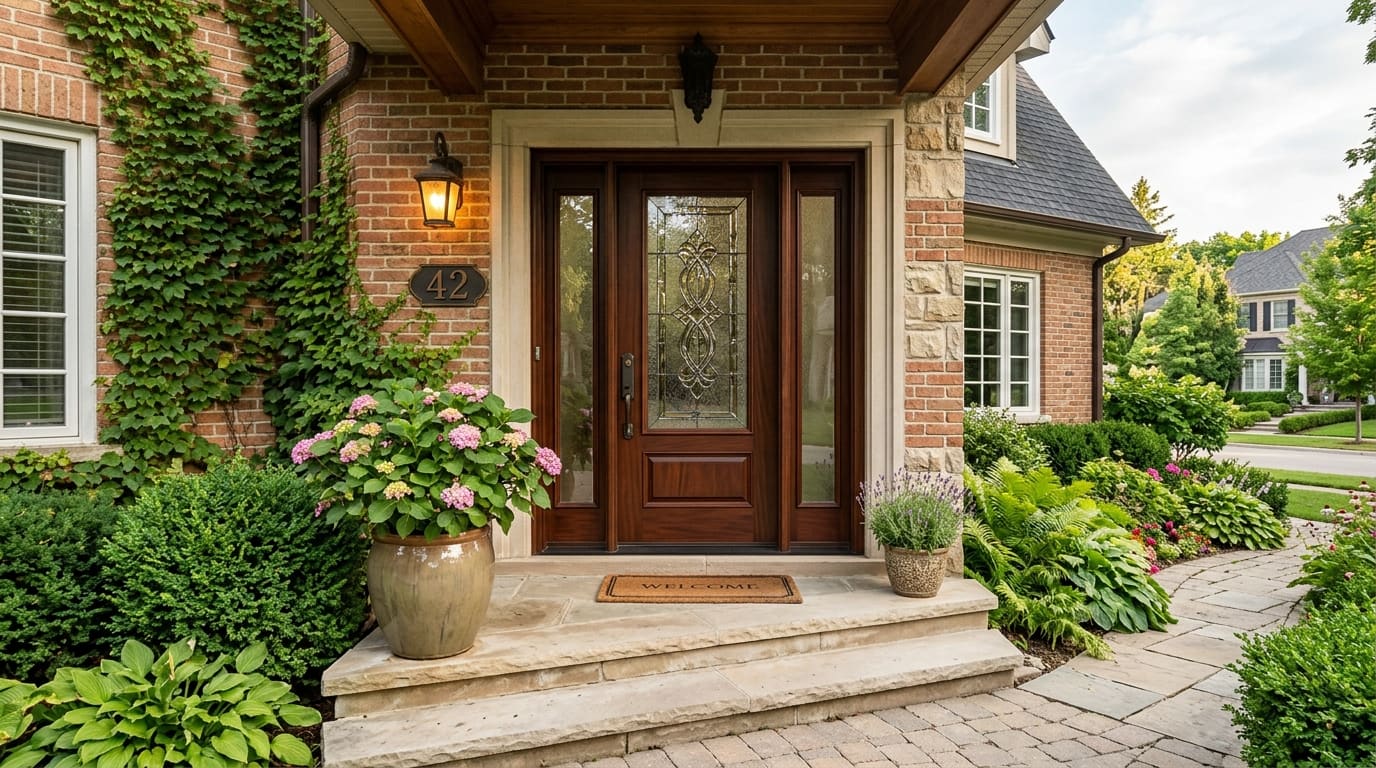
The glass at your front entry — the sidelights flanking the door, the transom above it, the glass panels in the door itself — is some of the most scrutinized glass on your property. Visitors see it first. Real estate listings photograph it prominently. And it takes daily abuse: impact from groceries and packages, UV from south-facing exposures, fingerprints and cleaning chemicals, and in many DMV homes, the bumping and banging of school backpacks, dog leashes, and delivery packages. Despite all this, entryway glass is often an afterthought in renovation planning — whatever came with the door gets replaced with the same thing, and the opportunity to actually optimize the specification gets missed.
Sidelight Glass: Navigating the Privacy-Light Tradeoff
The classic sidelight design tension is that the glass that lets in the most natural light also exposes the most of your interior to view from outside. A pair of clear sidelights flanking a front door gives beautiful natural light to an entry hall — and also lets any passerby see directly into your home. In many DMV neighborhoods, where houses are close together and sidewalk traffic is constant — think Capitol Hill, Dupont Circle, the Arlington streetcar corridors, or dense Bethesda blocks — full-view clear sidelights can feel more exposed than comfortable.
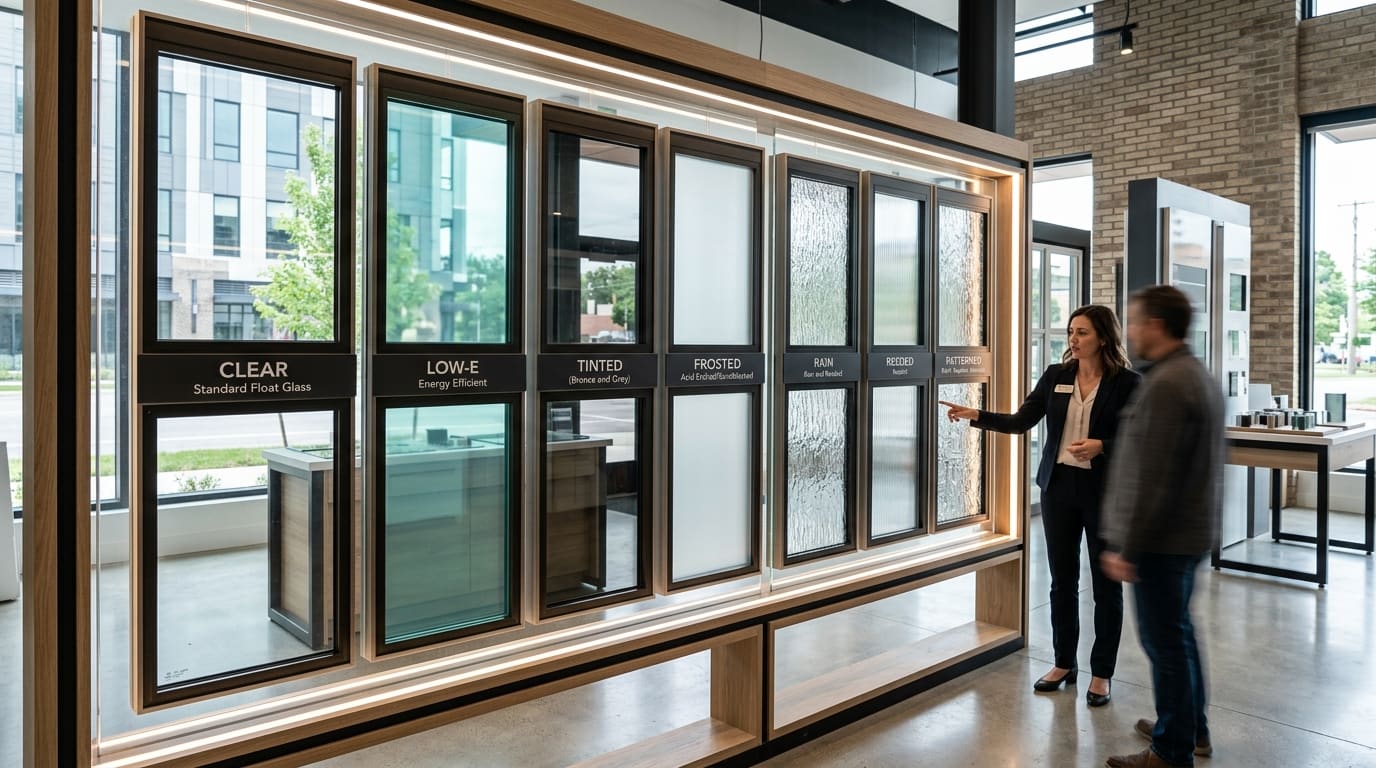
The practical options are textured or patterned glass (which transmits light while obscuring visibility), frosted glass (stronger privacy, softer light quality), or privacy film on clear glass (field-applicable, reversible, variable opacity). Textured glass comes in a wide range of patterns — rain, reeded, fluted, and various art glass textures — that provide good privacy while still transmitting substantial light and adding visual interest. For DMV rowhouse entries where the sidelight is close to the street, a lightly textured glass is often the right call: more privacy than clear, better light quality than frosted, and a more finished appearance than film.
Whatever glass type you choose for sidelights, the structural specification matters: sidelights adjacent to door openings are required by code to be safety glass — tempered or laminated — because they are within the impact zone of the door. If your home has older non-safety glass sidelights, replacement is worth prioritizing from a safety standpoint regardless of condition. A slam-opened door can shatter non-safety sidelight glass and create a serious laceration hazard.
Transoms: Function Over Decoration
Transom windows above entry doors serve a real function beyond aesthetics — they admit high-angle light that illuminates the entry hall in a way that sidelights at eye level cannot replicate. In older DMV homes, original transoms were often operable (hinged or pivoting) for ventilation before air conditioning. Most have been sealed over the decades, and most replacement transoms are fixed glazing. The glass specification for a fixed transom is more flexible than for sidelights because there is no direct impact risk from the door operation — you can use clear, textured, colored, or art glass depending on what works aesthetically and what level of solar gain you want from a high-exposure south-facing position.
For south-facing entry transoms in DMV homes, a Low-E coated glass is worth considering even though the transom is a small area. A south-facing transom in direct sun all day is a meaningful source of solar heat gain in summer — enough to make the entry hall noticeably uncomfortable. Low-E glass cuts this solar gain while maintaining daylight transmission, and the cost premium on a small transom unit is minor relative to the comfort improvement.
Storm Doors: When They Help and When They Do Not
Storm doors — the glass-and-screen secondary door installed outboard of the main entry door — are one of those products that are almost always recommended by the companies that sell them and only sometimes recommended by people who have thought carefully about when they actually help. In the DMV climate, a storm door adds genuine value in specific situations: drafty older doors that need the additional air seal layer, entry doors without weatherstripping that should be updated, homes with decorative wood doors that benefit from protection from the DMV's sun and rain. In other situations — well-sealed modern entry doors, south-facing entries with solar gain concerns, or simply homes where the storm door aesthetic clashes with the architecture — a storm door adds cost and maintenance without proportional benefit.
The glass in storm doors is consistently tempered safety glass — this is code-required for storm doors due to the impact exposure. Common failures we replace are the interchangeable glass and screen panels that get cracked during the seasonal switch or from impact damage. Replacement panels for major storm door brands (Larson, Andersen Emco, Pella) are available as standard components. If your storm door glass is cracked and the door frame is otherwise in good condition, panel replacement is straightforward. Call (703) 470-7867 and have your door brand and approximate size ready for a quick estimate.
Mudroom Glass: A Different Set of Priorities
The interior glass in a mudroom — if you have a dedicated mudroom with a glass partition, glass-panel interior door, or glazed cabinet fronts — has a different set of stresses than exterior entryway glass. It sees high impact from sports equipment, school bags, and outdoor gear. It gets cleaning chemicals regularly. It may face direct access by children and pets. For these applications, thick tempered glass (3/8-inch minimum for partitions and door panels) and wire-free laminated glass for any panel at lower height are the right specifications. The decorative appeal of frosted or textured glass for mudroom partitions is also practical here — it hides the smudges and fingerprints that are inevitable in a working entry space, reducing the visual demands of daily cleaning.
About the Author
Mike Reynolds
Lead Glass Technician & Owner
With over 15 years of experience in window and glass repair across the DC, Maryland, and Virginia area, Mike shares practical expertise to help homeowners and businesses make informed decisions about their glass repair and replacement needs.
Need Help With Your Glass?
Our experts are ready to help with any window or glass issue. Free estimates, same-day service available across DC, MD & VA.
Related Articles
Continue reading about tips & tricks
More Tips & Tricks
View All
Sound-Reducing Glass for Noisy DMV Locations: Airports, Highways & Metro Lines
7 min read
Preparing Your Home for Window Glass Replacement: A Homeowner's Guide
5 min read
What Causes Window Glass to Crack Without Impact? 7 Common Causes
6 min read
Shower Door Glass: Frameless vs Framed Options for DMV Bathrooms
6 min readExplore More Resources
Common Problems
Our Services
24/7 Emergency
Board-Up & Glass
Licensed & Insured
DC, MD & VA
300+ Areas
DMV Coverage
Same-Day Service
When You Need It
Ready to Get Started?
Get a free estimate for any window or glass service across the DMV area.