Complete Guide to Double Pane Windows for DMV Homeowners
Double pane windows are the standard for energy efficiency and comfort. Virginia Glass Windows explains how they work, how long they last, and when they need service in the DMV.
How Double Pane Windows Work
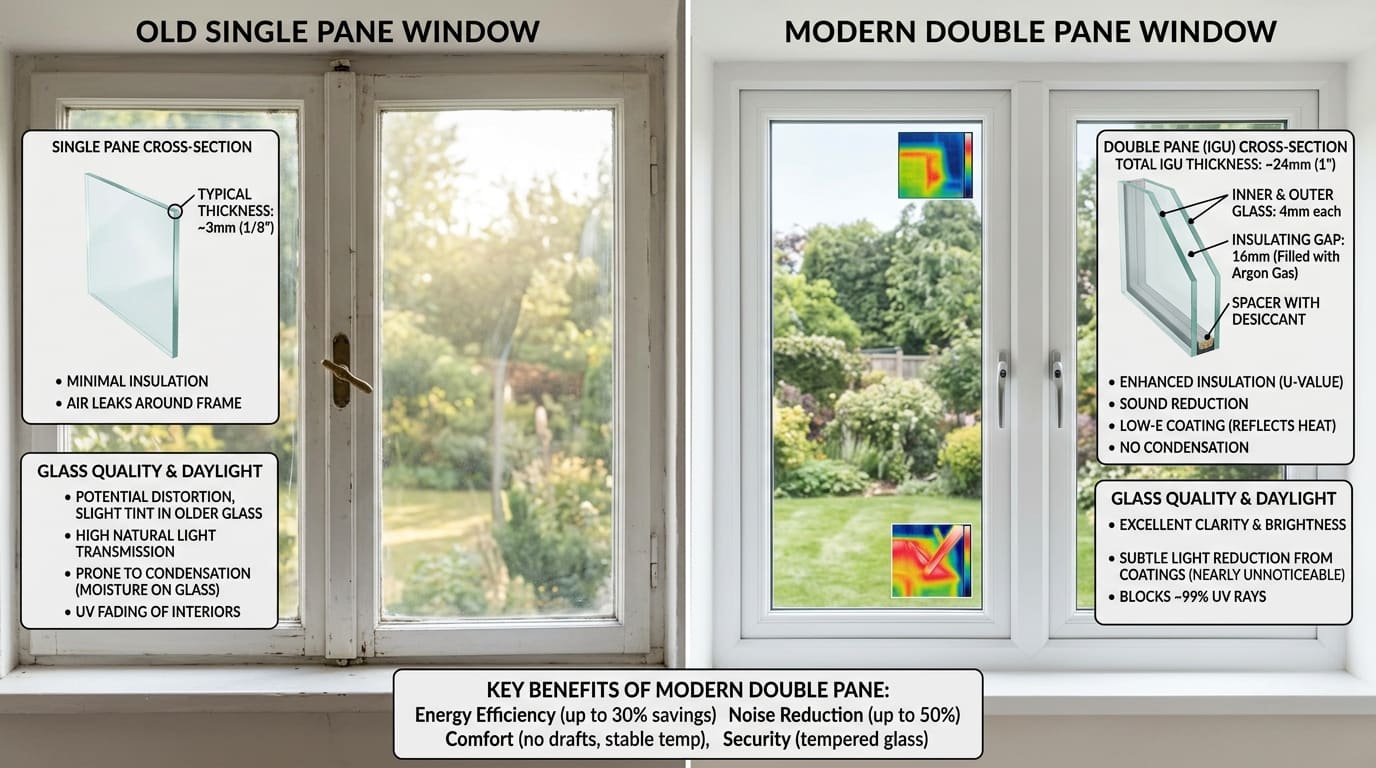
A double pane window consists of two glass panes sealed together as a unit called an insulated glass unit (IGU). The space between the panes — typically 1/2 inch to 3/4 inch — is filled with air or argon gas. This sealed air space acts as a thermal barrier, dramatically reducing heat transfer compared to single-pane glass.
The perimeter of the IGU is sealed with a primary and secondary sealant system and contains a spacer filled with desiccant material. The desiccant absorbs any residual moisture that enters the cavity, keeping the interior surface clear and fog-free.
Low-E coatings are typically applied to the inner surfaces (surface 2 or 3 in glazing terminology) to further reduce radiant heat transfer. This combination of air gap, gas fill, and coating gives modern double-pane windows their excellent thermal performance.
Performance Ratings
Standard double-pane with air fill: U-factor approximately 0.45 to 0.55. A significant improvement over single-pane (U-factor 1.0+) but below current energy code requirements in many DMV jurisdictions.
Double-pane with argon fill and low-E coating: U-factor 0.25 to 0.35. Meets or exceeds Energy Star requirements for the Northern/Central climate zone that includes all of DC, Maryland, and Virginia.
Triple-pane: U-factor 0.15 to 0.22. The highest performance option for residential use. Best cost justification for north-facing windows and very cold exposures.
Lifespan and Failure Modes
Quality double-pane windows typically last 20 to 30 years before seal failure becomes common. The failure mode is progressive — the sealant degrades, moisture enters the cavity, the desiccant becomes saturated, and fog appears between the panes.
Seal failure does not mean the window is dangerous or must be immediately replaced. A fogged window maintains its structural integrity but loses its insulating performance. Many homeowners live with fogged windows for years before replacing them.
Physical damage (cracks, impacts) requires immediate attention regardless of window age. A compromised pane reduces security and allows water infiltration.
Repair vs Replace Options
When a double-pane window fails, you have two main options: replace just the IGU (the glass unit) or replace the entire window assembly (frame, hardware, and glass).
IGU-only replacement is the cost-effective choice when the frame is sound, the window hardware operates correctly, and the window is not significantly outdated in energy performance. This preserves the frame and hardware while restoring clarity and insulating value.
Full replacement makes more sense when the frame is damaged, the window style is outdated, or you want to upgrade to significantly better energy performance than your current frames allow.
Need Help With Your Glass?
Send us a photo of your window or glass issue and get a free estimate within hours. Our experts serve all of DC, Maryland, and Virginia.
Common Questions
Frequently Asked Questions
Answers to common questions about this topic from our DMV glass experts.
Keep Reading
Related Guides
Explore More Resources
Related Articles
Common Problems
Related Pages
Our Services
Ready to Get Started?
Get a free estimate from our glass experts. Same-day service available across DC, MD & VA.