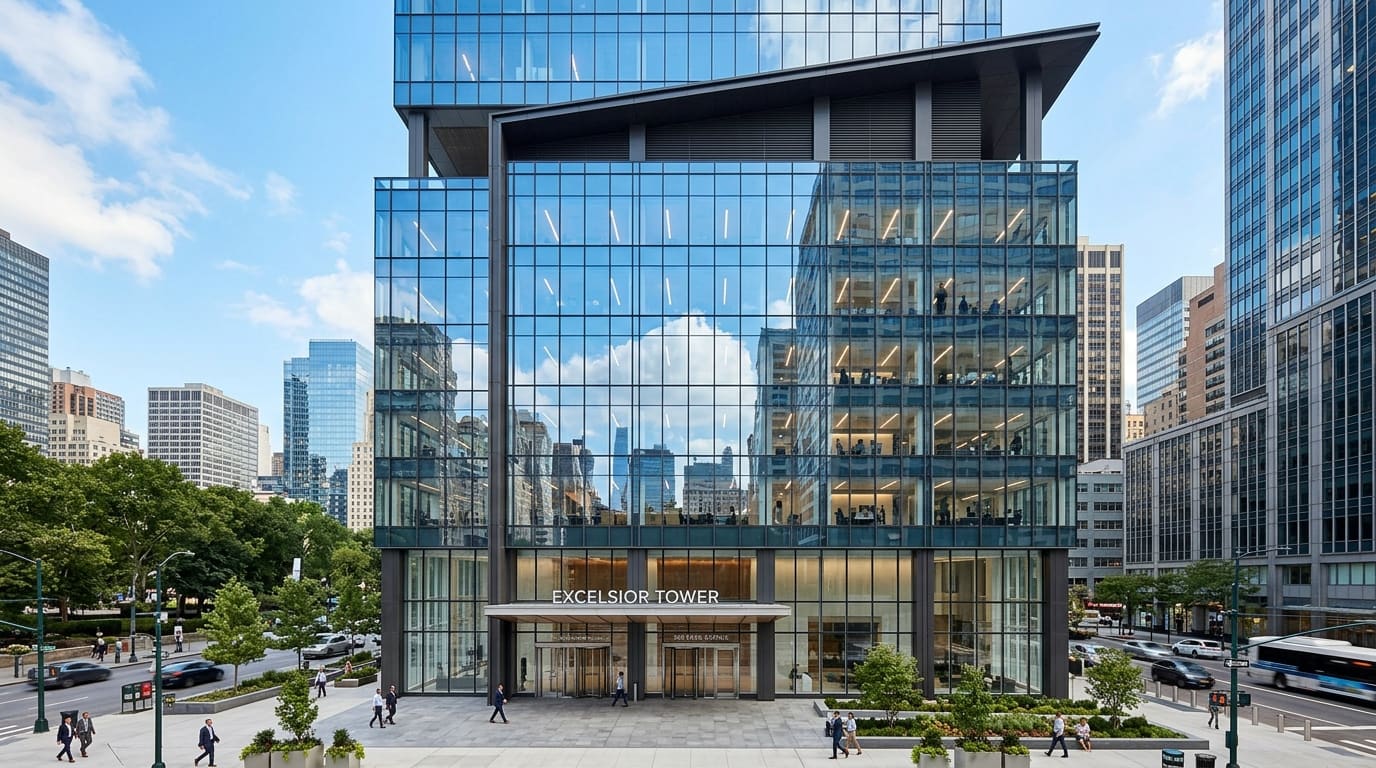
Automatic Door Glass Repair & Replacement for Businesses
Automatic doors are essential for commercial accessibility, but damaged glass in these systems is both a safety hazard and an ADA compliance issue. Here is what DMV business owners need to know.
Mike Reynolds
Lead Glass Technician & Owner
In This Article
Types of Automatic Door Systems
Automatic doors are a staple of commercial buildings throughout the DMV area — from office towers in downtown DC and Crystal City to retail centers in Tysons Corner and Columbia to medical facilities in Bethesda and Silver Spring. Each type of automatic door system presents unique glass requirements and repair considerations that business owners should understand.
Automatic sliding doors are the most common type, found in virtually every retail store, grocery store, hospital, and office building entrance. They operate on a track system with an overhead motor, using motion sensors or pressure mats to detect approaching pedestrians. The glass panels — typically 1/4-inch or 3/8-inch tempered safety glass — slide horizontally on rollers. Because the glass is in constant motion and subject to vibration from the motor and track system, it experiences different stresses than static glass installations.
Automatic swing doors operate like traditional hinged doors but with an electromechanical operator that opens and closes them automatically. They are common in ADA-compliant entrances where space constraints prevent sliding doors, in interior vestibule configurations, and in healthcare facilities where hands-free entry is essential. The glass panels must withstand the repeated torque and stress of the swing mechanism. Automatic revolving doors — found in hotel lobbies, upscale office buildings, and high-traffic commercial entrances throughout the DMV — use curved or flat glass panels in a rotating assembly. Their glass is subject to continuous motion stress and requires precise dimensional tolerances.
Common Glass Problems in Automatic Door Systems
The glass in automatic doors faces a unique combination of stresses that static glass installations do not experience. Vibration from the motor and track system transmits through the frame to the glass panel with every opening cycle. Over thousands of daily cycles, this vibration can fatigue the glass, particularly at stress concentration points like mounting hardware holes, edge chips, and frame contact points. Impact damage is also more common because automatic doors are in high-traffic locations where carts, dollies, strollers, and distracted pedestrians contact the glass regularly.
Misalignment is a frequent cause of glass problems in automatic sliding doors. When the track, rollers, or guide system wears unevenly, the glass panel no longer travels in a perfectly straight path. This causes the glass to contact the frame, the adjacent fixed panel, or the floor guide at points it was not designed to touch, creating edge chips and stress points that can develop into cracks. In the DMV area, where commercial buildings experience significant temperature swings between seasons, thermal expansion and contraction of the door frame and track system can exacerbate misalignment issues.
Seal failures around the glass perimeter allow water, dirt, and debris to enter the frame channel, accelerating corrosion of the metal frame and undermining the glass support. In automatic doors, where the glass moves within the frame, seal integrity is more critical and more prone to wear than in static installations. Failed seals also allow air infiltration, which in a commercial entrance affects the building's HVAC efficiency and occupant comfort.
Safety Sensors and Glass Integrity
Automatic door safety systems are designed to prevent the door from closing on people or objects in the doorway. These systems include motion detectors, presence sensors, safety beams, and in some cases, pressure-sensitive edges on the door panels themselves. When the glass in an automatic door is damaged — cracked, chipped, or otherwise compromised — it can affect the performance of these safety systems in ways that create serious liability for the building owner.
Cracked glass may alter the reflection patterns that infrared presence sensors rely on to detect people in the door path. A spider-web crack pattern in the glass can scatter the sensor beam, potentially creating blind spots. Replacement glass must be specified to the same optical characteristics as the original to ensure sensor calibration remains valid after the repair. After any glass replacement in an automatic door system, the safety sensors must be tested and recalibrated to confirm proper operation.
Building owners and property managers in the DMV area have a legal obligation to maintain automatic door safety systems in proper working condition. ANSI/BHMA A156.10 (for power-operated pedestrian doors) and ANSI/BHMA A156.27 (for power-operated revolving doors) establish the safety requirements that these systems must meet. Damaged glass that compromises safety sensor function or structural integrity of the door panel is not just an aesthetic issue — it is a compliance issue with potential liability implications.
ADA Compliance and Automatic Door Access
The Americans with Disabilities Act requires that public accommodations provide accessible entrances, and automatic doors are one of the primary means of meeting this requirement. When automatic door glass is damaged and the door is taken out of service for repair, the business must ensure that an accessible alternative entrance is available and clearly marked. Taking an automatic door offline without providing an accessible alternative can constitute an ADA violation.
ADA requirements also affect the glass specification for automatic doors. The glass must include visual indicators — typically a horizontal band of opaque or contrasting material at a height between 30 and 36 inches above the floor — to make the glass visible to people with low vision. This requirement applies to all glass doors in accessible routes, but it is particularly important for automatic doors because the glass panels move, creating a collision hazard for anyone who does not see them. When replacing glass in an automatic door, ensuring that the visual indicators are present and properly positioned is a code and ADA requirement, not an optional detail.
The clear opening width of an automatic door must be at least 32 inches when the door is open 90 degrees (for swing doors) or at its narrowest point (for sliding doors). Glass replacement must not reduce this clear width — for example, using a thicker glass panel that reduces the clear opening by even half an inch could create a non-compliant condition. Proper measurement and glass specification by an experienced commercial glass technician prevents these issues.
Commercial Automatic Door Service in the DMV
Virginia Glass Windows provides comprehensive glass repair and replacement services for all types of automatic door systems throughout Washington DC, Maryland, and Virginia. Our commercial glass technicians understand the unique requirements of automatic door glass — the precise dimensional tolerances, the safety glazing specifications, the sensor calibration considerations, and the ADA compliance requirements that distinguish this work from standard glass replacement.
We maintain relationships with all major automatic door system manufacturers and can source OEM-specification replacement glass for Stanley, Besam, Dorma, Record, Nabco, and other brands commonly installed in DMV commercial buildings. For emergency situations — a broken entrance door that leaves your business unsecured or inaccessible — our 24/7 emergency service provides immediate response with temporary board-up followed by permanent glass replacement. Contact Virginia Glass Windows at (703) 470-7867 for commercial automatic door glass service throughout the DMV area.
About the Author
Mike Reynolds
Lead Glass Technician & Owner
With over 15 years of experience in window and glass repair across the DC, Maryland, and Virginia area, Mike shares practical expertise to help homeowners and businesses make informed decisions about their glass repair and replacement needs.
Need Help With Your Glass?
Our experts are ready to help with any window or glass issue. Free estimates, same-day service available across DC, MD & VA.
Related Articles
Continue reading about commercial
More Commercial
View All
Explore More Resources
Helpful Guides
Common Problems
Related Pages
Our Services
24/7 Emergency
Board-Up & Glass
Licensed & Insured
DC, MD & VA
300+ Areas
DMV Coverage
Same-Day Service
When You Need It
Ready to Get Started?
Get a free estimate for any window or glass service across the DMV area.