Residential service 24/7 Emergency

Sidelight Glass Replacementin DC, MD & VA

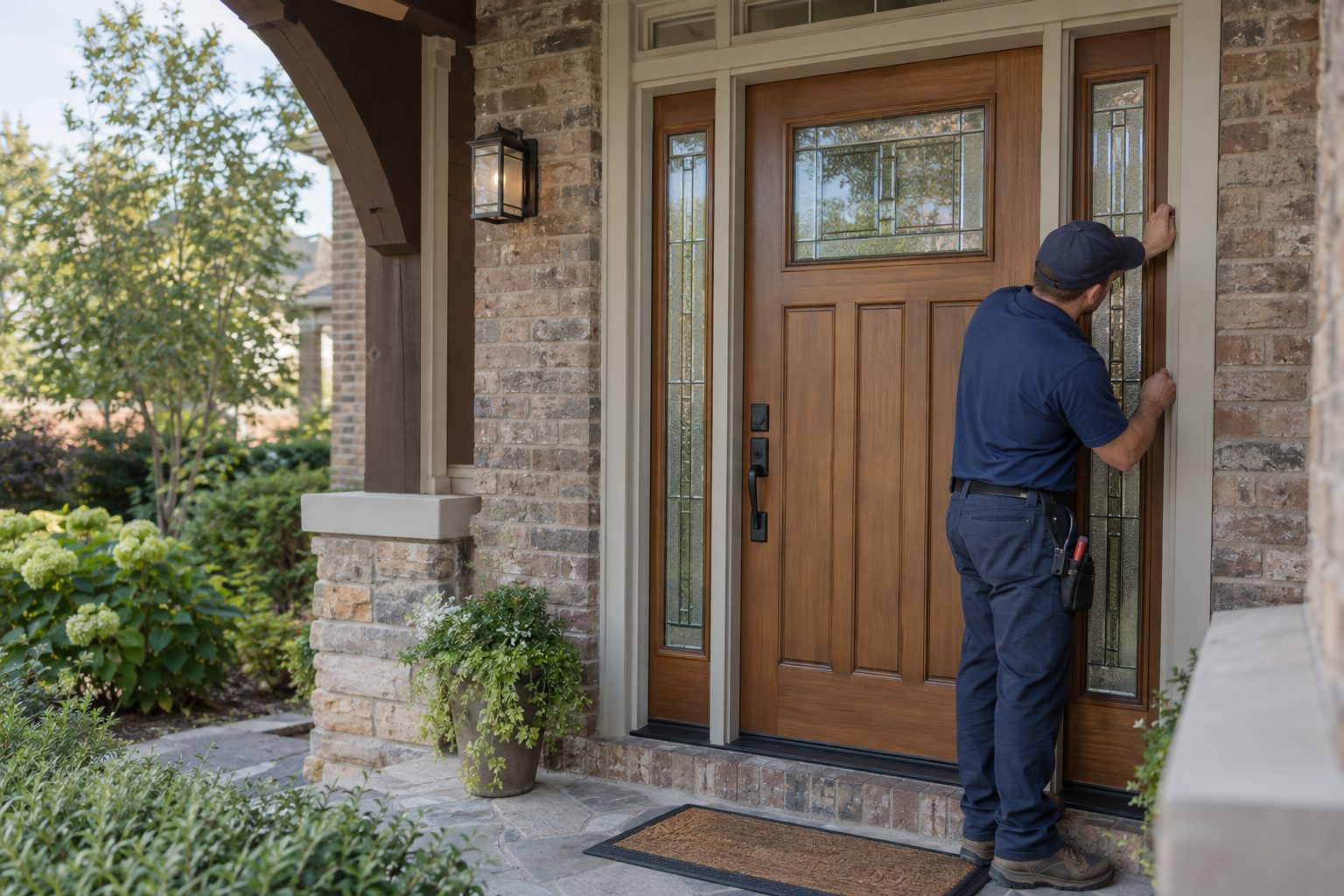
The narrow panes either side of a front door are the most regulated glass in the house and the first thing anyone sees. We replace cracked, fogged and forced sidelites in their existing frames, in tempered or laminated safety glazing, matched to the door beside them. Across DC, Maryland and Virginia.

  • 24/7 Emergency Service
  • DC · Maryland · Virginia
  • Free photo estimates

Bonded & Insured

Residential and commercial

24/7 Emergency

Seven days a week

Free Estimates

No obligation

Locally Owned

Residential and commercial

Upfront Pricing

Never an overtime charge

IRC R308

Hazardous location glazing

Laminated

Or tempered, to code

Templated

To your exact opening

DC/MD/VA

All three jurisdictions

Types we handle

Sidelight Glass Replacement: what we work on

Each of these is a different assembly with its own hardware, tolerances and code path. Drawings, not stock photos.

Entry sidelite, elevationA half-lite entry leaf between two narrow sidelites, under a transom, all glazed with safety glass.

Single Sidelite

One narrow fixed lite on the lock side or hinge side of the leaf, tied to the door by a mullion post. The most common arrangement on DMV colonials and townhouses, and the one most often broken because it sits directly beside the handle.

Entry door with sidelites and transom, elevationA half-lite entry leaf between two narrow sidelites, under a transom, all glazed with safety glass.

Twin Sidelites

A matched pair flanking the leaf. Both panes have to agree with each other and with the door — same obscurity, same tint, same coating, same grille bar width — or the front of the house reads wrong from the street.

Transom lite over a door head, elevationVision glass above an intermediate rail with a solid bulkhead panel below, in the same aluminium perimeter frame.

Sidelites With a Transom

Sidelites carried up into a transom over the head, so the glazing wraps the door on three sides. The transom sits in its own frame with its own detailing, and matching the two is a specification exercise rather than a measuring one.

Laminated security glass, sectionTwo lites bonded to a polyvinyl butyral interlayer. An impact fractures the outboard lite, but the interlayer holds the fragments and the opening stays closed.PVB INTERLAYERFRAGMENTS HELD

Laminated Security Sidelites

Two lites bonded to a structural interlayer. Break one and the fragments stay stuck to the interlayer, so the pane holds in the frame instead of emptying out of it — which is what stops an arm reaching through to the thumbturn.

Insulated glass unit, section through the edgeTwo lites of glass separated by an argon-filled cavity. The low-emissivity coating sits on surface two, the room side of the outboard lite. A warm-edge spacer holding desiccant is bedded on a primary seal, with a secondary seal closing the edge.1234LOW-E #2ARGONSPACERSEAL

Insulated Sidelite Units

A sealed unit rather than a single lite: two panes, a warm-edge spacer, an argon fill and a low-emissivity coating on surface two. Standard on any sidelite made in the last few decades, and the reason a failed one goes cloudy rather than simply dirty.

Forced-entry damage, elevationGlass punched out beside the lock, with radials running back into the field.

Forced and Broken Sidelites

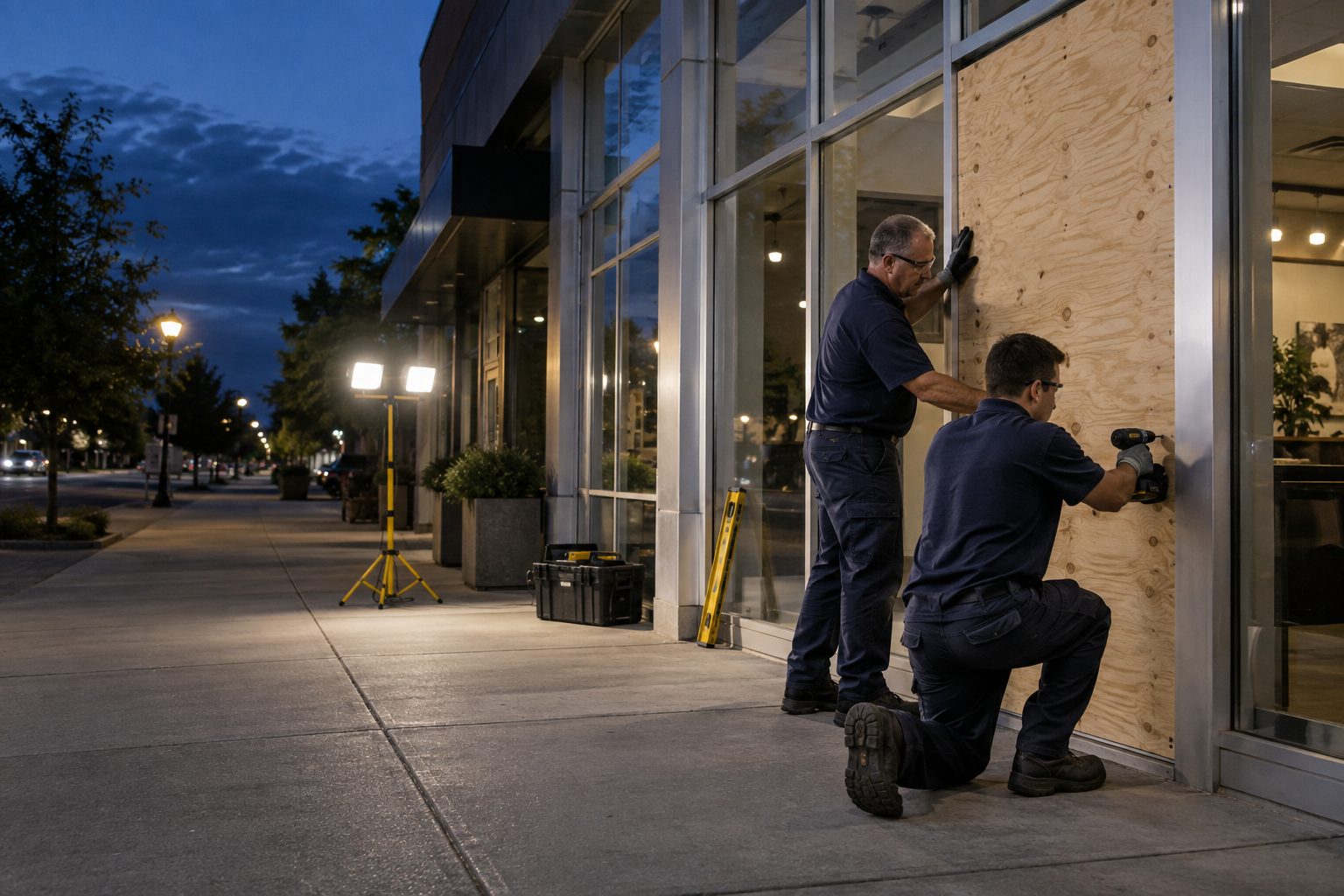
The pane beside the lock is the classic forced-entry point on a front door. We board the opening the same day, then re-glaze — and it is the moment to move from tempered to laminated, because the same attempt does not work twice on laminated glass.

Every hour costs you more

Why you need sidelight glass replacement now

Delaying repair doesn't save money — it multiplies the damage.

01

A broken sidelite is a hand next to your lock

The pane closest to the handle is the one that gets broken, and the reason is not the glass — it is what is behind it. A tempered sidelite dices out of the frame in a second and leaves clear reach to the thumbturn and the chain. Boarding it is a stopgap; the specification is the actual answer.

02

Unmarked glass in a hazardous location

Glazing adjacent to a door is a hazardous location under IRC R308.4.2, and every compliant lite carries a permanent designation naming the standard it was made to. Older houses, and past repairs done in a hurry, routinely have plain annealed glass sitting there. It breaks into blades at chest height beside a door people walk through every day.

03

It is the first thing anyone sees

A cracked or clouded sidelite sits at eye height on the front elevation, lit from behind, framed by the door. Nothing else on a house is looked at as often or as closely, and nothing else makes a well-kept property look neglected as quickly.

What You Get

Sidelight Glass Replacement Benefits

Every service comes with our commitment to quality, speed, and transparency.

01

Safety glazing, marked

Tempered or laminated to IRC R308, carrying the permanent manufacturer designation the code requires. You can read it in the corner when we are finished.

02

Laminated offered every time

A pane beside a lock is a security question as much as a glazing one. We specify the laminated option on every sidelite so the choice is yours rather than an assumption.

03

Your frame stays

The sidelite is glazed into its own existing frame. The door, the mullion, the lockset, the casing and the finish are all left untouched.

04

Templated to the opening

Narrow frames and settled houses mean the daylight opening is rarely square. We measure the opening and the rebate directly, and take a physical template where the profile is unusual.

05

Matched to the door

Obscurity, tint, coating, grille pattern and bar width are matched to the leaf beside it, so the pair reads as one assembly rather than a repair.

06

Secured the same day

A forced or shattered sidelite is boarded on the first visit, before the replacement is even measured.

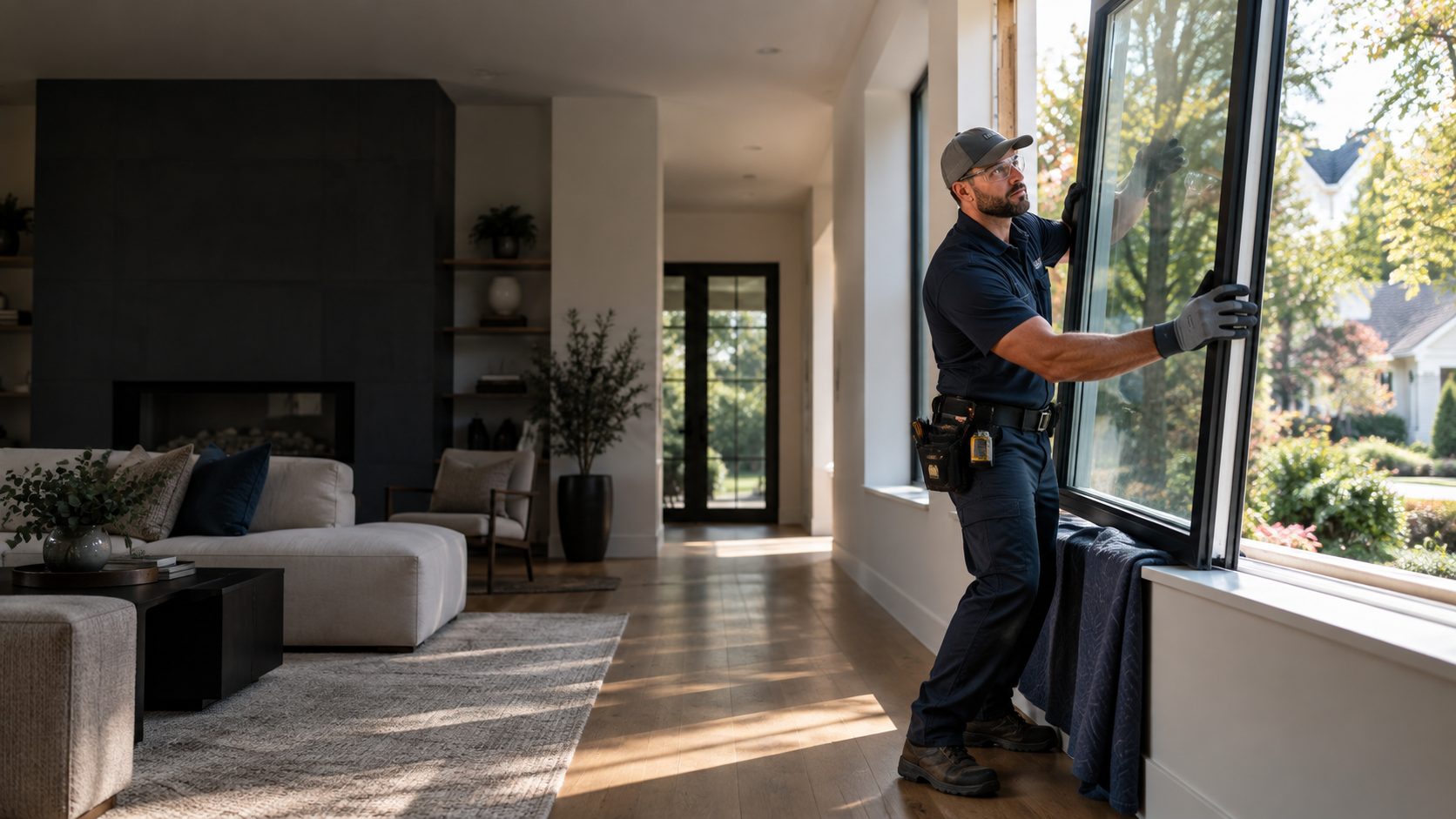
Sidelight Glass Replacement on a job site in the DMV
Insulated glass unit, section through the edgeTwo lites of glass separated by an argon-filled cavity. The low-emissivity coating sits on surface two, the room side of the outboard lite. A warm-edge spacer holding desiccant is bedded on a primary seal, with a secondary seal closing the edge.1234EXTERIORINTERIORLOW-E COATING — SURFACE 2ARGON-FILLED CAVITYWARM-EDGE SPACER + DESICCANTSECONDARY SEAL
Sealed unit — edge section
The detail behind it

Specified before it is ordered

Every sidelight glass replacement job starts with the assembly, not the pane. What the frame is, how the glass is captured, which code applies to that opening — those decide the specification, and the specification decides whether the repair lasts.

  • Safety glazing specified to the code for the opening
  • Same-day service for most jobs
  • Free photo estimates with no obligation
  • Bonded and insured, residential and commercial

Get a Free Sidelight Glass Replacement Estimate

Upload photos of the glass and we will come back with an itemized estimate. No home visit needed, no obligation.

Upload Photos Now
Our Process

How Sidelight Glass Replacement Works

A simple, transparent process from first contact to completed job.

01

Photograph the corner

Send a picture of the whole door and a close-up of any corner of the pane. The designation mark, or its absence, tells us what is in there now.

02

Specify against the code

We confirm the opening is a hazardous location under R308.4.2 — nearest edge inside the 24 in arc, bottom edge under 60 in — and settle tempered against laminated with you.

03

Template the frame

Beads off, opening measured, rebate depth and unit thickness taken, and a physical template made where the profile calls for it. Nothing is ordered off a nominal size.

04

Glaze and finish

New unit bedded on setting blocks, beads back, perimeter sealed, and the pane checked against the leaf in daylight before we leave.

The Transformation

Before & After Sidelight Glass Replacement

Before

Damaged, inefficient glass compromising safety and comfort.

After

Crystal-clear, professionally installed glass restoring beauty and performance.

Warning Signs

Signs You Need Sidelight Glass Replacement

A crack in the pane beside the front door, whatever its length.
Haze, streaking or a white tide line between the panes that will not clean off from either side.
Condensation forming inside the glass rather than on it.
No permanent designation mark in any corner of either face.
The pane rattles in its frame when the door is closed.
Putty or bead has shrunk, cracked or fallen away from the perimeter.
Daylight or a draught around the edge of the sidelite frame.
The bottom of the sidelite frame is soft, swollen or discoloured from long-term condensation.
The sidelite reads a different colour to the lite in the door in low sun.
Obscure glass that has been patched or replaced with clear, so the hall is now visible from the street.
Chipped or dished glass where a previous forced-entry attempt was made.
A sidelite pane that has already been replaced with plain annealed glass.

What makes a sidelite a hazardous location

Section R308.4.2 of the International Residential Code, as adopted across DC, Maryland and Virginia, treats glazing adjacent to a door as a hazardous location when two things are true at once. The nearest vertical edge of the glazing falls within a 24-inch arc struck from either vertical edge of the door in its closed position, and the bottom exposed edge of that glazing sits less than 60 inches above the walking surface. A sidelite meets the first condition by definition — it is fixed directly against the door edge — and it almost always meets the second, because sidelite glazing typically runs down to within a few inches of the threshold. The code lists exceptions, including decorative glazing and glazing separated from the door by an intervening wall or other permanent barrier, but a conventional sidelite is not one of them. Commercial buildings reach the same conclusion by a different route, at IBC 2406.4.2.

Tempered or laminated, and why we always raise the question

Both are safety glazing and both satisfy the code, so the decision is yours rather than the inspector's. Tempered glass is heat-treated so the surfaces are in compression; when it fails it fails completely, dicing into small blunt granules. That is safe for the person standing next to it, and it is also why a broken tempered sidelite leaves an empty hole beside your lock in about a second. Laminated glass is two lites bonded to a plastic interlayer. It cracks, it stays in the frame, and getting through it takes sustained, loud, visible effort. It also blocks effectively all ultraviolet, so the hall floor and the console table beside the door stop fading, and it takes a useful bite out of street noise. On a sidelite next to a thumbturn, laminated is the specification we would put in our own house, and there is no reason not to have it specified alongside the tempered option.
How to tell what is in your sidelite now

Look at the corners of the pane, on both faces, in raking light. Safety glazing is required under R308.1 to carry a permanent manufacturer designation — etched with acid or sandblasting, or ceramic-fired into the surface — naming the fabricator and the standard the lite was made to, usually CPSC 16 CFR 1201 or ANSI Z97.1. It is deliberately impossible to remove. If there is no mark in any corner of either face, the safe assumption is that the pane is annealed glass, which breaks into long blades rather than granules. That is common in houses built before the rule tightened and in sidelites replaced without much thought since. It is not something to leave beside a door that children use.

Obscure and decorative glazing for privacy at the front door

A sidelite is a window into your hall at head height, six feet from the street, and the usual answer to that is textured glass rather than a blind. Reeded and fluted glass runs vertical ribs across the pane, so shapes and light come through but detail does not, and it suits both Federal and contemporary front doors. Rain glass has an irregular runnelled surface with heavier distortion. Acid-etched satin gives an even, uniform blur across the whole lite, the most complete obscurity of the four and the most modern-looking. Glue chip carries a fern-like crystalline pattern created by shrinking animal glue on a sandblasted surface — a genuinely old technique that suits period doors. Leaded and caming panels, bevelled clusters and sandblasted borders are all available as well, and any of them can be encapsulated inside a sealed unit so the texture sits protected in the cavity and the surfaces you actually clean stay flat.

Sealed units, Low-E and why a sidelite goes cloudy

Nearly every sidelite made in recent decades is an insulating unit rather than a single lite: two panes held apart by a spacer, sealed at the perimeter, filled with argon and coated with a low-emissivity layer on surface two, the cavity face of the outer pane. That coating is what stops the afternoon sun turning a west-facing hall into an oven while still letting daylight through. When the perimeter seal fails, the cavity begins breathing outside air, moisture condenses on the inner faces and the pane goes hazy or grows a tide line. Nothing you do from either side reaches it, because the deposit is inside the unit. Sealed units are replaced rather than repaired, and that replacement is the natural moment to specify a warm-edge spacer, which keeps the glass edge warmer and stops the winter condensation that rots the bottom of a wooden sidelite frame.

Matching a new sidelite to the door beside it

The technical work on a sidelite is straightforward. The part that goes wrong is the match. A replacement pane sits inches from the lite in the door leaf, on the most looked-at elevation of the building, and any difference between the two is obvious from the pavement. We record the obscurity pattern and its direction, the tint, the coating — because a Low-E surface reads slightly green or slightly blue depending on which product it is, and two different coatings side by side never look accidental — the grille or caming pattern and the width of the bars, and the bead profile. On period properties in Georgetown, Old Town Alexandria, Capitol Hill and Annapolis, historic district review may also have a say in what is acceptable on a street-facing elevation, and it is worth knowing that before anything is ordered rather than after.

Sidelites in commercial and multi-family entrances

The same glazing appears either side of apartment lobby doors, office entrances and the doors between corridors and stairs, where it is governed by IBC 2406 rather than the residential code and often has fire-rating or smoke-barrier requirements layered on top of the impact-safety ones. Rated glazing is a different product with its own listings and its own permanent marking, and it cannot be substituted with ordinary tempered because the sizes happen to match. We identify what is listed for the assembly before quoting, and we work to building access and scheduling rules rather than around them.

For Every Property

Residential & Commercial Sidelight Glass Replacement

Residential sidelight glass replacement

Residential Sidelight Glass Replacement

Professional service for homes, condos, and townhomes across the DMV.

Commercial sidelight glass replacement

Commercial Sidelight Glass Replacement

Serving offices, retail, restaurants, and buildings of any scale.

Common Questions

Sidelight Glass Replacement FAQ

A sidelight — spelled sidelite in the trade — is the narrow fixed window immediately beside an entry door, running most or all of the door height in its own frame and joined to the door frame by a mullion post. It does not open. Its job is to bring daylight into a hall that would otherwise have none and to give the entrance the proportions the architecture is after. Doors come with one, two or none, and a matching lite over the head is a transom rather than a sidelite.

Work we stand behind

See the work, then judge it

Virginia Glass Windows is locally owned and has been doing residential and commercial glass across Northern Virginia, DC and Maryland for over a decade. Bonded and insured, on call around the clock.

24/7 Emergency Service

Sidelight Glass Replacement Emergency? Call Now.

Call the dispatch line and we will get a crew out to secure the opening.

(703) 470-7867
Shop drawings

Why a sidelite is never ordinary glass

A narrow pane beside a front door looks like the least demanding piece of glass in a house. It is one of the most tightly regulated. Four plates: the assembly, the rule that governs it, the detail it is glazed into, and what you can choose within all of that.

SL-01 · Entry assembly — elevation

Scale NTS

transom, where the assembly has one60 in above the walking surfacebottom exposededge of glazingSIDELITESIDELITEDOOR LEAFmullion postthresholdA sidelite is a fixed lite in its own frame, tied to the door by a mullion.Its glazing runs almost to the threshold, well under the 60 in datum. SL-02 has the other half.

SL-02 · Hazardous location — plan

Scale Diagrammatic

IRC R308.4.2 — GLAZING ADJACENT TO A DOOR24 insidelite — inside the arcSAFETY GLAZING REQUIREDbeyond the arcclause not triggereddoor in the closed positionswing shown for orientation only — the arc is struck from the closed positionBoth halves have to be true: nearest vertical edge inside a 24 in arc of either door edge, AND bottom exposededge less than 60 in above the walking surface.Exceptions include decorative glazing, and glazing separated from the door by a permanent barrier. Commercial: IBC 2406.4.2.

SL-03 · Jamb and mullion — plan section

Scale NTS

EXTERIORINTERIORsealant onbacker rodouter jambbead, both facesLow-E coating on surface 2mullion postweatherstrip in the stop kerfdoor leafThe sidelite is glazed into its own frame — it is not part of the leaf.Which is why a broken one is replaced on its own, with the door, the mullion and the lockset left completely undisturbed.

SL-04 · Obscure glazing and the designation

Scale NTS

PRIVACY WITHOUT LOSING THE LIGHTReededRainSatin etchedGlue chipvertical ribs · shapes onlyrunnelled · heavy distortioneven blur · full obscurityfern pattern · decorativeTHE MARK IN THE CORNERTEMPERED16 CFR 1201 CAT IIANSI Z97.1 · makerR308.1 — safety glazing carries a permanent designation.Etched or ceramic-fired into a corner, naming the maker andthe standard the lite was made to. It cannot be peeled off.No mark in any corner? Assume it is annealed glass.On a sidelite next to a thumbturn, tempered dices and emptiesthe opening. Laminated cracks and stays in the frame.

What we settle before a pane is ordered

Four questions, asked in this order. Nothing gets cut until all four have an answer.

Code

Is it within the arc, and below 60 inches?

A sidelite sits by definition against the door edge, and its glazing almost always runs to within a few inches of the threshold. Both halves of the R308.4.2 test are met before anyone gets out a tape. That is why a sidelite is safety glazing, every time, and why an unmarked pane in one is a finding rather than a curiosity.

Code

Tempered or laminated — the choice is yours to make

The code accepts either. Tempered is the default: heat-treated, dicing into blunt granules. Laminated is two lites bonded to an interlayer, so a break stays in the frame. Beside a door with a thumbturn on the inside, that difference is the whole security argument, and it is the reason we raise laminated on every sidelite quote.

Measure

Templated off the frame, not off the old pane

Sidelite frames are narrow, old ones have moved, and the daylight opening is rarely square by the time a house has settled. We measure the opening, the rebate depth and the existing unit thickness directly, and take a physical template where the profile is unusual.

Measure

Matched to the door, not to a catalogue

A replacement sidelite has to agree with the leaf beside it — same obscurity if the leaf lite is obscured, same tint, same grille pattern and bar width, same coating so the two do not read as different colours in low sun. Getting that wrong is the most visible mistake possible on the front of a house.

The rest of the entry assembly

Sidelites rarely fail alone. If the lite in the door leaf has gone too, or there is a transom over the head that needs matching, those are covered on their own pages — and doing them in one visit is what keeps the whole front of the house reading as one assembly.

Send us a photo of the corner of the pane.

The designation mark, or the absence of one, tells us more about what you have than any measurement will.

(703) 470-7867

Ready for Sidelight Glass Replacement?

Upload photos for a free estimate, or call for same-day service. Bonded and insured across DC, Maryland and Virginia.