Tempering is a thermal process. The lite is heated close to its softening point and then cooled fast with air jets, so the surfaces set first and end up in compression while the core stays in tension. That balance is what makes it strong, and it is also what makes the failure so total: a flaw that reaches the tension core releases the stored energy through the whole pane in one event. What lands on the floor is a heap of small blunt cubes rather than the long knife-edged shards annealed glass produces.
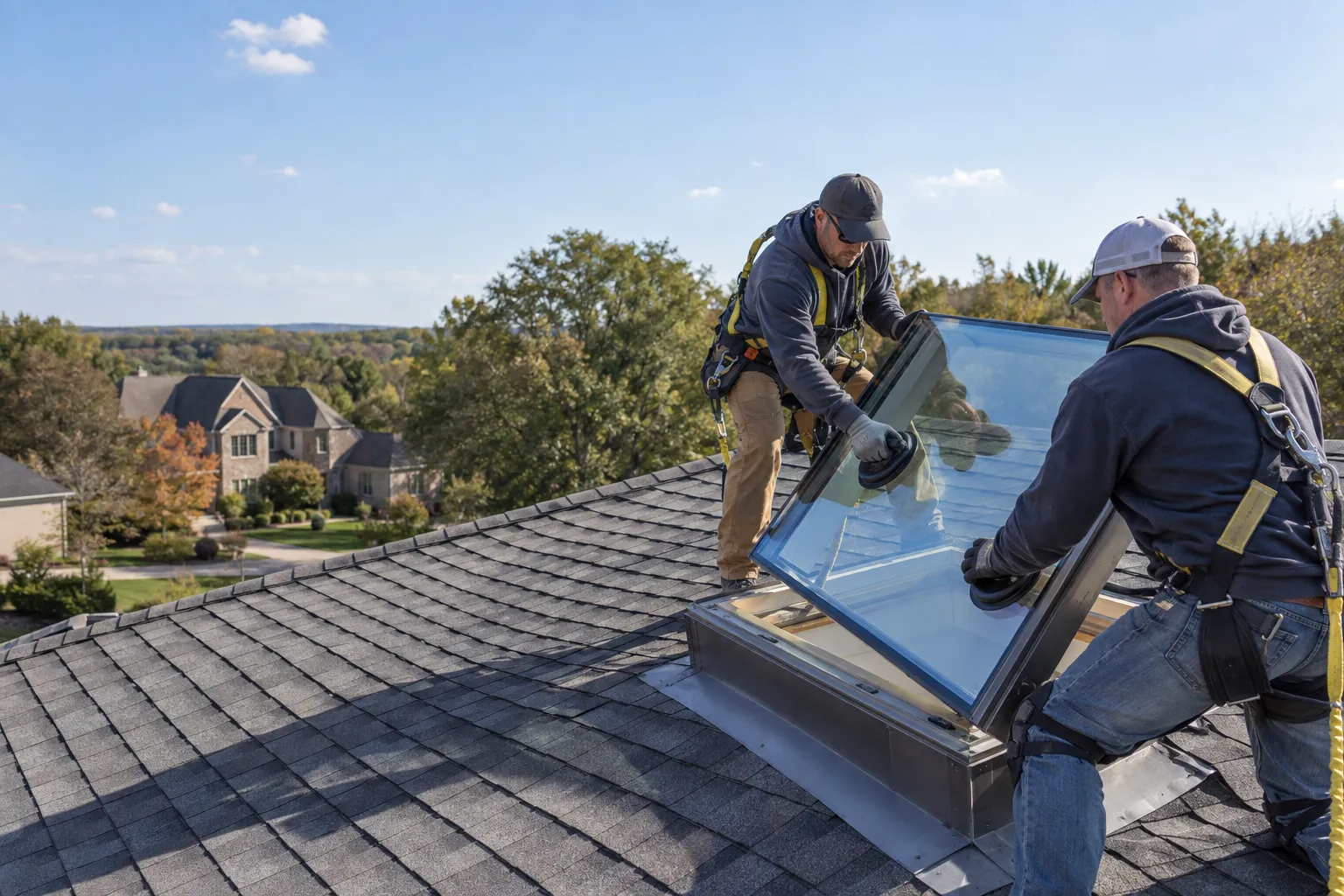
Lamination is mechanical. Two lites are bonded to a plastic interlayer — PVB in most residential work, a stiffer ionoplast where the panel is structural. Break it and it cracks like ordinary glass, but the fragments stay stuck to the interlayer and the panel stays in the opening. That is the whole argument for laminated glass overhead, in a guard, and at street level: after the failure the hole is still closed.
Where both are permitted we default to tempered, because it is what the fabricators stock and it turns around faster. We specify laminated where the code names it, where the opening cannot be left open after a break, and where the interlayer is doing a second job — noise or UV.