Landlord & Tenant Glass Repair Responsibilities in DC, Maryland & Virginia
Who pays for window glass repair in a rental? DC, MD, and VA legal requirements, timelines, and documentation for landlords and tenants. Virginia Glass Windows.
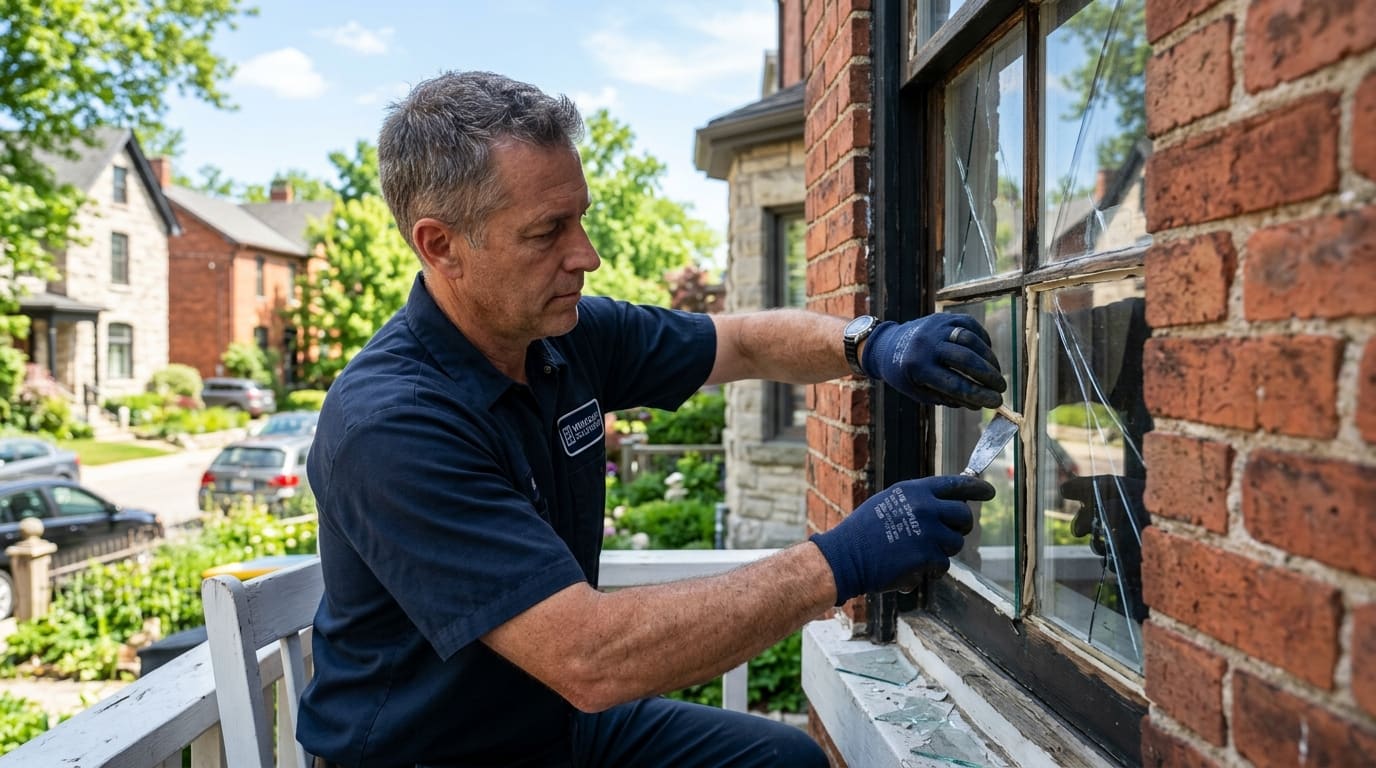
The Question Every DMV Landlord and Tenant Asks Eventually
We get calls like this regularly: a tenant calls because a window broke during a storm and wants to know if their landlord has to fix it. Or a landlord calls because a tenant says they did not break the window but the landlord is skeptical. Or a property manager calls because a tenant moved out and there is a broken window and a security deposit dispute. Glass damage in rental properties sits at the intersection of property law, lease contracts, and physical evidence — and the answer to "who pays for this" is almost never simple.
The short version is: in DC, Maryland, and Virginia, landlords are generally responsible for maintaining windows in a habitable condition as part of their duty to provide a livable premises. Tenants are generally responsible for damage they cause through negligence or intentional acts. The tricky cases — storm damage, spontaneous thermal breakage, a break with disputed cause — are where the legal framework, lease language, and documentation all matter enormously.
We are glass professionals, not lawyers, and nothing in this guide is legal advice. But after handling hundreds of rental property glass calls across the DMV, we can tell you what we see, what matters practically, and what documentation we can provide that is useful for both landlords and tenants when disputes arise.
DC Law: Strong Tenant Protections, Strict Landlord Timelines
Washington DC has some of the strongest tenant protection laws in the country, and the DC Housing Code (14 DCMR Chapter 7) is explicit about window maintenance. Landlords are required to maintain windows in weathertight condition, properly glazed, and in good repair. A broken window that leaves the unit exposed to the elements is a housing code violation. DC law does not specify a precise repair timeline for non-emergency glass repairs, but DC regulations require landlords to address conditions that threaten health or safety within 24 hours for emergency situations.
In practice, for a window broken by weather or by unknown cause, DC landlords should plan to make glass repairs within 3 to 5 business days for non-emergency situations (a broken pane in an interior room, for example) and same-day or next-day for exterior glass breaks that leave the unit exposed. The DC Department of Housing and Community Development (DHCD) investigates tenant complaints, and a pattern of delayed repairs is a serious compliance issue for DC landlords.
DC tenant protections also limit the ability of landlords to charge tenants for repairs. Unless the lease specifically provides for tenant liability for glass damage and the landlord can document that the damage was caused by the tenant's negligence or intentional act, DC landlords generally cannot charge tenants for window repairs or deduct the cost from the security deposit. This is a meaningful practical difference from many other jurisdictions.
Maryland Law: Implied Warranty of Habitability and Local Codes
Maryland landlord-tenant law is governed by the Maryland Landlord-Tenant Act (Maryland Code, Real Property Title 8) and by local county codes that in many cases are more specific. Maryland recognizes an implied warranty of habitability that requires landlords to maintain rental properties in a livable condition. Broken windows that allow weather infiltration, create security vulnerabilities, or otherwise render the unit uninhabitable trigger this obligation.
Montgomery County and Prince George's County — which together contain a large share of Maryland DMV rental housing — have local housing codes that specify maintenance standards for windows. Montgomery County's Building and Housing Codes require windows to be maintained weather-tight and free of broken glass. The county's Housing Code Enforcement office receives complaints and can cite landlords for violations. Repair timelines under Montgomery County code are generally 30 days for non-emergency items, shorter for items creating immediate hazards.
Maryland law gives tenants a rent escrow remedy for serious habitability issues — tenants can pay rent into court escrow if the landlord fails to make required repairs. This is a significant enforcement mechanism that motivates Maryland landlords to address glass repair promptly. For landlords, the practical implication is that delayed glass repairs can trigger an escalating legal situation that costs far more than the repair itself. We recommend that Maryland landlords treat exterior glass breaks with 48-hour urgency at minimum.
Virginia Law: Different Framework, Similar Obligations
Virginia residential landlord-tenant relationships are governed by the Virginia Residential Landlord and Tenant Act (VRLTA, Virginia Code Title 55.1, Chapter 12) and by local housing codes. The VRLTA requires landlords to maintain rental dwellings in a fit and habitable condition, which includes maintaining windows in proper working order and repair. Northern Virginia jurisdictions — Arlington, Alexandria, Fairfax County, and their incorporated cities — all have local property maintenance codes that reference and supplement the state act.
Virginia's framework for repairs differs from DC's in one important way: it includes a specific repair-and-deduct remedy for tenants. Under Virginia Code 55.1-1234, a tenant can arrange for repairs and deduct the cost from rent (up to $1,500 or one month's rent) if the landlord fails to make required repairs within a reasonable time after written notice. For a broken exterior window, "reasonable time" is generally interpreted as a few days. This remedy is available regardless of what the lease says, because the VRLTA provisions cannot be waived by lease agreement.
Virginia also treats tenant-caused damage differently from normal wear and tear, and lease language matters more in Virginia than in DC. A lease provision holding tenants responsible for glass breakage is more likely to be enforceable in Virginia than in DC. The key question in Virginia glass damage disputes is causation: was the break caused by a defect in the window, by weather or external event, or by the tenant's action or inaction? Documentation of the condition of windows at move-in and move-out is essential for both parties in Virginia.
Documentation: What Actually Wins Disputes
In our experience, the vast majority of landlord-tenant glass disputes come down to documentation — or the lack of it. A landlord who can show move-in inspection photos with all windows intact, has the tenant's signature on a move-in condition report, and receives a repair request with no admission of responsibility has a relatively strong position. A tenant who has photos of the damaged window showing the break pattern and can demonstrate that the building exterior (falling branch, neighboring construction debris) was the cause has a strong defense.
For landlords managing DMV rental properties, we recommend establishing a relationship with a glass professional before you need an emergency repair. Have a contact at Virginia Glass Windows (or another glass company) in your property management contacts, know the timeline for emergency glass service in your area, and document window condition systematically during move-in and move-out inspections. A simple photo of each window at move-in takes three minutes and can resolve a security deposit dispute years later.
When we respond to a rental property glass break, we document the break pattern and the condition of the opening as part of our standard process. This documentation — photos, written description of break pattern and likely cause — can be provided to both landlord and tenant as objective third-party documentation. We do not render legal opinions on liability, but accurate documentation of physical facts (the glass broke from the inside outward vs. from the outside inward, the break pattern is consistent with point impact vs. thermal stress) is often the factual foundation that resolves a dispute without litigation.
Practical Timelines and Emergency Service
Whatever the ultimate liability determination, a broken exterior window needs to be addressed quickly. Rain and wind entering through a broken window can cause thousands of dollars of water damage to floors, walls, and contents — damage that often exceeds the glass repair cost by a factor of ten. Emergency board-up followed by glass replacement is the correct sequence for any exterior break that cannot be repaired same day.
For landlords in the DMV, our general recommendation is: respond to all broken exterior window reports within 24 hours with at minimum a board-up or temporary weatherization, and complete glass replacement within 5 business days. For DC properties, be aware that this aligns with your legal obligations under the DC Housing Code. For Maryland and Virginia properties, this timeline is conservative and will keep you in compliance with virtually any interpretation of "reasonable time" under those states' laws.
Virginia Glass Windows provides emergency board-up and priority glass replacement for rental property managers and landlords throughout the DMV. Rental property managers juggle multiple properties and need a responsive, reliable partner. We can work directly with tenants for access coordination when the landlord is not on-site. Call us any time at (703) 470-7867, and we will respond to your rental property glass emergency.
Need Help With Your Glass?
Send us a photo of your window or glass issue and get a free estimate within hours. Our experts serve all of DC, Maryland, and Virginia.
Common Questions
Frequently Asked Questions
Answers to common questions about this topic from our DMV glass experts.
Keep Reading
Related Guides
Related Services
Explore More Resources
Related Articles
Common Problems
Related Pages
Our Services
Ready to Get Started?
Get a free estimate from our glass experts. Same-day service available across DC, MD & VA.